








What Is the Difference Between Cappuccino and Coffee in Iced Form?
An iced cappuccino is hard to find because the drink depends on a thick layer of hot milk foam that does not hold up when chilled, and many cafés simply decline to make it. The key difference between cappuccino and coffee here is ratio and texture: a classic hot cappuccino uses about 20g of coffee extracted into 40ml of espresso with 140-150ml of milk whipped to roughly 3cm of foam at 65°C.
Iced milk foam is time-consuming to produce and tends to collapse, adding effort without improving flavor, so cafés often steer customers toward an iced latte instead. The latte milk to coffee ratio also gives a different result, with more milk and less foam. Some shops attempt an iced cappuccino by dusting cocoa powder on top or substituting cream, but the dense, velvety texture of the hot version rarely carries over.
When ordering at a café, many customers find that iced cappuccino isn't on the menu, and are even told by the barista that "cappuccino isn't made iced." Behind this are considerations of flavor as well as the cumbersome production process. Starting from real conversations at Front Street's offline stores, this article analyzes the two core characteristics of hot cappuccino—thick milk foam and rich coffee flavor—and, using the classic blend as an example, discloses the complete parameters: 20g of powder extracted into 40ml of espresso, 140–150ml of refrigerated milk whipped into 3cm of milk foam, and a milk temperature of 65°C. It also compares the similarities and differences between iced cappuccino and iced latte, explaining why iced milk foam is time-consuming and laborious yet fails to improve the taste, as well as the improved attempts made by some cafés through dusting cocoa powder or substituting cream.
"Most of the coffees on the blackboard can be made iced, depending on what type you want."
"Then give me an iced cappuccino!" "Emmmmmm.......cappuccino isn't made iced." Such conversations happen frequently at Front Street's offline stores. When customers receive a negative answer, they often follow up with Front Street: why is cappuccino specifically not made iced? They report that at many coffee shops they can't order an iced cappuccino and can only choose a hot drink.

To be fair, not every coffee shop refuses to make iced cappuccino. For example, some chain brand stores not only offer iced cappuccino but even have iced flat white available. Those that genuinely don't offer iced cappuccino are only some cafés. As for the reason, it's actually not hard to understand—iced cappuccino performs poorly in flavor, and the production process is relatively troublesome.
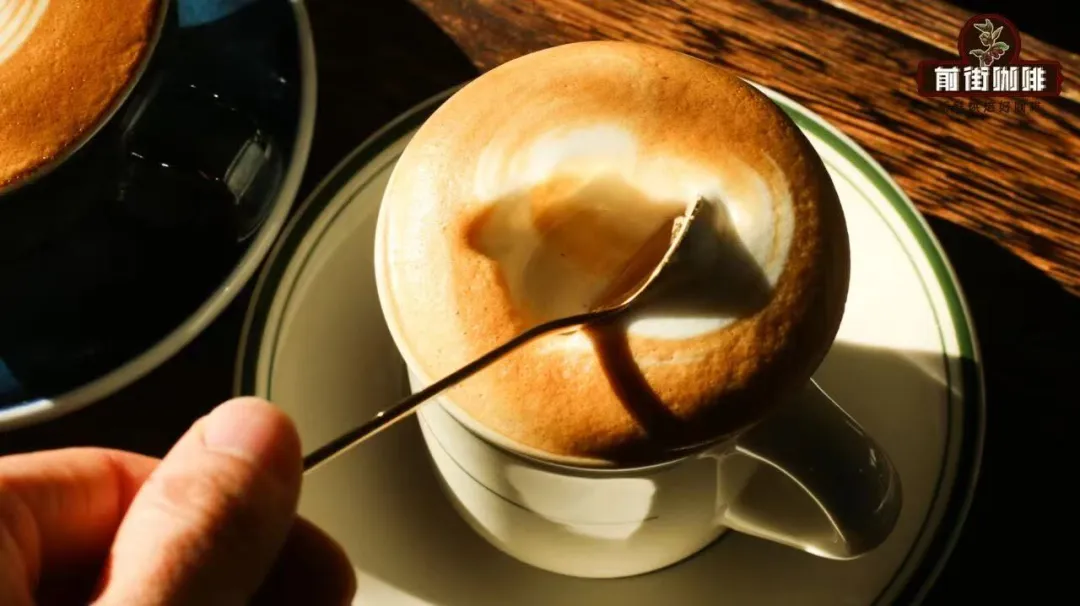
What exactly is the difference between iced cappuccino and hot cappuccino? Like most coffees, cappuccino was originally only made as a hot drink. Front Street has mentioned in previous articles that hot cappuccino has two distinct characteristics: first, it has an extremely thick layer of milk foam, and this layer of foam brings a dense, velvety texture to the coffee, soft as marshmallow on the palate;

Second, the coffee flavor is very prominent. Unlike most milk coffees, milk in cappuccino only serves to appropriately dilute the bitterness and add smoothness, not to suppress the coffee flavor or achieve balance with it. Precisely because of this, the coffee flavor of cappuccino is more intense than that of other milk coffees.
Taking Front Street as an example, the beans used for making espresso come from Front Street's Italian Classic Blend on the Front Street bean list. When making cappuccino, Front Street takes 20g of coffee beans, extracts 40ml of coffee liquid within 30 seconds, then pours 140–150ml of refrigerated milk into the milk pitcher, using the steam wand to simultaneously whip the milk foam and heat the milk; Once the milk foam is whipped to a thickness of 3cm and the milk temperature reaches about 65°C, you can stop, and finally integrate the milk and milk foam with the coffee liquid to eleven-tenths full, and a relatively authentic cappuccino is complete.

When such a cappuccino enters the mouth, the first thing that strikes you is the extremely dense, velvety feel of the milk foam, followed closely by a coffee flavor that is rich yet not bitter. Because the amount of milk used is small, the coffee's own flavors are clearly presented—chocolate, nuts, cream, butter cookies, with a smooth mouthfeel and a long finish. Extracting the espresso, whipping the milk foam and heating the milk, and finally integrating them—this is the complete production process of a fragrant, rich hot cappuccino. In comparison, making an iced cappuccino is slightly more troublesome. Although the overall idea is similar to an iced latte—adding ice cubes, refrigerated milk, and espresso liquid to the cup—in order to replicate the soft texture of hot cappuccino, chain coffee shops, when inventing the iced cappuccino, deliberately added a thick layer of iced milk foam on top of this.
The whipping principle of iced milk foam is the same as that of hot milk foam—both inject air into the milk. But at the time, convenient tools like electric frothers were not yet widespread, so for a long time, the iced milk foam of iced cappuccino was whipped entirely by hand.
"Whipping takes a long time, and cleaning is troublesome"—these are exactly the two hassles brought by iced milk foam. Even so, if the finished product turns out ideal, many coffee shops are still willing to whip iced milk foam and serve iced cappuccino. But the problem lies precisely in this: the cappuccino made this way doesn't taste very good. Here Front Street isn't saying it tastes bad, just that compared with an iced latte there's little difference. Low temperatures reduce taste sensitivity, so the difference in the amount of milk used becomes less obvious, and it drinks only slightly stronger in coffee flavor than a latte. And although the milk foam is thick and dense, it hasn't integrated with the coffee, so the flavor is just the milk itself, appearing very monotonous. Even if stirring can bring out a bit of coffee aroma, the milk foam still doesn't taste very pleasant on the palate. It could be said to be more form than substance.
Simply put, it can be understood as adding a layer of milk foam on top of an iced latte. It tastes lacking in distinctive features, and coupled with the cumbersome production process, very few coffee shops are willing to offer iced cappuccino. But what Front Street said is very few, not none! Besides chain brands, there are still some coffee shops that offer iced cappuccino, and they will adjust the original recipe to make the iced cappuccino more layered and better-tasting. For example, some coffee shops dust a layer of cocoa powder on the surface of the milk foam (some dust cinnamon powder instead) , not only for decoration but also to add flavor to the bland milk foam. The flavor of cocoa powder itself is quite close to coffee, so dusting it on won't bring an abrupt change, but instead can enhance and add flavor to the coffee; (The picture is not a cappuccino, for reference only)

Some coffee shops simply replace the milk foam with cream, which saves the step of whipping milk foam and gives the coffee richer layers and an excellent texture. However, the cost rises accordingly, so not many coffee shops choose this approach. That's all for this article. If you've never tried an iced cappuccino, or are just thinking of giving it a try, you can look through Front Street's previous articles, which contain related tutorials. The method is very simple: just reduce a certain amount of milk from an iced latte and add a layer of whipped iced milk foam~
- END -
The above content is compiled by CoffeeHunters, a coffee news website.


