







Should you re-grind coffee beans ground too coarse?
Coffee ground too coarse for pour-over can be run through the grinder again, a practice called double grinding. It does make particle size more uniform, which is why competitors use it, but it raises the share of fines and leaves grounds trapped in the grinder, so the dose that comes out is smaller than what went in.
In one test, roughly 20 g of grounds after double grinding yielded only about 13 g, a loss of nearly a third. Without a blower to clear retention, the simpler route is to brew the coarse batch as it is, adjusting water temperature and pouring to raise extraction. A Panama Elida anaerobic natural Catuai works as a test bean for that plan.
If you accidentally grind your coffee too coarse when making pour-over, can you pour it back into the grinder and grind it finer again? This is what's known as double grinding. Although it's used in professional competitions to improve particle uniformity, it also brings two major problems: an increase in fines and grinder retention. Front Street Coffee found through experiments that after double grinding, nearly 20 grams of coffee powder might yield only about 13 grams, a shocking loss. If you don't have tools like a blower, you might try a different approach: directly adjust parameters like water temperature and pouring method, and brew good coffee with the coarser grind. This article uses Panama Elida Anaerobic Natural Catuai as an example to share a specific brewing plan, so you can handle unexpected situations with ease.
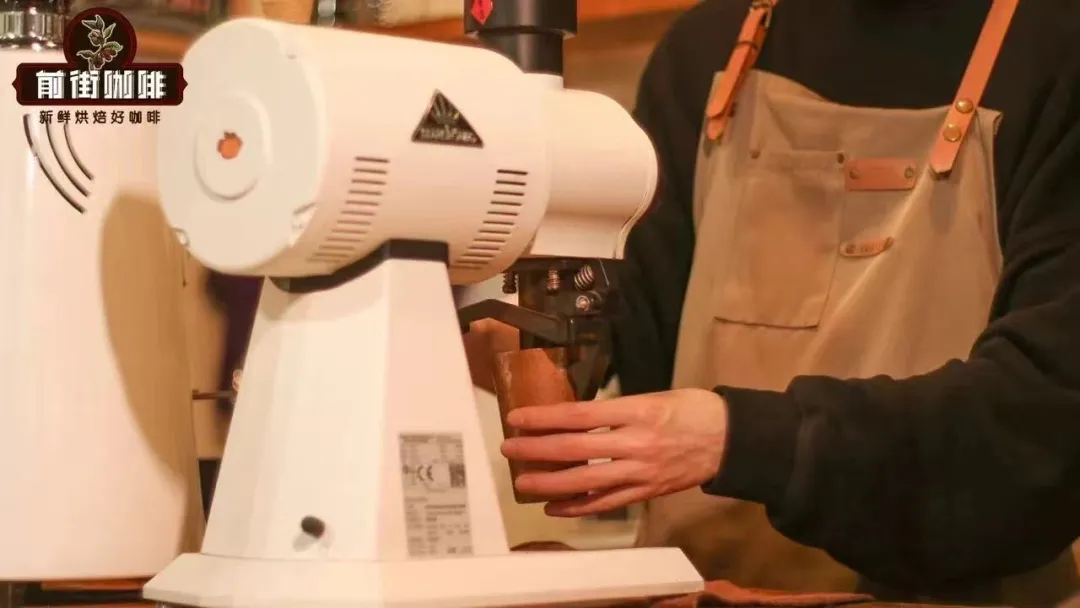
When coffee grounds are on the coarse side, extraction efficiency naturally takes a hit. If you brew with this batch directly, the resulting cup will likely taste weak and fail to reach the ideal deliciousness. (Relatively speaking)
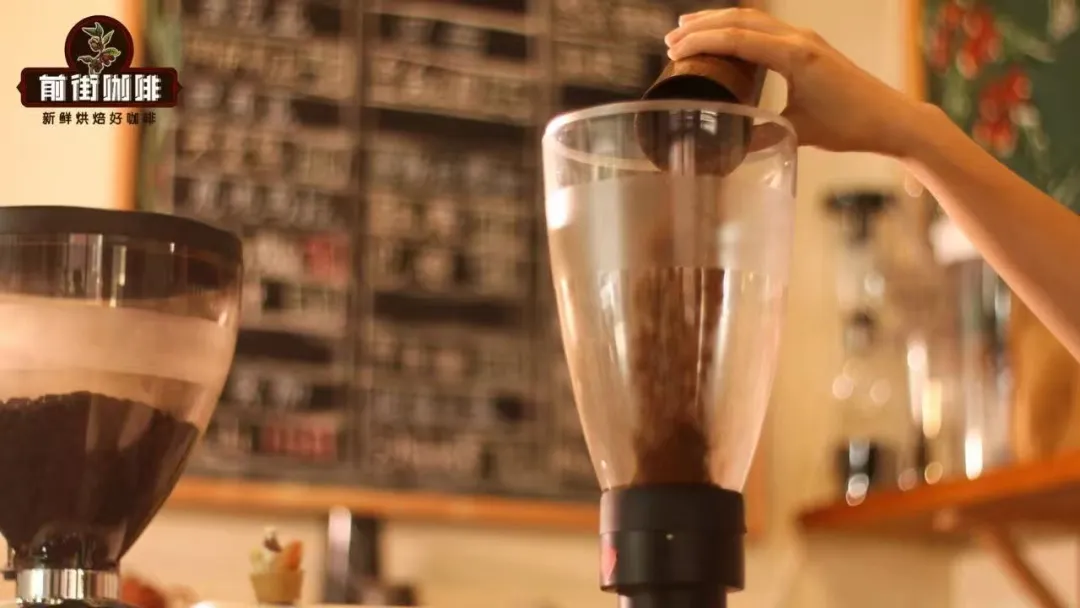
So many friends might wonder: can we pour this batch of grounds back into the grinder, set it back to the correct setting, and grind it again to get the coarseness we need?
The answer is, of course you can. Front Street often mentions when sharing about world-class coffee competitions that many competitors deliberately use double grinding to process coffee grounds, with the clear goal of making the particle distribution more uniform.
However, this method has two rather unpleasant drawbacks. If you can't overcome them, Front Street recommends a different approach: directly "handle" this mistakenly ground batch, which actually makes it easier to brew an ideal cup of coffee.
Excessive fines:
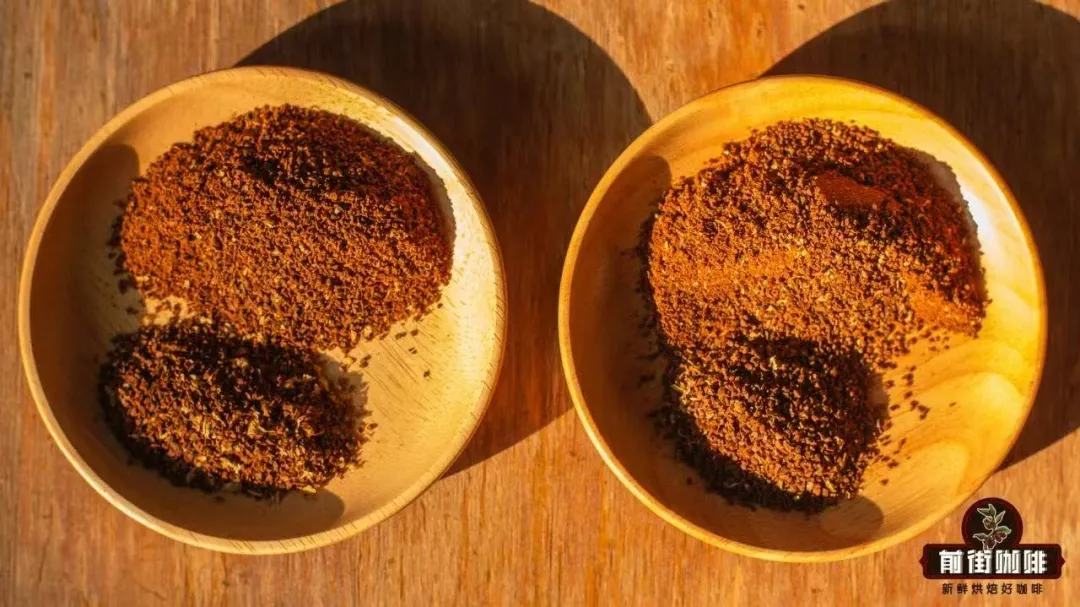
As you know, ground coffee always contains some fines, which are particles smaller than 0.25mm. A moderate amount of fines can add layers to the coffee, but once there are too many, they can easily cause clogging, leading to over-extraction and noticeable off-flavors.
Double grinding precisely causes the proportion of fines to continue rising, because the coffee grounds are ground more times, so the number of fines naturally increases. (On the right is double-ground coffee powder; you can clearly see many fines clumping together)
If your grinder is of average quality and already produces more fines, Front Street suggests sifting out some fines after double grinding with a sieve. This can effectively reduce the chance of failure due to excessive fines. (Such as clogging, over-extraction, etc.)
The "eating" grounds problem:
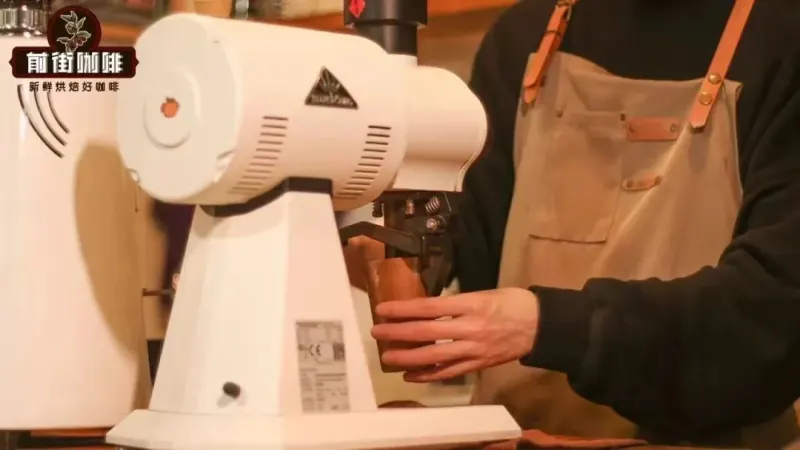
Now let's talk about grounds retention. Most electric grinders "eat" grounds because there are gaps around the grinding area, and some coffee powder falls into corners after grinding and can't come out, resulting in less powder than the beans you put in. For example, if you put in 15g of beans, only 14.7g of powder comes out—this is the common grinder retention phenomenon.

And if we put in coffee powder instead, the amount "eaten" will further increase, and by much more than you'd imagine.
Front Street has done several experiments, putting coffee powder back into the grinder for double grinding. The results were invariably the same: nearly 20g of coffee powder ultimately only about 13g could come out smoothly, with the remaining few grams staying in the machine due to static electricity or falling into dead corners. Afterwards, you'd have to "wash" it with beans or use a blower to get these residual grounds out. (Internal detail diagram of the grinder)
If you're using a hand grinder, or have tools like a blower that can blow powder out of the grinder, then double grinding is still worth a try. But if you don't have these, then you might as well adjust the parameters and brew this batch directly. Because even coarsely ground coffee powder, as long as the parameters are reasonably matched, can still brew delicious coffee.
Brewing sharing
The method is very simple. Although the coffee powder is ground coarser, causing the originally set extraction efficiency to drop, we just need to raise other parameters a bit and adjust the pouring method to compensate for the lost extraction efficiency and brew a good cup of coffee.
Water temperature and time are parameters that can be adjusted besides grinding. Front Street recommends raising the water temperature to correct extraction efficiency, because compared to extending time, increasing temperature is simpler and more intuitive. For this brewing, Front Street chose the recently launched Front Street Panama Elida · Anaerobic Natural Catuai from the Taobao Tmall store to share. The grind will be two notches coarser than the original, and the extraction parameters are as follows:
Coffee dose: 15g Coffee-to-water ratio: 1:15 Grind setting: Ek43 at 10.5, 70% pass-through rate on a No. 20 sieve (Regular brewing: Ek43 at 9.5, 75%~80% pass-through rate on a No. 20 sieve) Water temperature: 94°C (Regular brewing: 92°C) Dripper: V60 Extraction time: 2 minutes
The pouring method is also a three-stage pour, starting with a 30-second bloom using twice the coffee dose in water.
After the bloom, begin pouring the second stage of hot water, totaling 120ml. Note that after the grind becomes coarser, the water flow speed will increase. If you still want the extraction time to fall within 2 minutes, you can't copy the original pouring method. Otherwise, the gaps between particles are too large, water flows too fast, coffee extracts too early, and the final result will be under-extracted. This is also why Front Street doesn't recommend adjusting time.
In this situation, you can appropriately reduce the water flow, which effectively extends the extraction time. Pour the second stage of hot water in a large circle with a small stream, and when the second stage has mostly permeated, start pouring the third stage.
The third stage is also poured with a small stream, totaling 75ml, but the circling range is reduced from a large circle to the size of a coin. After pouring, wait for all the water in the dripper to drip through, then remove the dripper and end the extraction.
Total time is 2 minutes. The Front Street Elida Anaerobic Natural Catuai brewed with this method and parameters is almost indistinguishable from that brewed with regular parameters. The taste is balanced, the mouthfeel is smooth, the aftertaste is long, and the flavors of berries, cream, apricot, etc. are all prominent—quite excellent.
Front Street is just giving an example here. In the future, if you encounter similar unexpected situations before brewing, you can use this approach to adjust parameters and still brew a delicious cup of coffee.
- END -
The above content is compiled by CoffeeHunters, a coffee news website.


