







Do You Need Different Espresso Recipes to Make Americano and Latte?
The espresso recipe does not have to change drastically between an americano and a latte, but the brew ratio should shift. Espresso for an americano is usually pulled slightly longer and thinner so the added hot water keeps the cup aromatic without turning harsh, while espresso destined for milk is kept shorter and more concentrated so it still reads clearly through the milk.
The reason lies in extraction order. Once the puck is soaked, caffeine, organic acids, lipids, melanoidins and carbohydrates dissolve in sequence, so the front of the shot tastes different from the back. Lengthening the ratio adds later, more bitter compounds; shortening it keeps sweetness and body. Front Street Coffee's practical guidance is to adjust the ratio first, taste the finished specialty coffee, then fine-tune grind.
Many coffee enthusiasts, when adjusting espresso parameters, are not really concerned about the espresso itself, but whether the americano or latte made from it tastes good. So, is it actually necessary to use different extraction recipes for americano and latte? This article, based on Front Street Coffee's practical experience, first sorts out the basic logic and conservative formula of espresso extraction, then separately addresses the characteristics of americano and milk coffee, explaining how to adjust the brew ratio to highlight their respective flavor advantages, so that every cup of specialty coffee can achieve the ideal taste performance.
For friends who love espresso, the purpose of adjusting parameters after turning on the machine is often not for the espresso itself, but to see whether the specialty coffee made with it as a base actually tastes good—for example, whether an americano with added water is aromatic enough, whether it is bitter, whether a latte paired with milk is strong enough, whether it is rich and smooth, and so on. Therefore, the compatibility of the espresso must be high.
As they try more and more times, everyone gradually figures out some patterns and can roughly find parameter combinations that match the coffee. But at the same time, some friends who pursue taste have also developed many extraction-related questions. Among them, the one Front Street Coffee has been asked most often is none other than this: Is it really necessary to use different parameters to extract espresso for americano and latte?
Why adjust espresso extraction parameters?
Just like the pour-over that Front Street Coffee often talks about, under the extraction mode of an espresso machine, the release of soluble flavor substances also follows a certain sequence.
After the coffee puck is completely soaked by hot water, it immediately enters a formal extraction stage. The caffeine, organic acids, lipids, melanoidins, and carbohydrates in the coffee will all be released with the hot water at this moment, and their corresponding taste characteristics are what we usually call aroma, acidity, sweetness, and bitterness (astringency).
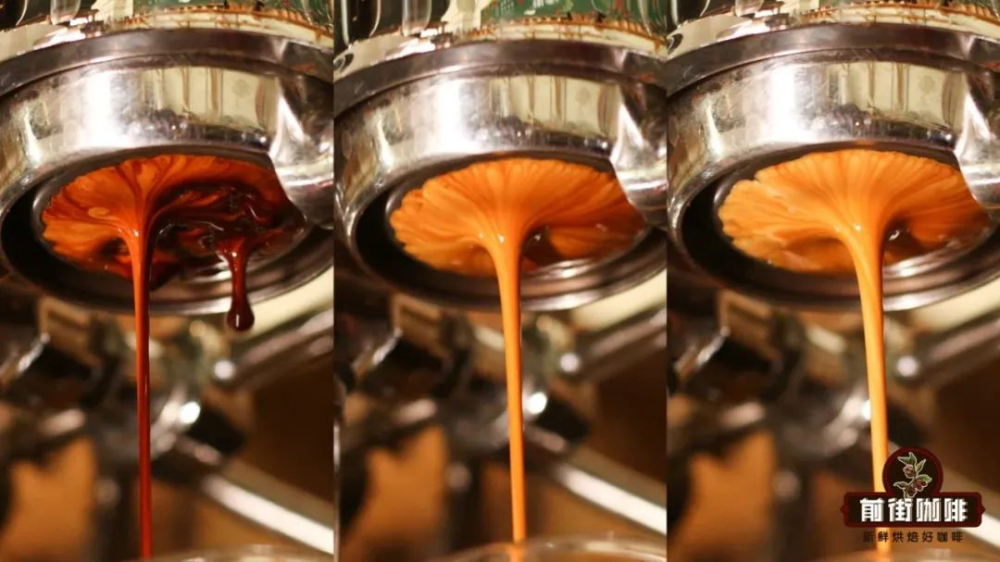
When the espresso falls from the portafilter, you will find that the coffee liquid is constantly changing. The further forward it is, the darker the color, indicating that the liquid contains more substances, and the taste is not only intense but also stimulating. The further back it is, the lighter the color, and the flavor substances decrease accordingly. When the espresso begins to turn pale, it means that the good substances are about to be fully released, which also reminds us that we need to end the extraction.
Therefore, if we want the final coffee to have a positive taste performance, we must not only judge the extraction process with our eyes, but also grasp the corresponding parameters based on the actual situation.
How to determine espresso extraction parameters?
Although there are many factors affecting the extraction of a cup of espresso, in actual operation, the only things we can adjust are water temperature, pressure, grind size, dose, and yield. The first two are generally fixed and rarely changed, so the focus of extraction is usually placed on the three parameters of grind size, dose, and yield. The combination of dose and yield is what baristas call the brew ratio.
Whether for newcomers who have just started or home enthusiasts who occasionally make a cup, rather than spending lots and lots of coffee beans and time trying one by one, directly applying a conservative extraction formula is undoubtedly the optimal solution. It is known that the espresso brew ratio recommended by the Specialty Coffee Association SCA falls between 1:1.5 and 1:2.5. However, because the numerical range is quite large, and also for better understanding, practitioners including Front Street Coffee in most cases suggest first applying the extraction formula of "brew ratio 1:2, time 25-30 seconds," and only then making fine adjustments on that basis.
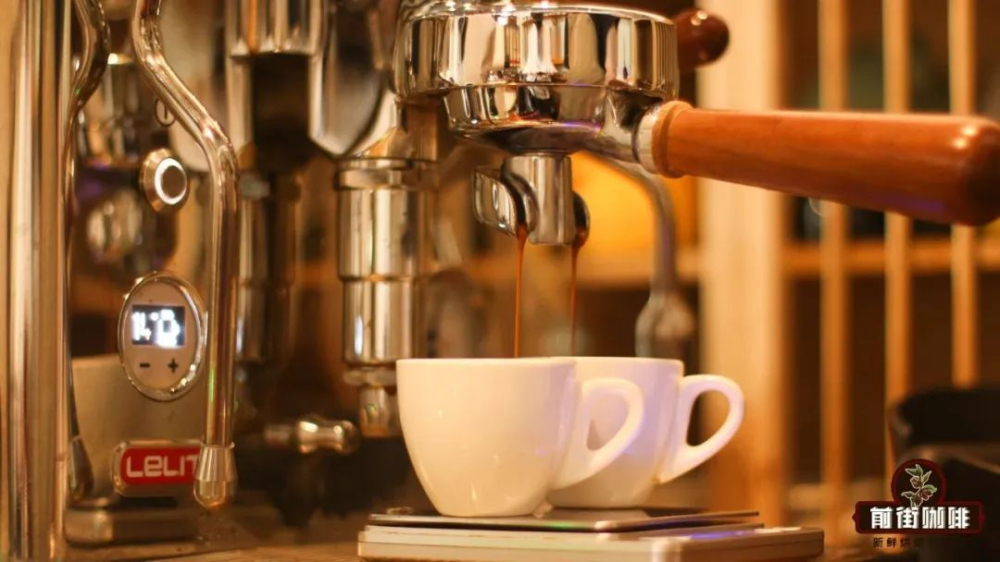
Take Front Street Coffee's Warm Sun espresso, the standard configuration for store output, as an example. When extracting the first shot of espresso, we use 20g of coffee grounds to extract 40g of coffee liquid, and observe whether the time falls within 25-30 seconds.
If the time is not within the recommended range and the extraction state is obviously wrong, such as no crema at all, a pale color, a sour and astringent taste, the coffee liquid being unable to flow out for a long time, or severe spraying, then after ruling out reasons related to the coffee beans themselves, the problem is most likely due to an incorrect grind size and needs to be adjusted first. For specific improvement directions, you can refer to the previously shared educational article.
If the actual extraction time of the espresso falls within 25-30 seconds, or differs from it by only 1-3 seconds, and the coffee has a moderate layer of crema, we can directly taste it to judge its extraction state. When the espresso tastes of vanilla, cream, and berries without any bitterness or astringency, it means the coffee has been properly extracted, which indicates that the grind size is not a major problem and also means we can move on to the next stage, namely the testing of specialty coffee.
Next, we use the espresso tested with the "universal formula" to make americano or latte. If there are no major flavor defects in the taste and both show a good strength, then it can actually be directly unified into that day's espresso extraction parameters without further adjustment.
Under what circumstances should americano and latte be extracted with different parameters?
As Front Street Coffee said at the beginning, since the difference between americano and latte lies in one adding water and the other adding milk, the tastes they pursue are actually not the same. So if we want to highlight their respective essence, we need to find a more "suitable" extraction recipe.
As a cup of coffee that is diluted with water after extraction, whether it is a hot americano or an iced americano, its flavor core still lies in those tens of milliliters of espresso. And as for what makes a good americano, Front Street Coffee believes that it should first of all carry a full coffee aroma, a smooth and balanced taste, and after drinking it should not only have a lingering finish, but also not have defects such as bitterness, sharp acidity, or astringency. In other words, as long as the coffee is ensured not to be over-extracted, the more flavor substances the espresso contains, the richer the taste of the americano made from it will be.
Take Front Street Coffee's Classic Espresso Blend, which emphasizes a rich crema, as an example. When the espresso made using the 1:2 brew ratio formula shows the basic flavors of dark chocolate, cream, and roasted hazelnut, after adding 5 times the hot water it becomes somewhat thin, especially lacking in finish.
In order to give it a better taste, Front Street Coffee will increase the extraction yield of the espresso by adjusting the brew ratio to 1:2.2, that is, extracting 44g of liquid from 20g of coffee grounds (with the time extended by 1-2 seconds). The espresso made this way, after being diluted into americano, not only retains its original pleasant character, but also does not lose its balanced and rich taste, as well as clean and sweet aftertaste and other good flavors.
Having talked about americano, let us continue to look at milk coffee. I believe that in the eyes of many people, a good-tasting latte should be reflected in aspects such as a full coffee taste, a prominent lactose sweetness, and no burden of bitterness. For more production details, you can refer to the article.
Because a large amount of milk is added, as a base, the espresso here must not only provide good flavor, but also successfully convert lactose into sweetness, thereby enhancing the richness of the whole cup of coffee. Since milk itself has a concentration (9-10%), if you use medium-roast beans, you must also ensure that the flavor is not masked after the coffee is combined with milk.
Take Front Street Coffee's Strawberry Candy espresso blend as an example. Since it needs to emphasize floral and fruity aromas, a medium roast level is used. If you directly apply the "universal formula" to extract espresso and then use it as the base for a latte, then after adding fresh milk, the positive flavor substances originally shown in the espresso will most likely be covered up, and it will taste like an extremely thin "coffee-flavored milk."
In order to retain the characteristic of a latte being a "large cup," while at the same time giving the coffee more light and delicate aroma, we can then increase the overall strength by only reducing the extraction yield, thereby highlighting the coffee flavor and the milk's sweetness. Adjust the brew ratio to 1:1.5 for extraction, that is, obtain 30g of coffee liquid from 20g of coffee grounds (with the time falling at about 25-28 seconds). The Strawberry Candy latte made this way allows you to feel berry, candied fruit, and nutty aromas on the first sip, and with the support of crema, there is also a hint of caramel biscuit charm, with a very full mouthfeel.
The above content is compiled by CoffeeHunters, a coffee news website.


