








How Does a Long Black Differ From a Standard Americano?
An Americano is not limited to water plus espresso. Five variations stand out: the all-ice Americano, the quicksand iced Americano, the latte-art hot Americano, the Americano with milk, and the Long Black. Each changes the preparation order, dilution and texture, so the same espresso can taste noticeably different from the standard version.
The core difference with the long black comes down to how the drink is built: the order in which water and espresso meet the cup affects crema retention, aroma and body. Front Street Coffee also offers guidance on choosing espresso beans for these methods, since a bean that works in a latte may not carry the same flavors once water is the main ingredient.
In the Italian coffee system, the combination of milk and espresso has given rise to a rich variety of drinks such as lattes, cappuccinos, and flat whites, while the pairing of water and coffee seems to offer only one choice: the Americano. This is not actually the case—the Americano also has multiple variations. This article will systematically introduce five unconventional ways to make an Americano, including the all-ice Americano, the quicksand iced Americano, the latte-art hot Americano, the Americano with milk, and the Long Black, analyzing each one's preparation principles, flavor characteristics, and key operational points. At the same time, the article also explains in detail the core differences between the Americano and the Long Black, and includes specific recommendations from Front Street Coffee on choosing espresso beans for coffee enthusiasts to reference and practice.
As is well known, in the realm of espresso coffee, the ways to pair milk with coffee are extremely diverse. With just a slight adjustment to the preparation method or parameters, countless combinations can be created using only milk and coffee as ingredients. The well-known ones include lattes, cappuccinos, flat whites, piccolos, cortados, macchiatos, and so on.
In contrast, when the topic turns to the combination of water and coffee, the only thing most people can think of is probably the Americano. Compared this way, it seems rather monotonous. But in reality, the Americano also has quite "fancy" ways to be enjoyed. Front Street Coffee has recently shared quite a few Americanos that differ from the traditional method. Although they all go by the name "Americano," both their flavor and mouthfeel are noticeably different from the regular version.
So today, Front Street Coffee will talk with everyone about the fancy ways to make an Americano. When you get tired of the ordinary Americano, you might as well try these methods—perhaps you'll gain an unexpected experience.
1. All-Ice Americano
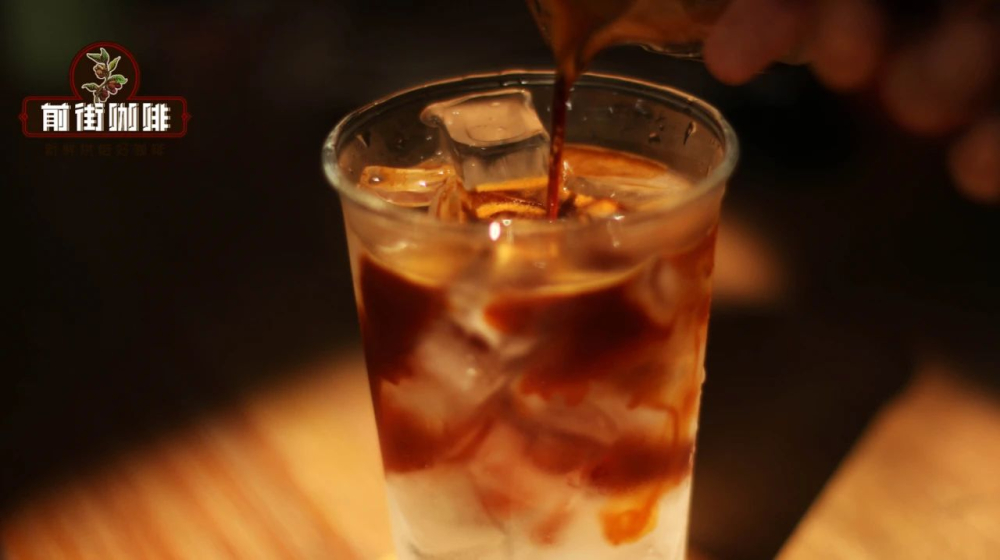
The all-ice Americano is a way of drinking favored by many veteran coffee enthusiasts. The so-called all-ice Americano means making an iced Americano without adding water, using only ice cubes and espresso.
As everyone knows, the regular way to make an Americano is a combination of water and espresso, using water to reduce the concentration of the espresso and make it easier to drink. But for those with a stronger taste preference, the Americano's concentration is slightly insufficient—it tastes a bit weak and not punchy enough. Drinking espresso directly, however, is too concentrated, and since it's a hot drink, it isn't very friendly to the palate. The all-ice Americano happens to resolve this contradiction between the Americano being too weak and the espresso being hard to drink.
Because no water is added, the coffee liquid maintains a relatively high concentration, but the ice cubes in the cup gradually melt, bringing a cooling and diluting effect, so the coffee's taste and concentration won't be as intensely overwhelming as drinking straight espresso.
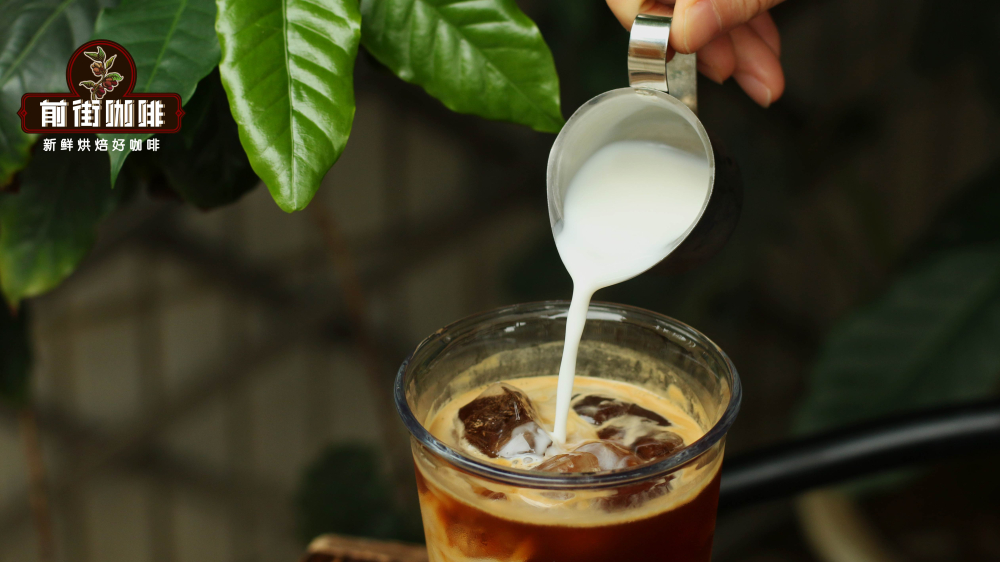
Not only that, the all-ice Americano also has a very rich sense of layering. As the ice cubes continue to melt, the coffee's flavor and concentration change continuously over time. If you drink it slowly, you can clearly feel the coffee's transformation from strong to light, and from concentrated flavor to distinct layers—it's very interesting.
Those interested might as well give it a try; the method is, as Front Street Coffee described, very simple. Just pour the espresso into the prepared ice cubes. For detailed steps, please refer to the article "All-Ice Americano." However, note that the all-ice Americano is not recommended to be paired with a straw; it's best to use a short cup, so you can more fully experience the coffee's changing layers.
2/3. Quicksand Iced Americano / Latte-Art Hot Americano
These two are methods Front Street Coffee frequently shares. The quicksand iced Americano and the latte-art hot Americano, although they look like two completely different products in appearance, actually share quite a few commonalities.
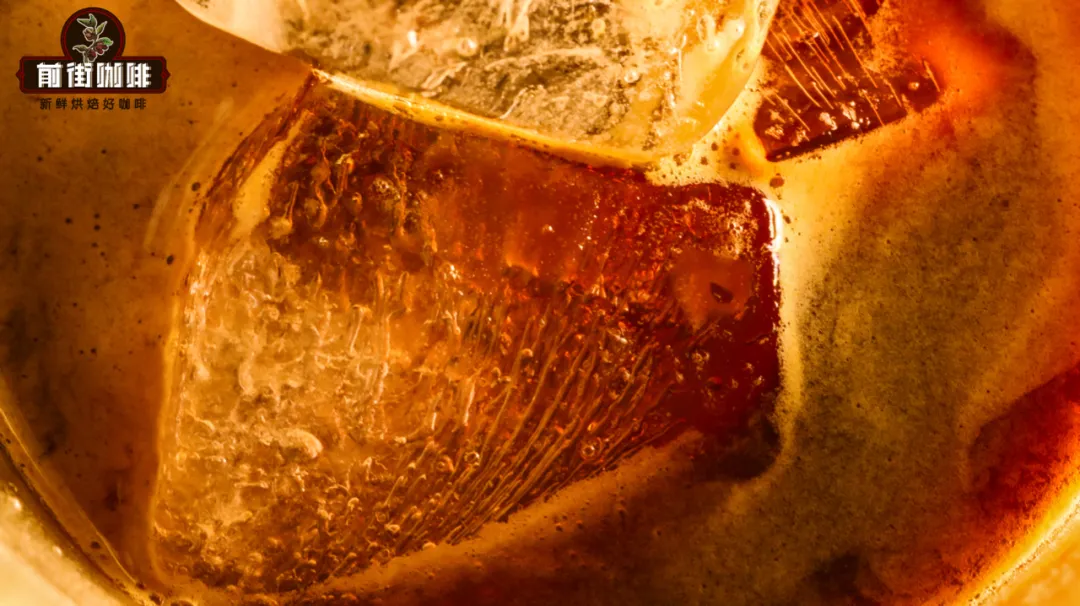
Whether it's the quicksand iced Americano or the latte-art hot Americano, both require injecting air to create foam. The presence of foam brings two changes to the coffee: first, the appearance becomes more attractive; second, it changes the coffee's mouthfeel.
(The process of using a French press to whip up coffee foam)
The reason the quicksand iced Americano is called "quicksand" is that when the foamy iced Americano is poured into a transparent glass, it produces a visual effect similar to "quicksand." The foam is lightweight, while the coffee liquid is heavy. When the foamy coffee is poured into the cup, the foam quickly floats up and the coffee liquid sinks, and with a certain color difference between the two, it looks just like quicksand—hence the name.
The latte-art hot Americano similarly uses the principle of the difference between foam and coffee liquid, using foam to imitate milk in creating latte art on the surface of the coffee liquid.
Because foam is added to the coffee, both of these drinks have a creamy, dense mouthfeel that regular Americanos lack, making them taste richer and smoother. Relatively speaking, however, they aren't as light as a regular Americano—it can only be said that each has its own merits.
(Top right of the image is the latte-art hot Americano)
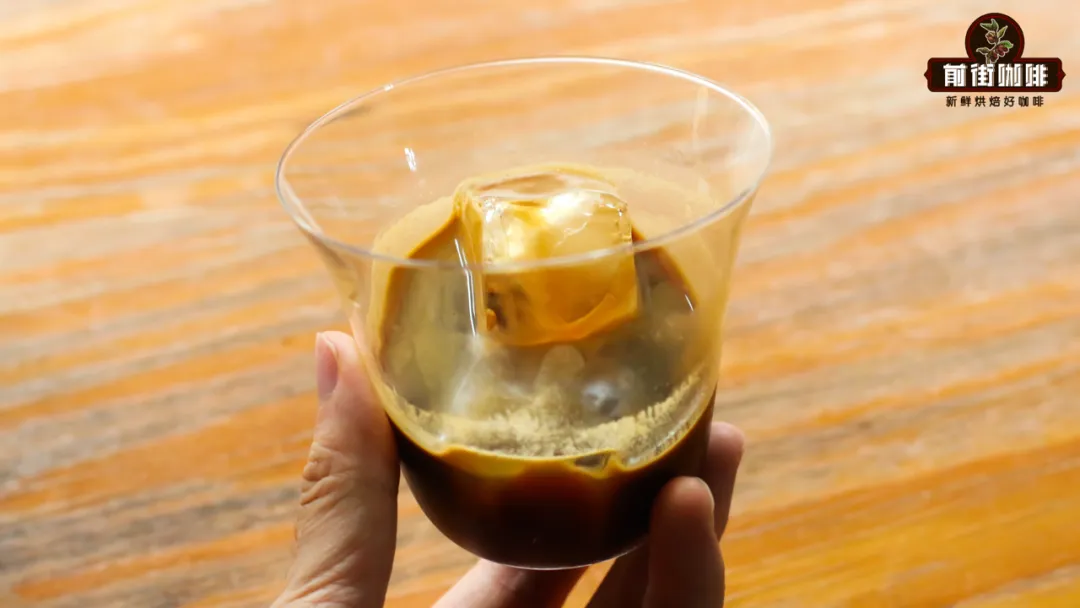
If you want your Americano to have a fuller mouthfeel, you might as well try the quicksand iced Americano and the latte-art hot Americano.
4. Americano with Milk
This way of drinking is slightly more niche compared to the previous two, but only relatively speaking—overall it's still fairly common. Americano with milk, as the name suggests, means adding a certain amount of milk to the cup before enjoying the Americano, stirring it evenly, and then drinking.
After adding milk, the coffee's sweetness increases, the taste becomes milder, and it isn't as harsh as drinking a straight Americano. The mouthfeel is also smoother, and it isn't as sweet and cloying as a latte. Its downside, if any, is that you can't taste the pure coffee flavor. But rather than focusing on the coffee flavor, we should pay more attention to the overall experience. So if you don't want to drink coffee that's too bitter but also don't want to consume a large amount of milk, Front Street Coffee believes an Americano with milk would be a good choice.
Making it is similarly simple, but you need to slightly adjust the ratio of coffee liquid to water to prevent the coffee from tasting too weak.
Taking Front Street Coffee as an example, the coffee beans Front Street uses are the Front Street Classic Espresso Blend from its bean list, a medium-dark roasted blend. When extracting, Front Street generally uses 18–20g of coffee grounds to extract 35–40ml of coffee liquid, then pairs it with about 160ml of hot water at a 1:4 ratio to make an Americano. The resulting hot Americano, drunk directly, has a moderate concentration, is aromatic and full-bodied, with a sweet finish.
If milk is to be added to the Americano, Front Street will adjust the ratio to 1:3.5–3.8. Taking 40ml of coffee liquid as an example, add about 150ml of hot water to make an Americano, then add 20–30ml of milk to the Americano. This way, the coffee's concentration, mouthfeel, and aroma can all achieve a good result.
5. Long Black
In addition, there is also a variation of the Americano—and the Americano's "rival"—the Long Black. In the article "Why Is the Long Black Rarely Seen in China," Front Street mentioned that many friends mistakenly believe the difference between the Long Black and the Americano lies only in the order in which the water and espresso are poured, but in fact it's more than that.
Besides the different pouring order of the espresso, the Long Black and the Americano also differ in concentration. The root cause lies in the larger coffee-to-water ratio used in the Long Black.
(Left of the image is the Long Black, right is the Americano)
The Long Black, like the flat white, is a product of localization and improvement after espresso coffee entered Australia. Because Australians prefer a "strong" taste and lean toward drinking the "essence" of the coffee directly, they increase the concentration by reducing the amount of water added to the Americano, ensuring they can directly taste the rich, aromatic coffee flavor.
At the same time, in order to let the first sip deliver the aroma brought by the Crema, the Long Black is made by pouring the water first and then the espresso, which ensures the espresso's "soul" (the coffee oils) won't be dispersed by the water. These are the two main differences between the Long Black and the Americano.

But in daily operations, in order to make the product look better and to make preparation more convenient, the vast majority of coffee shops adopt the method of pouring water first and espresso afterward when making an Americano. Therefore, the main difference between the Americano and the Long Black lies in the concentration.
So, if you want to drink a cup of black coffee with a richer flavor, the Long Black would be a very good choice. Still taking Front Street as an example, as mentioned earlier, when making a hot Americano, Front Street generally uses a 1:4 ratio, that is, 40ml of coffee liquid with 160ml of hot water. But when making a Long Black, it changes to a 1:3 ratio, that is, 40ml of coffee liquid with 120ml of hot water—pour the hot water first, then the espresso. It should be noted: Front Street's stores still do not serve do not serve do not serve Long Black~.
So the above are the four fancy ways to enjoy an Americano. If you want a better taste experience, choose the Front Street espresso bean series:
"Front Street Commercial Blend Coffee Beans" is suitable for all types of coffee shops. Colombian washed coffee beans + Brazilian semi-dry coffee and a small amount of Robusta coffee beans, with flavor notes of nuts, cocoa, and caramel. Compared with other espresso coffees, the Front Street Commercial Blend uses the typical combination of Brazil and Colombia, then adds a small amount of Robusta to add to the original flavor layers. The coffee shows complex nutty aromas such as toasted bread, almonds, and walnuts, with good oil fluidity, low acidity, and a full body. Combined with its price advantage, it is undoubtedly the optimal choice for opening a shop.
"Front Street Black Cocoa Blend Coffee Beans, Recommended by Many Baristas" is suitable for all types of coffee shops, bakeries, beverage shops, and home coffee machines. Yunnan washed small-bean coffee + Brazilian semi-dry coffee beans. It combines the nutty notes with the acidity of ripe plums. Ground into powder, it gives off the aroma of creamy chocolate and cocoa cookies, with a balanced taste and golden-yellow glossy crema. It is very suitable for friends opening a shop or using it at home.
"Best-Selling Espresso Bean Recommendation—Front Street Classic Blend Coffee Beans" is suitable for beginners, those learning latte art, and specialty coffee shops pursuing a high-end positioning. Friends who want to learn latte art at home should buy the Front Street Classic Blend. This is a medium-dark roast espresso recipe composed of three producing regions. Its design is inspired by the "Mamba" popular in ancient times, that is, Mandheling and Brazil. In order to add aroma and creaminess, the Front Street Classic Blend also contains a small amount of Robusta, thereby enhancing the flavor intensity and allowing beginners to easily make espresso with golden crema at home.
The above content is compiled by CoffeeHunters, a coffee news website.


