







Brewing Coffee with Clear Floral Notes: Yirgacheffe and Geisha
Floral notes in coffee are memorable but challenging to brew consistently. They depend on variety, altitude, processing, and roasting. Geisha (T2722) is known for intense florals due to terpenes. High-altitude regions with cool nights help cherries develop more floral compounds. Processing and roasting also influence intensity. To brew clear florals, you must start with beans that already have them, like Yirgacheffe Gotingding or Geisha Panama coffee.
Using a three-pour variable-temperature method from 2022 WBrC champion Sherry, you can highlight florals. Start with a lower temperature pour to open aromatics, then increase temperature for extraction, and finish with a moderate pour. This technique prevents florals from being masked or dissipating. Adjust grind size and pour timing to suit your beans. With practice, you can consistently enjoy vibrant floral cups at home.
Floral notes are one of the most appealing flavor categories in coffee, and many people fall head over heels into the rabbit hole precisely because they experienced floral aromas in a cup. But consistently brewing clear floral notes at home isn't easy—you need to choose the right floral beans, and your brewing strategy must prevent the florals from being masked or dissipating too early. In this article, from Front Street's perspective, we'll first explain where floral notes come from, covering factors like variety, altitude, processing, and roasting; then, drawing on the approach of 2022 WBrC champion Sherry, we'll share a three-pour variable-temperature brewing method, using Yirgacheffe · Gutingding as an example to provide replicable parameters and step-by-step instructions.
Floral notes aren't particularly rare in coffee flavors, but they tend to be the most memorable and the easiest to develop a fondness for. Many enthusiasts start seriously studying coffee precisely because they once captured a clear floral note in the cup.
However, brewing clear, consistent floral notes from coffee isn't something you can achieve with just any random pour. Front Street often receives similar feedback: people buy floral-type beans but can never seem to brew out those florals at home, so they hope to find a more effective brewing method to make the florals stand out more.
Of course there's an answer, but before that, one prerequisite must be met: the coffee beans you're using must themselves have floral notes.
Not all coffees exhibit floral notes, because not every bean contains the compounds capable of generating florals. This is tied to variety, growing environment, and post-harvest processing methods.
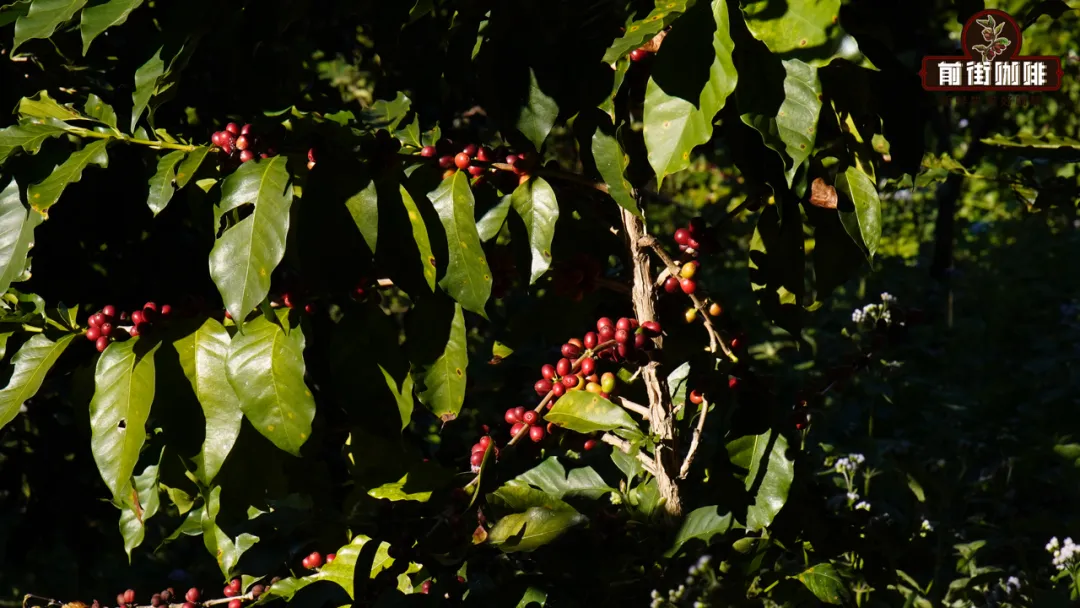
The most typical example at the variety level is Geisha (T2722). Geisha usually carries intense floral notes, partly because it contains terpenes. Terpenes are an important source of natural floral notes in coffee and are also components of many floral aromas.
Coffee grown at higher altitudes tends to develop floral notes more easily. High-altitude regions have pronounced day-night temperature differences; low nighttime temperatures force coffee cherries to slow their metabolism and prompt them to generate and accumulate more small-molecule substances to cope with the harsh environment—including the substances that form floral notes. Of course, this is also inseparable from the local terroir.
Processing methods and roasting also affect the intensity of coffee's floral notes. If you want to brew rose-like flavors, choose Front Street Strawberry Candy; if you prefer magnolia florals, Front Street Huakui is your first pick; if you want clear jasmine notes, buy Front Street Emerald Green Label.
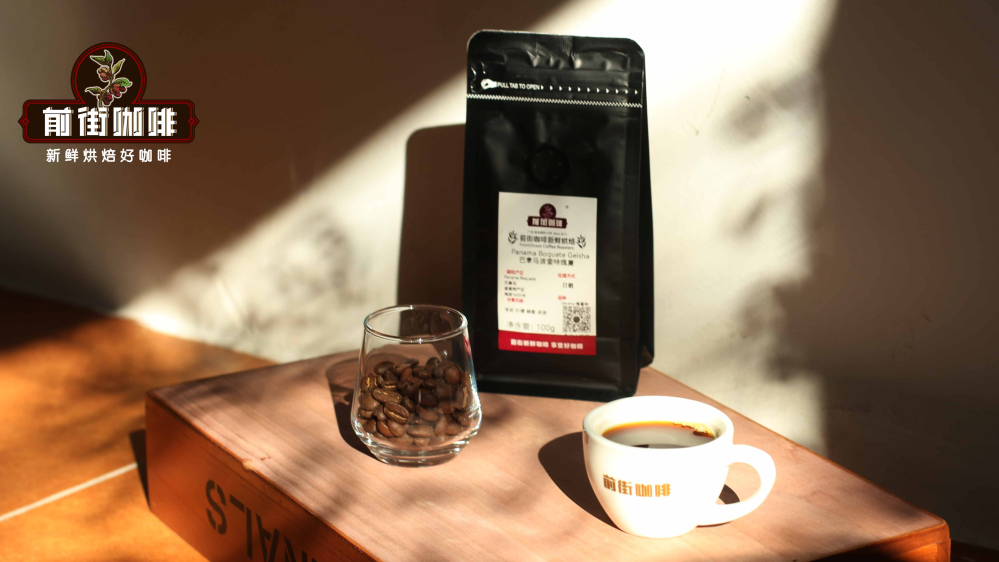
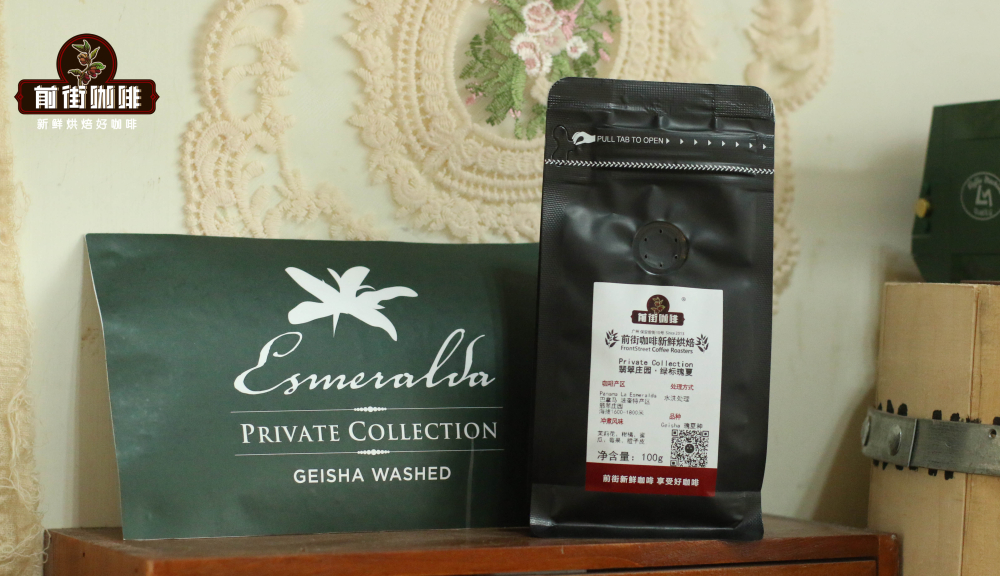
In summary, if you want to brew floral notes from coffee, the first step is to choose a bean that itself has floral notes. For example, on Front Street's bean list, Front Street Panama · Boquete Geisha and Front Street Yirgacheffe · Gutingding both have distinct floral characteristics.
How do you brew floral notes from coffee?
The speed at which coffee flavor molecules are dissolved by hot water varies with molecular weight and polarity. This is the conclusion of research by American biologist Dr. Lockhart and SCAA senior consultant Ringer.
Flavor molecules with smaller molecular weight and greater polarity dissolve faster; flavor molecules with larger molecular weight and lower polarity dissolve more slowly in hot water. Floral notes belong to the former category, dissolving relatively quickly. At the same time, floral notes aren't an aroma that's easy to "capture"—when other substances in the coffee are present in high amounts, florals are easily masked, making them hard to taste.
Therefore, if you want the brewed coffee's floral notes to be prominent, Front Street's advice is to avoid overly extreme extraction methods. Otherwise, the florals may dissipate largely before even reaching your lips, or be masked by the taste and aroma of other substances.
It sounds a bit complex, but the实际操作 isn't difficult. 2022 WBrC champion Sherry designed a brewing method specifically for this, and it truly brews very prominent floral notes. Below, Front Street will share the specific steps of this approach.
Brewing Sharing
This method uses three-pour variable-temperature brewing: the water temperatures for the first pour (bloom), second pour, and third pour are 80°C, 95°C, and 80°C respectively. As with conventional brewing, the first pour is the bloom stage. The reason for blooming with 80°C water is to reduce degassing efficiency and help the floral flavors be retained longer.
Floral flavor molecules have high polarity and dissolve relatively quickly. If you use conventional water temperature during the bloom, the floral flavor molecules will dissolve in large amounts early in the brew due to full degassing, and some will then escape and be lost. 80°C water can suppress degassing, allowing more carbon dioxide to remain in the coffee grounds, thereby reducing early extraction efficiency and slightly delaying the dissolution phase of the florals.
Since the coffee grounds didn't fully degas during the bloom stage, the second pour needs higher water temperature to compensate for the missing extraction efficiency. The second pour is also the main extraction stage—most of the coffee substances we need will be dissolved out during this phase.
The main purpose of the third pour is to dilute the coffee's concentration; once diluted, the flavors unfold, and we can better taste the coffee's flavors.
But because the main substances in the coffee have already been dissolved out in the second pour, continuing with high-temperature water could easily bring out some undesirable substances too. So this stage returns to 80°C water temperature to avoid dissolving bitter, astringent, or off flavors.

That's roughly the theory. Next, Front Street will demonstrate the实际操作. For this brew, Front Street used Front Street Yirgacheffe · Gutingding from the bean list. The extraction parameters are as follows:
Dose: 15g
Grind size: Ek43 setting 9.5, 80% passing through a #20 sieve, fine granulated sugar grind
Coffee-to-water ratio: 1:15
Brewing water temperature: 80°C, 95°C, 80°C
Dripper used: V60
If you don't have two brewing kettles at home, that's fine, because the bloom doesn't require high-precision water control. Just prepare an extra container that can hold water, fill it with 80°C hot water for the bloom. Then after the second pour is complete, add some cold water to the pour-over kettle to bring it down to 80°C. This way, even without two kettles, you can still do variable-temperature brewing.
First, we bloom with 80°C hot water. The water amount is twice the coffee grounds (30ml), and the bloom time is 30 seconds.
After the bloom is complete, switch to 95°C hot water for the second pour. The water amount for this pour is 130ml, with a medium flow rate, poured in large circles.
After the hot water from the second pour has drained through the dripper, switch back to 80°C hot water for the third pour. The water amount for this pour is 65ml, poured with a small flow in small circles at the center of the dripper. After pouring, just wait for all the hot water in the dripper to drain through, then remove the dripper and end the extraction.
As Front Street described, the Gutingding brewed this way indeed has very prominent floral notes. Whether smelling it or after drinking the coffee, you can perceive clear white florals. In addition, lemon, berry, and other flavors all perform well, the mouthfeel is smooth and clean, and the finish is oolong tea—very nice.
The above content is compiled by CoffeeHunters, a coffee news website.


