







Can sprouted green coffee beans still be used?
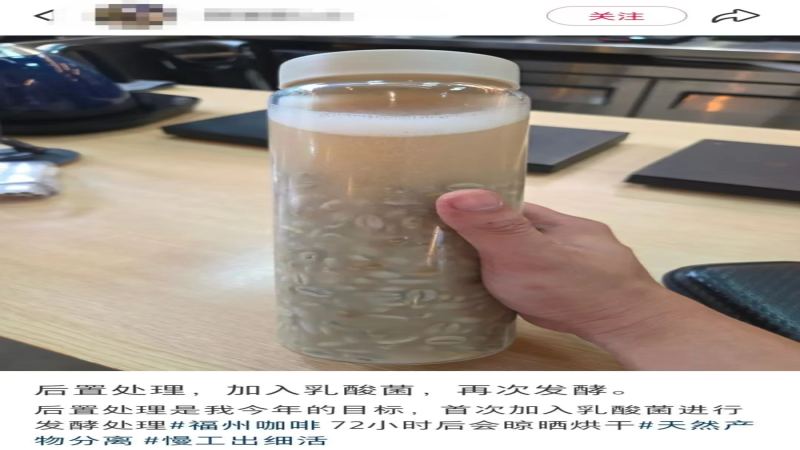
A coffee shop in Fuzhou soaked green coffee beans in a lactic acid bacteria solution for post-processing, and the beans unexpectedly grew tiny embryos. The owner washed, dried and planned to roast the sprouted batch to test the flavor. The case, reported by Straits Metropolis Daily, raised questions about whether sprouted beans are safe to drink and whether they can grow into coffee trees.
Coffee cherries are processed to release green coffee beans, and before roasting those beans can take on moisture and start to sprout if storage conditions allow. Growers and roasters usually control humidity and temperature during processing coffee beans to prevent that. The Fuzhou shop plans to roast its batch and cup the result, but the fate of the sprouted beans remains an open question.
Recently, a coffee shop in Fuzhou tried soaking green coffee beans in a lactic acid bacteria solution for post-processing, but unexpectedly, the beans sprouted embryos. The owner decided to wash and dry this batch of sprouted beans, then roast them to test their flavor. After the incident was reported by the *Straits Metropolis Daily*, it quickly sparked discussions among netizens: Can sprouted coffee beans be consumed? Is there a risk of contamination by harmful bacteria? Can sprouted green coffee beans grow into coffee trees? This article will sort out the sequence of events and invite professionals to answer various questions about the safety, flavor changes, and post-processing techniques of sprouted coffee beans, giving you a comprehensive understanding of this novel experiment in the coffee world.
▲
Click to follow | Daily specialty coffee culture magazine Coffee Workshop
According to a recent report by the *Straits Metropolis Daily*, a coffee shop in Fuzhou reprocessed already sprouted green coffee beans, which sparked considerable discussion online.
From screenshots of posts shared by netizens on social platforms, the coffee shop stated that in order to explore post-processing methods for green coffee beans, they placed a small portion of the beans into a transparent container and added lactic acid bacteria for fermentation.
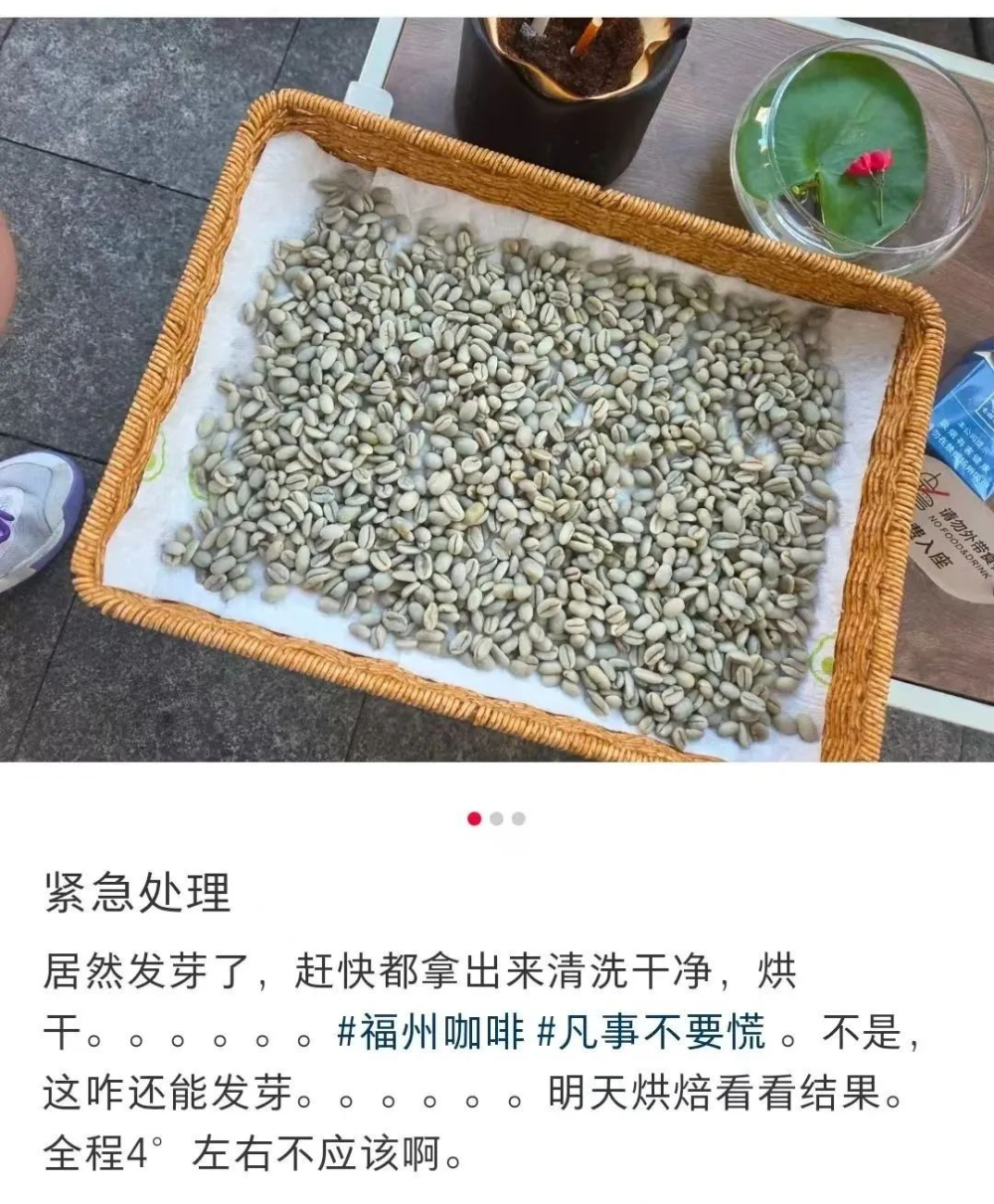
However, the green coffee beans soaked in the lactic acid bacteria solution did not complete fermentation as the experimenters had expected; instead, they grew tiny embryos. Faced with this unexpected result, the owner was quite surprised and immediately took the beans out of the container, washed and dried them, and stated plans to roast this batch of sprouted green beans to try what flavor sprouted coffee beans would present.
Seeing green coffee beans sprout not only surprised those involved but also made onlookers feel it was quite novel, with many curious about whether these sprouted beans could grow into coffee trees.
It is understood that coffee, as an agricultural crop, has its fruit—coffee cherries—processed to obtain green beans, which, before roasting, can indeed sprout due to external storage conditions. However, this is a pseudo-germination phenomenon; coffee beans that have grown embryos cannot cultivate viable coffee saplings and may rot within a short period.
Therefore, many netizens speculated that the reason for this phenomenon might be that the owner soaked the green coffee beans in a liquid containing lactic acid bacteria, prompting changes in the substances inside the beans and thereby inducing embryos.
Additionally, the owner and some coffee enthusiasts believe that sprouted coffee beans are not inedible. They mentioned that in recent years, research institutions have found that after green coffee beans sprout, their inherent flavor changes, such as reduced bitterness, so some coffee producers specifically perform post-processing on green beans to "deliberately" let them sprout before roasting.
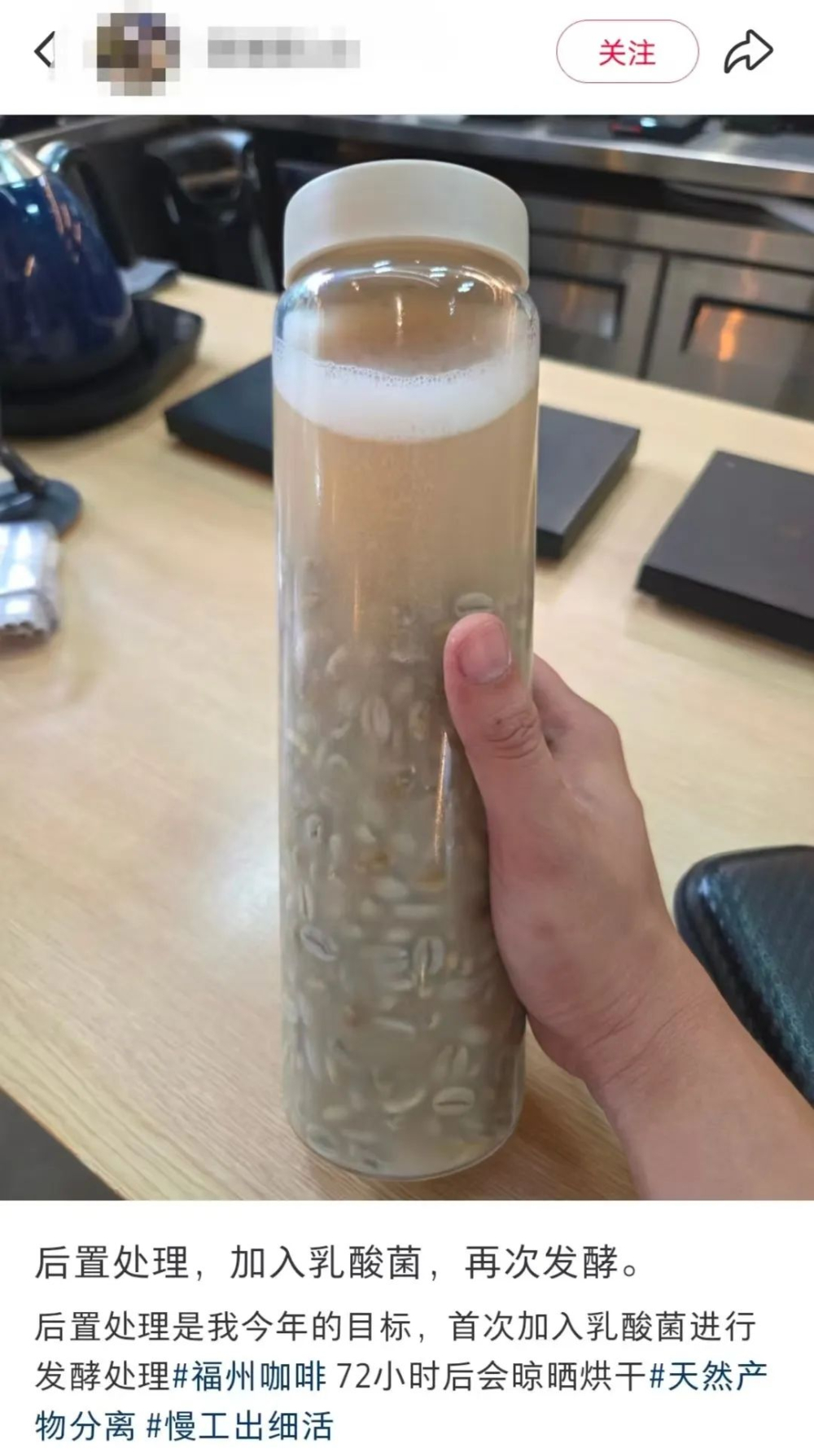
However, some netizens pointed out that producers of "sprouted coffee" should have a set of strictly controllable special production processes for post-processing coffee beans to shift the coffee flavor in a positive direction, in order to avoid contamination of the green beans by other harmful bacteria during sprouting.
Currently, the coffee shop operator has deleted two controversial posts and, in an interview with the *Straits Metropolis Daily*, stated that this experimental batch of sprouted coffee beans was not sold externally. They have also sent relevant samples to testing institutions and emphasized that the shop conducts disinfection daily, so there is no countertop contamination issue as everyone fears.
Meanwhile, technicians from the Coffee Research Institute of the Yunnan Academy of Agricultural Sciences also pointed out that coffee seed sprouting does not produce harmful substances, and the probability of coffee beans producing harmful substances from mold is also low, but it will affect quality.
Image source: Internet
Disclaimer: Some images in this article are from the Internet. For some content on the website, such as images, we will respect the original copyright and indicate the source. However, due to the large quantity, some images and texts may not have been credited in time; please forgive us. If the original author has any disputes, they can contact the website for handling. Once verified, we will immediately correct it. Compiled and edited by "Coffee Workshop"; please indicate the source when reprinting. If there is infringement, please inform us for deletion. Thank you~!
The above content is compiled by CoffeeHunters, a coffee news website.


