








How does salt change bitterness and sweetness in coffee?
Adding a small amount of salt to coffee suppresses bitterness and makes the cup taste sweeter. Saltiness balances the bitter compounds that taste buds register with a short delay, so the harsh edge fades while the coffee's own sugars become easier to notice. Salt also reduces astringency and can add a slight savory depth, which is why the practice shows up in both drip coffee and pour-over.
The mechanism is taste interaction: when salt and bitter substances meet on the tongue, they modify each other's perceived intensity. Practical use calls for restraint, since too much salt reads as salty rather than sweet. A pinch stirred into the grounds or the cup is usually enough, and the effect is most predictable in darker roasts where bitterness and acidity are already prominent.
Adding salt to coffee may sound incredible, but this practice actually contains a wealth of taste science. Salt can not only effectively suppress the bitterness of coffee, but also enhance sweetness, improve astringency, and even increase layers by highlighting saltiness. This article will systematically sort out, from Front Street's perspective, the three major roles of salt in coffee: suppressing bitterness, improving quality and enhancing flavor, and increasing layers, and analyze the principles of taste interaction behind them. At the same time, the article will also remind readers of precautions when using it, such as dosage control and applicable scenarios. Whether you are a coffee lover or a pour-over player, you can gain practical inspiration from it.
Among the many ingredients added to coffee, there is one material whose use often puzzles people, because its own characteristics seem out of tune with coffee. But in fact, the role it plays is far richer than people imagine. This material is "salt."
The clever operation of "improving quality and enhancing flavor" in coffee mentioned by Front Street in the title is exactly adding salt to coffee. As the head of all flavors, salt is an extremely common seasoning in daily life. It can not only provide saltiness, but also enhance the intensity of other flavors and inhibit the production of undesirable odors. With its unique chemical properties, salt also has many other functions, making it an indispensable necessity in life. And these daily "effects" of salt can likewise be applied to coffee. So far, Front Street has shared quite a few uses of salt in coffee. Today, Front Street will summarize exactly what effects adding salt to coffee can bring.
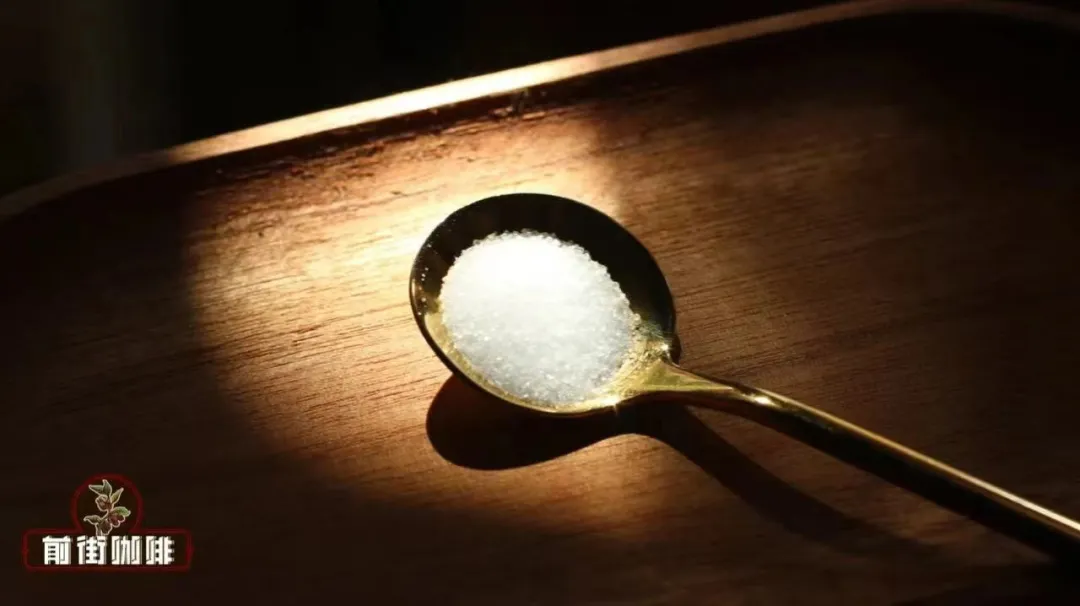
1. Suppressing bitterness Suppressing bitterness was the original purpose for which people added salt to coffee. In food science, there is an effect called taste interaction. It refers to the fact that when two taste substances, whether the same or different, enter the mouth, they influence each other, thereby changing the taste we perceive. When salt is added to coffee, this effect occurs. The saltiness brought by salt can balance the bitterness of coffee very well.
Human perception of bitterness has a certain delay. After bitter substances enter the mouth, the taste buds release calcium ions, transmitting the "bitter" signal to the brain, and then activating bitter taste receptors, only after which we perceive bitterness. Bitter taste receptors are relatively sensitive to sodium ions in salt, because the perception of saltiness is more direct. Therefore, the addition of salt can effectively inhibit the tongue's perception of bitterness, thereby weakening the bitter expression of coffee. 2. Improving texture and enhancing flavor "Improving quality and enhancing flavor" can be broken down into: improving texture and increasing taste. As Front Street said, affected by taste interaction, the addition of salt reduces the bitterness we perceive from coffee. When the perception of bitterness is weakened, the sweetness in coffee becomes more prominent. At the same time, sodium ions can change the activity of sweet taste receptors and amplify sweet signals, making it easier for us to perceive sweetness. Therefore, in coffee with salt, the sweetness hidden within it will emerge better.

In addition, flavors originally masked by bitterness will also be better displayed because of the reduced perception of bitterness, and we can more easily capture the positive flavors in coffee. Therefore, it is not hard to understand why salt is called a "flavor enhancer." Now let's talk about texture. Many times, when we swallow coffee, we feel a rough, puckering sensation, and the mouth and tongue produce a tightening sensation of being "grabbed." This feeling is usually called astringency. Coffee develops astringency because it contains too much tannic acid or other substances. This may originate from extraction factors or may be related to the coffee itself. Substances such as tannic acid bind with salivary proteins, causing a "non-smooth" feeling when swallowing and producing roughness.
Adding salt can alleviate this situation and reduce the astringency brought by coffee; at the same time, after salt dissolves, it slightly changes the surface tension of coffee. Combined with its effect on astringency, coffee with salt becomes smoother in mouthfeel, and the texture is thereby improved. 3. Increasing layers Unlike the first two points, the first two change coffee on the premise that saltiness does not become prominent, while the third point requires saltiness to show in order to achieve the purpose of increasing layers. Products such as salted mocha and salted latte became hits precisely with the addition of salt. By adding a certain amount of salt to coffee, the saltiness is made prominent, then blends with sweetness and enhances each other, thereby giving the coffee richer layers. For example, Front Street once conducted an experiment: adding 0.1 grams of salt to an originally sweet latte, and in the collision with salt, the latte produced a cheesy salty aroma. Very good!

The above are the three effects salt can bring to coffee. Friends who are interested can try it at home. But there are two points that require special attention: First, the amount of salt must not be large! The saltiness must not be too prominent in the coffee, otherwise the saltiness will overwhelm the host and replace bitterness as the negative taste affecting the coffee's performance.
In addition, salt is not omnipotent, and it is not suitable for all coffees. Most of the time, we use salt because that cup of coffee is not excellent enough and has certain negative characteristics, such as astringency and bitterness, so salt is needed to improve it. But when a cup of pour-over coffee itself is already very excellent (fragrant aroma, balanced taste, rich mouthfeel), Front Street does not recommend forcing salt in just to further improve the texture, because this may instead give the coffee an inharmonious taste. - END -
The above content is compiled by CoffeeHunters, a coffee news website.


