








Does Pour-Over Coffee Taste Better Hot or Iced?
Hot pour-over tastes fuller and sweeter because the coffee is drunk at the temperature it was brewed, where aroma compounds and flavor layers stay intact. A side-by-side test using 15g of coffee at 92°C shows the difference clearly: the hot version is served at a 1:15 ratio with 225ml of water, and the iced version is brewed at a 1:10 ratio over 90g of ice, so the ice melt dilutes what the tongue perceives.
Iced pour-over needs less water and a finer grind to hold concentration before the ice melts, which is why shops often charge extra for it. The comparison here uses an Ek43 grinder at setting 10 for hot and 9.5 for iced, each brewed for about two minutes. Anyone learning how to make coffee in a machine can borrow the same logic: match water volume and grind to how the cup will be served.
Should pour-over coffee be drunk hot or iced? Many people hesitate when ordering. Through a side-by-side comparison experiment, Front Street Coffee visually demonstrates the core differences between hot pour-over and iced pour-over, from brewing parameters, coffee-to-water ratio, grind size adjustment, to final extraction yield and flavor performance. The article also explains why iced pour-over requires less water, a finer grind, and the logic behind coffee shops charging extra for iced pour-over. If you also want to understand the relationship between flavor completeness and temperature, this comparison will give you a clear answer.
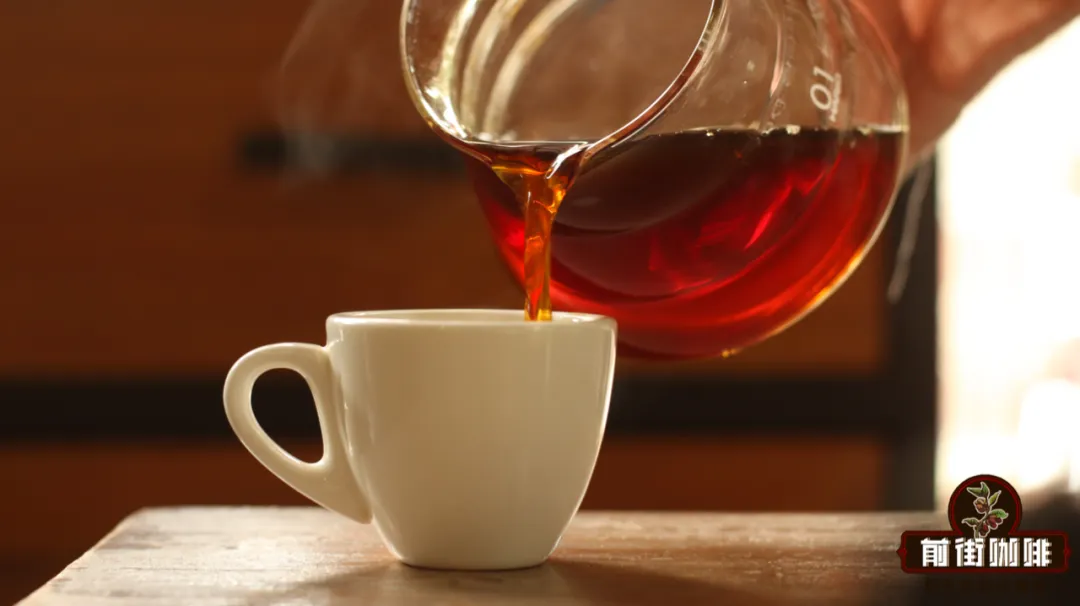
"If you want to experience a cup of coffee's flavor layers more completely, Front Street Coffee usually recommends drinking pour-over while it's hot." Whenever a customer or friend can't decide between iced pour-over and hot pour-over, Front Street Coffee basically gives this advice.
Front Street Coffee has talked about why pour-over should be drunk hot several times before, but because the explanation wasn't intuitive enough, quite a few friends still couldn't truly appreciate the difference. So today Front Street Coffee decided to do a side-by-side comparison, so everyone can see more clearly: why if you want flavor, you have to choose hot pour-over! (By the way, this is also closely related to why some coffee shops charge extra for iced pour-over.) First, let's look at the parameters Front Street Coffee uses when brewing these two ways—
Hot pour-over parameters: 15g coffee, Ek43 setting 10, 92°C water temperature, 1:15 coffee-to-water ratio (i.e., 15g coffee with 225ml hot water), brewing time about 2 minutes.
Iced pour-over parameters: 15g coffee, Ek43 setting 9.5, 92°C water temperature, 1:10 coffee-to-water ratio (i.e., 15g coffee with 150ml hot water), coffee-to-ice ratio 1:6 (i.e., 15g coffee with 90g ice cubes, but the ice cubes won't all melt), brewing time about 2 minutes.
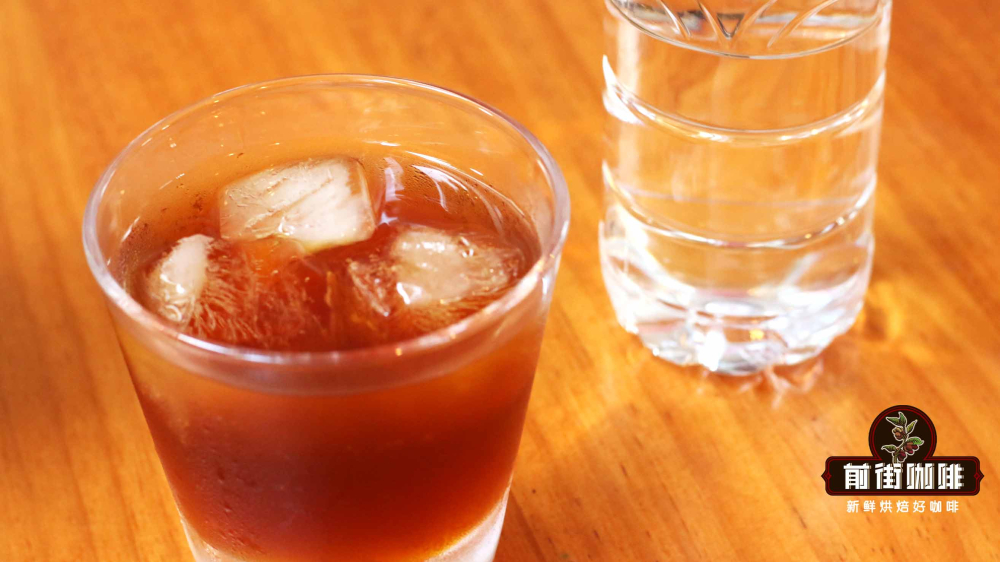
As you can see, the biggest differences between the two are the amount of water and the grind size. Iced pour-over uses less water because it relies on ice cubes for rapid cooling, so it must increase the concentration of the coffee liquid by reducing the water amount; otherwise, once the ice melts, the whole cup of coffee will become weak and tasteless.
But after reducing the water amount, the same brewing method can no longer extract the coffee sufficiently, so Front Street Coffee made the grind a bit finer to appropriately raise the extraction yield. In the end, the root cause of these differences is the different amount of water used.
Pour-over coffee does not have pressure assistance like an espresso machine, so when there isn't enough water, it's very difficult to fully bring out the flavor compounds we need through dripping alone. Next, Front Street Coffee will use an experimental comparison to help everyone understand this more intuitively. Of course, friends can also try it at home when they have time, because it really can directly lay out the difference between the two.
Comparison Experiment
Next, Front Street Coffee will brew one pot of coffee each using the two coffee-to-water ratios, 1:15 and 1:10. The parameters are consistent with those listed above; the only difference is that the 1:10 pot will not have ice cubes added, but will instead be diluted with hot water. The purpose of doing this is to make the temperature and concentration of the two pots as close as possible, so as to better present the differences caused by different amounts of brewing water.
The beans used this time are Front Street Coffee's Goddingding Cooperative. It is one of the most representative single-origin coffees of Yirgacheffe, with highly recognizable jasmine aroma, as well as lemon, honey, and green tea flavors. It is very suitable for friends who like floral and fruity notes but are afraid of bitterness.
In addition to Front Street Coffee's Goddingding, medium-light roasted beans rich in floral and fruity aromas are also very suitable for making iced coffee. The top choices are Front Street Coffee's Huakui, Front Street Coffee's Strawberry Candy, Front Street Coffee's Xizhua, and Front Street Coffee's Daduqi. They not only bring sweet and sour flavors to iced pour-over, but can even present a surprising juice-like quality.
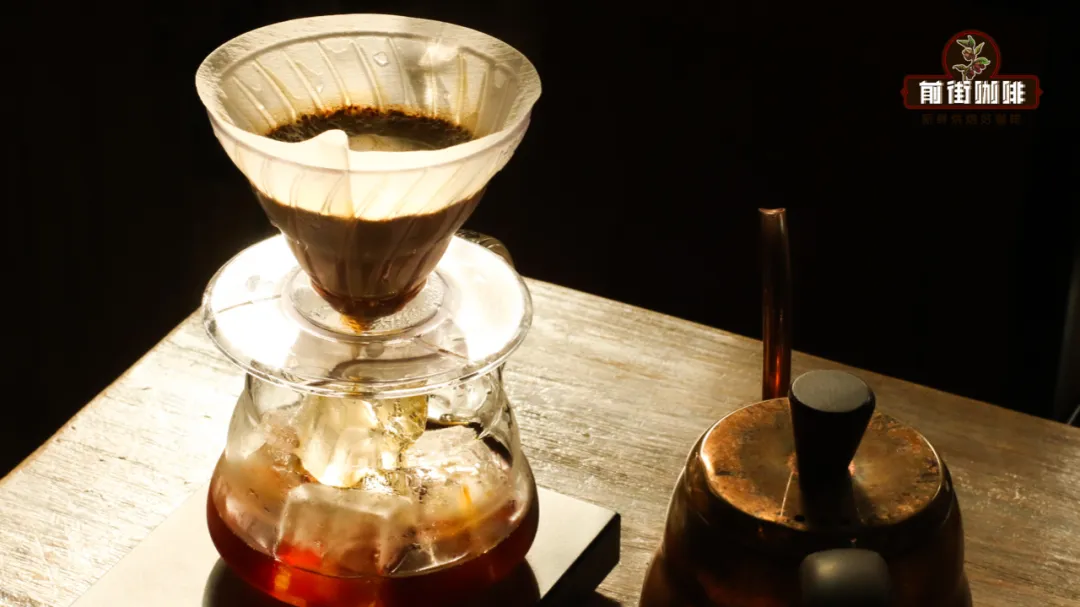
After brewing is completed, we need to measure the liquid weight of the two pots of coffee separately.
The measurement results show that the pot using the 1:15 coffee-to-water ratio had a coffee liquid weight of 195ml, while the pot using the 1:10 coffee-to-water ratio had 120ml.
We take one spoonful of coffee liquid from each to test the extraction yield, then add 70ml of 65°C hot water to the 1:10 coffee-to-water ratio pot to dilute it, bringing its concentration close to that of the 1:15 pot, and finally taste it.
Honestly, the difference is very obvious. The 1:15 coffee-to-water ratio pot had an extraction yield of 20.6%, with very rich layers, a full sweet-and-sour taste, and flavor notes of citrus, strawberry, cream, and berries. After swallowing, there was an obvious sweet aftertaste, a honey-like sweetness;
while the 1:10 coffee-to-water ratio pot had an extraction yield of 18.1%, with relatively less richness in layers, a more prominent sweet-and-sour taste, and almost no bitterness. The flavor notes were strawberry, berries, and citrus. After swallowing, there was no sweet aftertaste, but even so, it still fell into the category of being tasty.
Afterward, Front Street Coffee poured the two pots of coffee for customers and friends in the shop to taste and choose blindly, and as a result, everyone unanimously chose the 1:15 pot. The conclusion is: both are tasty, but the 1:15 coffee-to-water ratio pot had a fuller flavor and was a bit more delicious.
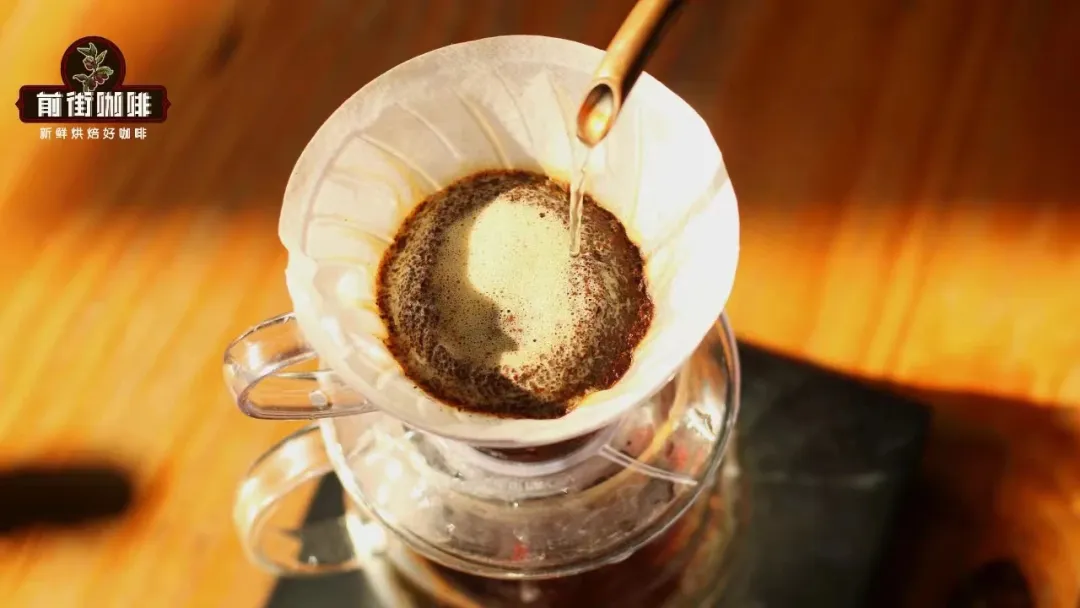
Seeing this, some friends may ask: since the insufficient dissolution of compounds is caused by too little water, can't we just grind much finer and raise the water temperature a lot to make up for the extraction efficiency problem caused by insufficient water?
From the perspective of extraction logic alone, that is indeed correct. But in actual operation, we not only have to consider the relationships among parameters, but also other issues beyond the parameters, such as fines.
Although a finer grind can give coffee grounds a larger contact surface area, it also produces more fines. Fines dissolve faster than regular particles, which means they are more likely to fully dissolve out bitter compounds.
Front Street Coffee once tested adjusting the grind finer to Ek43 setting 7, keeping all other parameters unchanged, and brewing with a 1:10 ratio. The result was an extraction yield of 20%, within the Golden Cup extraction range. It looked like a good cup of coffee, but in actual drinking, it was not. Because it did not show any obvious flavor, and was more bitter and muddy.
So when the grind is too fine, the coffee is very prone to over-extraction due to too many fines. And the extraction yield meeting the standard is only because what is calculated is an average value; it cannot measure how much sweet, sour, and bitter material is in it (so the Golden Cup extraction can only serve as a reference). Therefore, for stability, most coffee shops' iced pour-over only makes slight adjustments based on the original hot pour-over, and will not try extremely unstable extraction methods just for a more prominent flavor performance.
And some coffee shops, in order to make the extraction more complete, increase the amount of coffee to increase the amount of brewing water. The result naturally achieves the goal, but this raises both cost and selling price, so most coffee shops do not use this method to make iced pour-over.
In summary, everyone can understand why if you want the flavor of pour-over, you should drink it hot. Because hot pour-over has enough water to dissolve out the flavor compounds in the coffee, and the flavor performance will be more complete.
The above content is compiled by CoffeeHunters, a coffee news website.


