







How Does Sweetness in Coffee Reach the Tongue?
Sweetness in coffee is not sugar detected directly by the taste buds. It is a combined sensory effect built from taste, smell, and association. Green coffee beans contain sugary substances that make up roughly half their weight, but only about 8 percent of Arabica green bean weight is sucrose and other sweet-tasting sugars. Roasting then decomposes and recombines most of those compounds, so the sweetness perceived in a brewed cup is a constructed impression.
Two mechanisms do most of the work. First, the contrast between acidity and bitterness creates a sweet aftertaste, where the palate reads balance as sweetness. Second, retronasal olfaction links aroma compounds to remembered sweet foods such as strawberry candy. Green coffee beans supply the raw material, but bean selection, brewing, and tasting technique decide how clearly that sweetness comes through in black coffee.
Many friends who are just getting into coffee have this question: coffee has no sugar added, so why do some people say it's sweet? In fact, the sweetness of coffee is not sugar directly picked up by the taste buds, but a comprehensive sensory experience formed by taste, smell, and association working together. From the perspective of Front Street, this article systematically explains the sources of coffee sweetness—including the transformation of sugars in green beans during roasting, the sweet aftertaste effect brought by the contrast between acidity and bitterness, and how retronasal olfaction uses aroma to make us associate coffee with sweet foods. At the same time, the article also shares practical tips in three areas—bean selection, brewing, and tasting—to help you perceive sweetness more clearly in black coffee, and includes extraction suggestions for beans such as Front Street Strawberry Candy.
When writing articles, Front Street often uses words like "high sweetness without bitterness" and "high sweetness with low acidity" to describe coffee flavors, and in daily life it is not uncommon to hear friends or café customers praise a cup of coffee as "sweet." But many beginners feel confused when they hear this kind of evaluation: isn't coffee just sour and bitter?
This confusion is actually very normal. After all, you didn't add sugar to it. The sweetness of coffee has never meant the kind of sugary sweetness that taste buds can directly taste. Although Front Street has mentioned this in many articles, it has mostly been touched on only briefly, so many friends may not have truly understood it. So today Front Street will explain in detail what sweetness in coffee is really about, and how we can better perceive it.
Where does the sweetness of coffee come from?
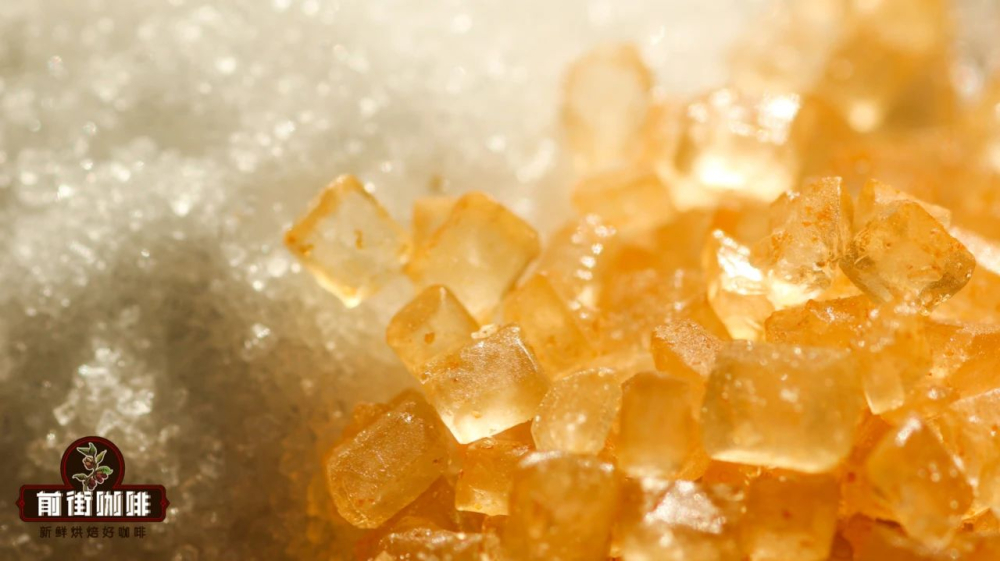
Everyone knows that green coffee beans themselves contain sugary substances, and sugars make up about half of the total weight of green beans. But note that not all sugars are sweet. The sugars that actually present sweetness (such as sucrose) account for only about 8% of the weight of Arabica green beans, while most of the rest are components that do not show sweetness.
And this is only at the green bean stage. When green beans are roasted and become roasted beans, those sweetness-presenting substances are affected by various chemical reactions, and the vast majority are decomposed and recombined into other substances that do not present sweetness, such as sucrose being transformed into caramel. The darker the roast level, the more complete this transformation becomes.
After roasting is complete, the sweetness that can be brought by the sugars remaining in the coffee beans is already very difficult for us to detect, because the amount is simply too small or even nonexistent. So what we taste from coffee is more the acidity and bitterness that are present in higher amounts. Then the question arises: since everyone says they can taste obvious sweetness in coffee, where does this "sweetness" come from?
In fact, this sweetness is something we "perceive," usually called "sweetness perception." The sweetness of coffee is the result of a comprehensive sensory experience, and in addition to taste, smell must also participate. From the perspective of taste, as Front Street mentioned earlier, this "sweetness" is not a flavor that taste buds can directly and obviously capture. It needs the acidity and bitterness of coffee to stimulate the mouth, thereby producing a taste contrast effect and oral physiological effects, and only then is sweetness perceived. For example, sweetness returning after acidity and sweetness returning after bitterness are both phenomena in which sweetness is highlighted after drinking coffee.
The olfactory aspect is much easier to understand. Here Front Street uses strawberries as an analogy. Everyone is familiar with the aroma of strawberries, right? Before even putting a strawberry into your mouth, just by smelling that aroma, we can already perceive a kind of sweet taste. In fact, this is produced by association. Part of coffee's sweetness is perceived by us precisely through aroma.
After coffee enters the mouth, taste first makes a judgment about the flavor. Then the coffee in the oral cavity continuously releases aroma, and these aromas are captured by retronasal olfaction. The brain quickly combines the taste with the aroma received by the nasal cavity, thereby associating it with the flavor of a specific food in memory. This is the process of associating coffee flavor, and also the process of perceiving sweetness.
When we associate a certain very sweet food in memory from the aroma, we subconsciously believe that this cup of coffee tastes very sweet, just as smelling strawberry aroma naturally makes us associate it with sweetness. As Front Street said earlier, the sugars in coffee that present sweetness are transformed during roasting, and the compounds they are transformed into are precisely the main source of sweet aromas. For example, two types of compounds, furan maltol and cyclopentenone, make us associate them with highly sweet aromas such as honey, sweet fruit, caramel, and maple syrup.
In summary, perceiving sweetness from coffee is not an illusion, but a comprehensive sensory experience. But for inexperienced beginners, it is not easy to perceive sweetness from coffee. So is there any way to help us better perceive the sweetness of coffee?
How can we better perceive the sweetness of coffee?
Of course there is. By choosing the right beans, brewing the coffee well, and combining that with some small tasting techniques, we can better perceive the sweetness in coffee. Front Street has previously introduced in detail that some beans, brewed under the same extraction conditions, simply produce coffee sweeter than other beans, and this is closely related to their varietal genetics, growing environment, processing method, and roast level.
If you want to buy coffee beans with high sweetness, you can give priority to Front Street Strawberry Candy, Front Street Sidra, Front Street Mozart, Front Street Blackberry, Front Street PNG · Bird of Paradise, Front Street 2013 Yunnan Small Bean, and others.

After preparing suitable coffee beans, the next step is brewing, to dissolve out the flavor substances in the coffee. Based on the characteristics of different coffee beans, Front Street previously shared an article on how to brew coffee "sweet." Friends who are interested can take a look → "How to Brew Coffee Sweet?"
Finally, there is the tasting stage. When drinking coffee, you can appropriately extend the time the coffee liquid stays in your mouth while holding your breath, which can help us better perceive the taste of the coffee itself; after swallowing, close your mouth and exhale through your nose, so that the aromatic substances of the coffee can be better captured by retronasal olfaction, thereby associating them with more specific food flavors. Be sure to perceive the sweet aftertaste and returning sweetness after swallowing; finally, combine taste and aroma to associate a specific sweet food, and in this way you can perceive the sweetness of coffee to the greatest extent.
The above content is compiled by CoffeeHunters, a coffee news website.


