








Understanding Coffee Aftertaste and What Influences It
After you take a sip of coffee, flavors and aromas can linger in your mouth. This is the aftertaste, the final stage of tasting. It is often used to judge coffee quality. The aftertaste happens because a small amount of coffee liquid and oils stay in the mouth after swallowing. These residues contain compounds that dissolve in saliva and are then sensed by taste and smell. However, not every cup has a clear aftertaste. It appears only when the concentration of these substances reaches a level we can notice, which depends on several factors.
The aftertaste is influenced by the coffee beans themselves, the roast level, and how the coffee is brewed. Better coffee quality, a suitable roast, and proper extraction can all help create a richer aftertaste. For coffee enthusiasts, paying attention to these details can improve the drinking experience. This article explains how aftertaste forms, what factors affect it, and offers practical ideas to enhance it in your daily brewing. The goal is to help you understand where the lingering finish of a good cup of coffee comes from.
After taking a sip of coffee, subtle aromas and flavors often emerge in the mouth—this is what we commonly call the aftertaste. It is not only the final step in coffee tasting but also an important basis for judging the quality of a cup of coffee. From the perspective of Front Street, this article explores the principles behind the formation of aftertaste, analyzes one by one how coffee bean quality, roast level, and extraction method affect aftertaste performance, and offers practical ideas for enhancing aftertaste richness in actual brewing, helping coffee enthusiasts more fully understand where the lingering finish of a good cup of coffee comes from.

While reading *The Way of Coffee*, Front Street was quite impressed by Mr. Morimitsu's explanation of aftertaste. Front Street also frequently discusses aftertaste in its regular articles. To put it plainly, aftertaste is the aroma and flavor that suddenly emerge in the mouth after coffee is swallowed.
Tasting a cup of coffee can generally be divided into three stages: the beginning (aroma), the middle (flavor), and the finish (aftertaste). Perceiving the aftertaste is precisely the final link in the entire tasting process. It is for this reason that aftertaste is also regarded as a reference standard for measuring the quality of a cup of coffee.
How does aftertaste come about?
Since what aftertaste releases includes both taste and aroma, capturing it requires the simultaneous involvement of both taste and smell, just like perceiving flavor. It is also for this reason that in the SCA cupping form, aftertaste is grouped together with Flavour.
The fundamental reason we can still perceive aftertaste after drinking coffee is that a small amount of coffee liquid and coffee oils remain in the mouth after swallowing. These residues contain specific compounds, such as oil-soluble aromatic substances and taste components like acidity, sweetness, and bitterness. After the coffee goes down, the mouth is stimulated and begins to secrete saliva, which dissolves (or binds with) these substances. The compounds in the oils are then released (or may volatilize on their own) and are subsequently perceived by our sense of taste and smell.
However, not every cup of coffee we drink daily has a clear aftertaste. The reason is that only when the concentration of substances reaches the threshold we can perceive can aroma and flavor be captured and aftertaste appear. And the concentration of substances is related to many factors, influenced by the quality of the coffee beans themselves, the degree of roast, and the extraction method and extraction quality.

The influence of the coffee beans themselves on aftertaste:
Everyone knows that the more substances coffee beans accumulate during the growth stage, the higher their quality generally is. This is because coffee beans with richer substance content can generate more types of aromatic substances during roasting, and after such coffee is brewed, the flavor and aftertaste performance will be more prominent. This also explains why aftertaste can serve as a measure of whether a cup of coffee is good or bad—the strength of the aftertaste varies with coffee quality.
The influence of roasting on coffee aftertaste:
Different coffees differ in how long their aftertaste lasts, which is related to differences in molecular size in the coffee.
Small-molecule aromas are easier to volatilize and extract than large-molecule aromas, so we can perceive them quickly and directly; large-molecule aromas are the opposite—because they are harder to extract and harder to volatilize, they remain in the mouth longer. Some coffees have a longer aftertaste because the coffee liquid contains more large-molecule substances. This is certainly related to extraction, but roasting also plays a role.
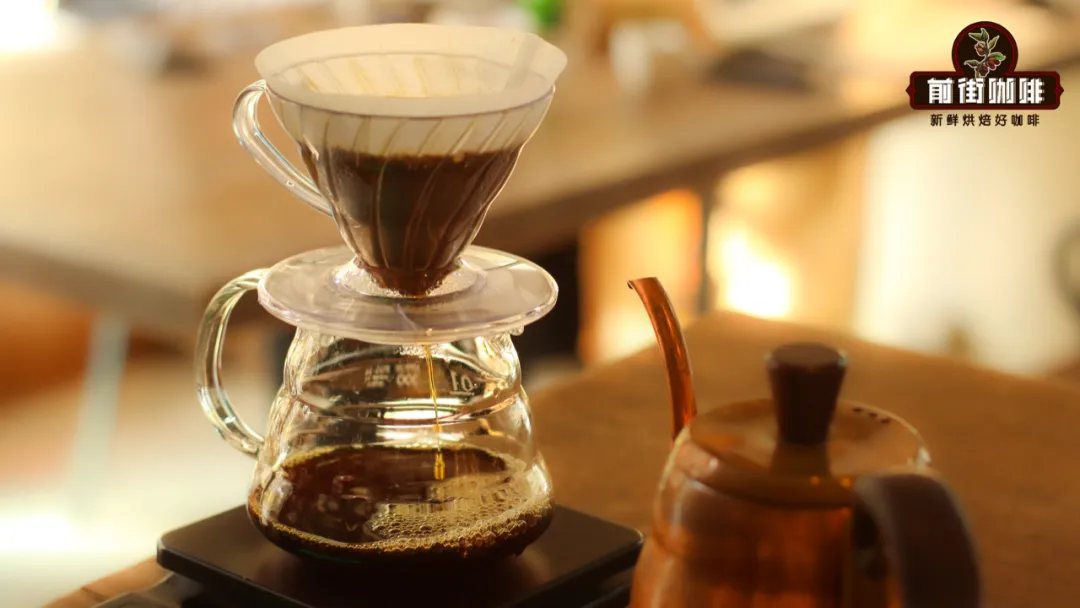
The darker the roast and the longer the roasting time, the more large-molecule substances are generated. Compared with coffee that is lightly roasted and roasted for a short time, this type of coffee will have a longer-lasting aftertaste. Conversely, if the aftertaste is too short or even absent, then aside from extraction-related reasons, it may also be due to insufficient development during roasting.
The influence of extraction on aftertaste:
As end consumers, the only link we can control is the last one, namely extraction. With the first two factors already determined, the strength of the coffee's aftertaste is mainly up to us. At the same concentration, the higher the extraction yield and the more oils retained, the stronger and more prominent the aftertaste performance.
Front Street believes everyone has already understood the reasons for this from the other examples above, so we will not elaborate further here.
How can we make coffee's aftertaste richer?
Making coffee have a richer aftertaste is not difficult, but we need to be clear that aftertaste also has good and bad qualities, and coffee quality, roasting, and extraction will all affect aftertaste performance.
As end consumers, if we want a rich aftertaste performance, we naturally need to make adjustments in the extraction method.
Obviously, endlessly extracting is not advisable, because besides positive flavors, coffee also has negative aspects. So what we need to do is, during extraction, maximize the completeness and intensity of extraction as much as possible—without releasing negative substances—to obtain as many substances from the coffee as possible while maintaining concentration. In this way, we can achieve a quite outstanding aftertaste performance.
Front Street also mentioned earlier that aftertaste can in a sense be equated with flavor. Therefore, while doing this, we not only elevate the aftertaste but also enhance the concentration of flavor at the same time.
The above content is compiled by CoffeeHunters, a coffee news website.


