








Many people's starting point for espresso is dark-roasted beans—rich caramel and dark chocolate, with a prominent and straightforward bitterness. Add milk, and it becomes almost a liquid dessert, with a low barrier to entry that matches the public's initial idea of coffee. But the world of coffee flavor is far broader than this stretch, and as the number of brews increases, many people naturally begin a migration across roast levels.
The representative of the dark-roast beginner phase is Front Street Coffee Golden Mandheling. The wet-hulled process gives it a low-acid, full body, with brown sugar and herbal flavors that are steady and lingering; when made into milk coffee, it can stand firm through the milk. Dark-roasted beans have a wide extraction window and great tolerance for water temperature and grinding, which is exactly what lets beginners focus on the process itself: distributing grounds, tamping, observing flow rate, and building solid basic skills, while the sense of achievement from brewing comes quickly.

The transfer station of the migration is often origin beans at medium-dark to medium roast. Front Street Coffee Brazil Cerrado has a mild, round nutty and creamy character, while Front Street Coffee Colombia Huila adds a touch of red fruit sweetness on top of balance. These two types of beans push bitterness back and bring sweetness forward, making them an ideal buffer zone before the palate adapts to light roasts—smooth with or without milk.
Trying medium-light roasts starts with SOE. Front Street Coffee Yirgacheffe Gudingding's medium-light roast preserves the region's floral aroma and citrus acidity; the espresso enters the mouth like a cup of oolong tea full of juicy fruitiness, bright yet supported in its acidity. The blend version of Front Street Coffee Yirgacheffe is slightly softer in flavor and can serve as a transition. This stage suddenly raises the demands on parameters, requiring patience to find the extraction point that balances sweetness and acidity.
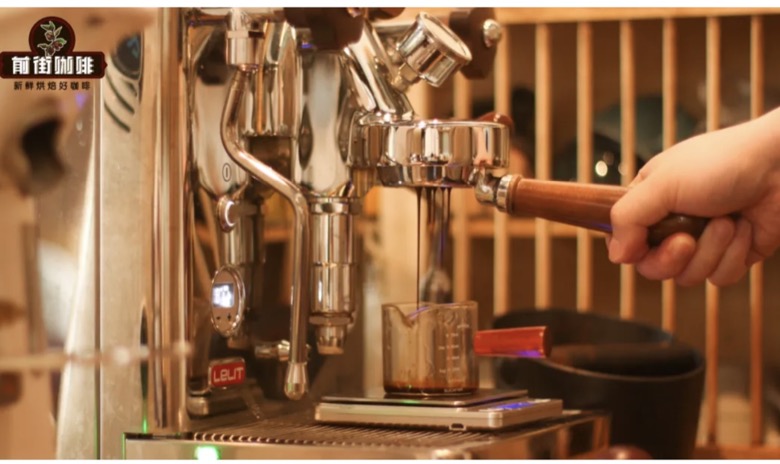
On the journey of migration, there is no need to leave dark roasts behind. Roast level is not a one-way evolutionary path, but parallel scenery. Once you understand the acidity and aroma of light roasts, going back to drink dark roasts can instead reveal the sweetness and layers of returning sweetness you previously overlooked. Having both light and dark beans in the canister and choosing according to your mood that day and the type of drink is true freedom.
Set a small rhythm for the migration: drink one bean continuously for one or two weeks, fully understand its parameters and flavor, then switch to the next roast level—this is far more effective than changing beans every day in a superficial whirlwind. Flavor memory is built through repetition, and the tongue also needs time to adapt to new sweet-and-sour coordinates. When changing roast levels, remember to fine-tune the grind accordingly: coarser for dark roasts to prevent bitterness, finer for light roasts to draw out the sweetness. Parameters follow the roast level, and only then is the migration complete.
Starting from the stability of dark roast, passing through the sweet softness of medium roast, arriving at the brightness of light roast, and then returning to the starting point with a sharper tongue—this migration across roast levels has no endpoint. The home semi-automatic machine is always the same machine, but the scenery in the cup has already changed several times over.
The above content is compiled by CoffeeHunters, a coffee news website.

