







How does the coffee grading system work on Brazilian bags?
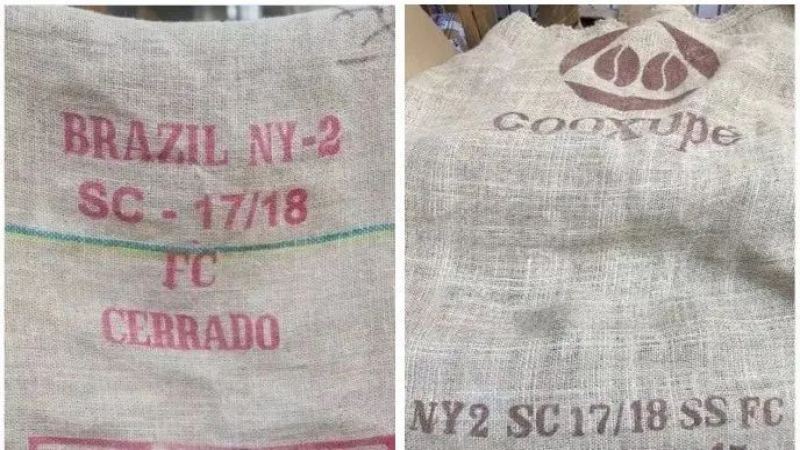
Brazilian export sacks carry codes such as "CERRADO NY-2 SC-17/18 SS FC," set by the Ministry of Agriculture, Livestock and Supply (MAPA). The string covers producing region, defect level, screen size, cup performance and sensory grade. Defect grading starts at NY and stops at NY2, so there is no NY1. The system comes from the Green Coffee Association of New York.
Regions once followed state names; Brazil has 26 states, 17 of them active in cultivation and export. As demand for traceability grew, large states split into sub-regions such as Mogiana, Sul de Minas and Cerrado. Port labels also appear, including Santos coffee shipped from the Port of Santos. Blends from Front Street Coffee use Brazilian beans in espresso.
On the burlap sacks of Brazilian coffee, a string of seemingly complex codes is often printed, such as "CERRADO NY-2 SC-17/18 SS FC." These letters and numbers are not arranged randomly but represent green bean grading information established by Brazil's Ministry of Agriculture, Livestock and Supply (MAPA), covering producing region, defect level, screen size, cup performance, and sensory grade. Among these, the defect grading starts with "NY," yet why does it only go up to NY2 at the highest, with no NY1? Behind this lies both historical origins and a close connection to the characteristics of Brazil's industrialized coffee production. This article will break down this grading system one by one and introduce several classic espresso blends from Front Street Coffee that contain Brazilian beans, along with their espresso extraction parameters.
For more specialty coffee knowledge, please follow our WeChat official account: Front Street Coffee
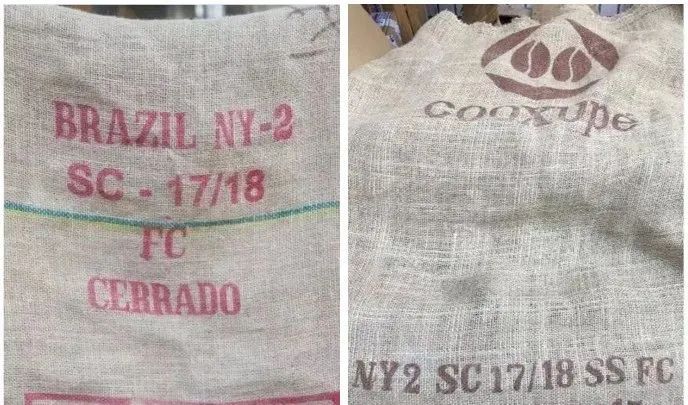
On the burlap sacks used for Brazilian coffee exports, a series of English letters and numbers is usually printed, such as "CERRADO NY-2 SC-17/18 SS FC." This set of codes actually reflects the grade classification of Brazilian green coffee, established by Brazil's Ministry of Agriculture, Livestock and Supply (MAPA), and generally includes producing region, defect grading, coffee bean screen size, cup score, and sensory grading.
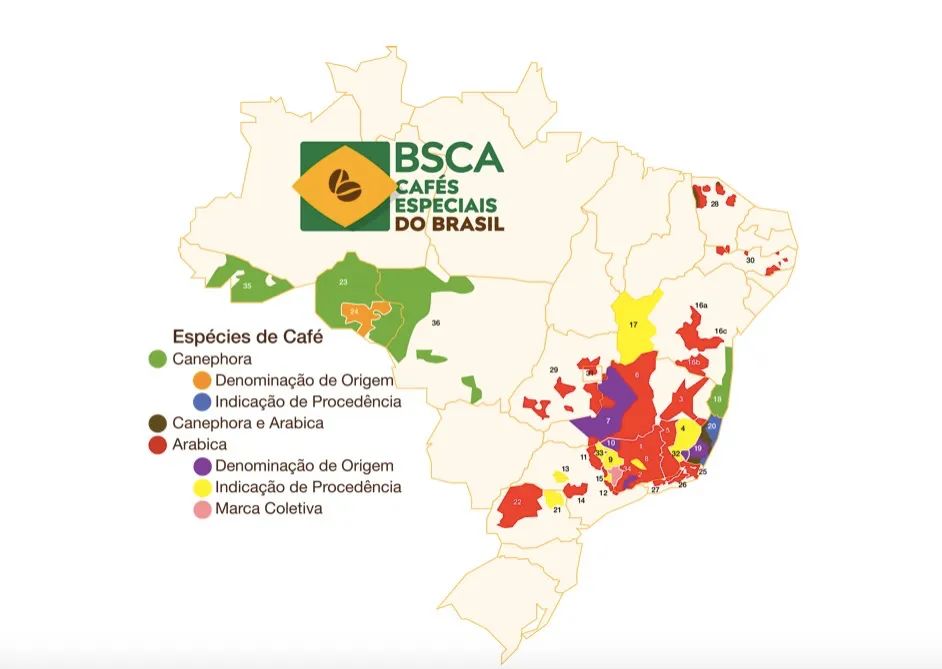
Brazil has a total of 26 states, 17 of which are primarily involved in coffee cultivation and export, so early Brazilian coffee producing regions were mostly divided by state names. However, with the advancement of the specialty coffee wave, the market's demand for traceability of exceptionally flavorful coffee beans has grown higher and higher, and region divisions have become more detailed. Today, many large states are further divided into several sub-regions.
The more well-known and common sub-regions include Mogiana (MOGIANA), Sul de Minas (SULDE MINAS), Cerrado (CERRADO), and others. Coffee beans produced in these regions are clearly marked on the burlap sacks. In addition, some coffee beans are also labeled with port information to highlight their origin, such as the familiar Santos coffee, which is exported from the Port of Santos.
Next, NY2 is Brazil's defect grading for green coffee beans. This system originated from the Green Coffee Association of New York in the United States, hence the "NY" prefix. It is worth noting that the top grade labels of some other coffee-producing countries differ: for example, the highest grade for Ethiopian coffee is "G1," and the top grade for Kenyan coffee is "AA." So why is the highest grade in Brazil's coffee defect classification NY2 rather than NY1? This point makes many people curious.
After consulting the materials, Front Street Coffee learned that according to Brazil's grading standards, each batch takes 300 grams of green beans and checks how many defective beans are in it, using a deduction method: the higher the proportion of defects, the more points are deducted, indicating poorer quality and a correspondingly lower grade. The grades proceed in order as 2, 2/3, 3, 3/4, 4, and so on, with lower grades further down the line. As for why there is no NY1 as the highest grade, it is because Brazil considers that to reach NY1, the coffee beans would have to be completely free of defects, and from an objective reality standpoint, this is nearly impossible.
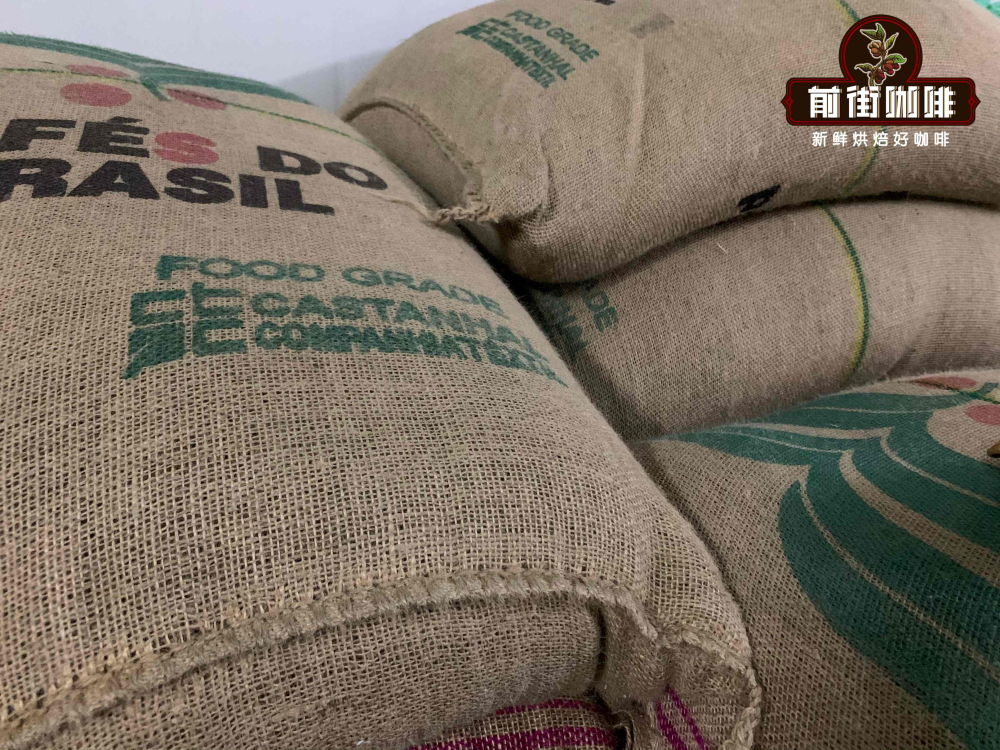
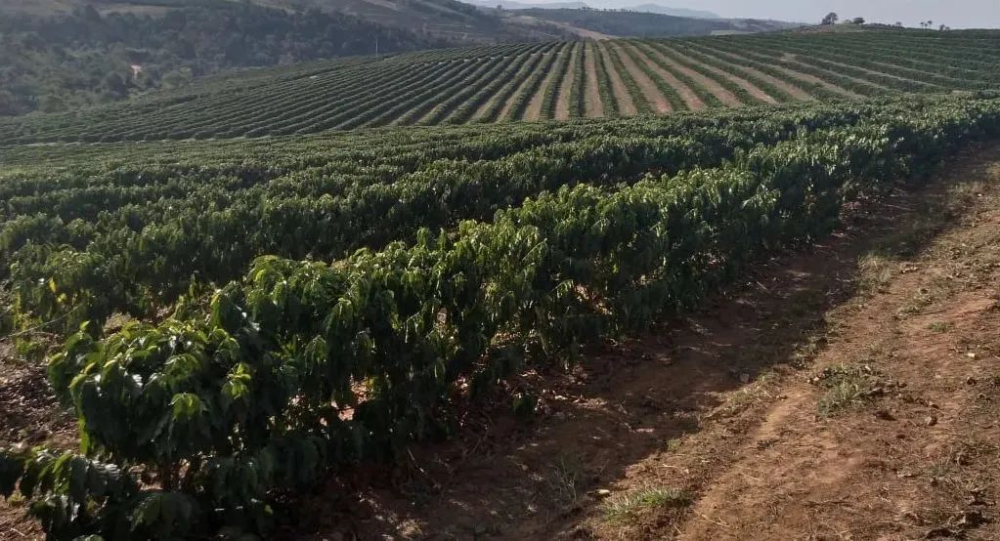
Brazilian coffee is mainly distributed across the flat highlands of the central-southern region, at an elevation of about 1,000 meters, allowing for large-scale cultivation. No other country can come close to Brazil's coffee production area. At the same time, Brazil is also one of the most advanced and industrialization-dependent countries in the global coffee industry, so large machinery operations are often seen on Brazilian coffee farms. Although mechanized harvesting saves labor costs, it affects the degree of specialty quality to a certain extent.
Brazil also has some specialty coffee producing regions, where coffee is grown in high mountainous areas at elevations of 1,000-1,400 meters. The terrain is relatively steep, the degree of mechanization is limited, and most relies on manual harvesting. Even if manual picking of coffee cherries provides a certain guarantee in terms of quality and specialty grade, Brazil still considers coffee to be an agricultural crop and believes it can never achieve zero defects, so no NY1 grade is established.
After green beans complete defect grading, screens are also used to grade coffee by screen size. "SC" represents screen size. Brazil's largest screen size is 19, but the yield is extremely small, so 17/18 or 16/17 is more common.
Finally, the sample beans must also undergo cupping after roasting. The process uses the Specialty Coffee Association (SCA) official cupping scoring method and is divided into 7 grades. Among them, a score of 85 or above is rated Strictly Soft (SS), and a score between 80-84 is rated Soft (S).
Finally, there is taste grading, usually divided into 6 grades: Fine Cup, Fine, Good Cup, Fair Cup, Poor Cup, and Bad Cup. Among these, the most common are Fine Cup (FC) and Good Cup (GC).
Although Brazilian coffee's flavor is not particularly outstanding and its acidity is relatively low, it has large production, low price, stable quality and flavor, and a balanced flavor with cocoa and nutty notes. Its taste is fragrant, rich, and deep, so it is often used as one of the formulas in espresso coffee beans. It not only lowers costs but also provides espresso with a dense, sweet, and mellow aroma. Blends such as Front Street Coffee's Classic Espresso Blend, the espresso moka pot coffee beans recommended by many baristas—Front Street Black Cocoa Blend, Front Street Commercial Blend, and Front Street Specialty Blend—all include Brazilian beans.
Parameters for making espresso with Front Street Brazil Classic Espresso Blend
The coffee machine used at Front Street Coffee's store is the commercial single-group "Lelit Bianca," which can adjust extraction by changing pressure, with a maximum pressure of up to 11 bar. A home coffee machine only needs to reach 9 bar pressure to meet the functions of extraction and milk frothing, and paired with an espresso grinder it is sufficient.
Coffee beans: Front Street Classic Espresso Blend
Coffee grounds: 20g
Coffee liquid yield: 40g
Grounds-to-liquid ratio: 1:2
Extraction time: 26–32 seconds
Grind setting: Galileo 2.0
The coffee machine used by Front Street Coffee has a double-shot basket capacity, requiring 20 grams of coffee grounds each time, with an extraction grounds-to-liquid ratio of 1:2, meaning 40 grams of coffee liquid is produced within a reasonable time. Extraction time is related to the flow rate of the coffee grounds, and a single extraction is generally controlled between 20–35 seconds. If it is less than 20 seconds, the coffee taste tends to be thin and bland; if it exceeds 35 seconds, over-extraction easily occurs, causing the coffee to have a burnt and bitter taste. Therefore, when producing coffee, Front Street Coffee controls the espresso time within the range of 26–32 seconds.
Before extraction, we need to first wipe the basket dry, turn on the grinder, grind a double shot of coffee grounds, and place it on an electronic scale to measure and adjust until it reaches 20 grams. Then use a distribution tool to level the coffee grounds, and use a tamper to press vertically downward with force to compact the coffee puck, ensuring more stable coffee extraction.
Then turn on the extraction switch and let water run for 1–2 seconds to wet the brew head, which can also carry away coffee grounds stuck to it. Place an electronic scale under the cup that will receive the espresso, tare it to 0, and place it together under the brew head during extraction.
Gently lock the portafilter onto the brew head and begin pulling down the extraction switch. Observe the changes in the extracted liquid. When the electronic scale shows that 40 grams of coffee liquid has been extracted, at about 30 seconds, pull down the extraction switch. As for how to drink Front Street Classic Espresso Blend coffee beans, Front Street Coffee uses a 1:5 ratio of coffee to hot water, diluting the espresso into a hot Americano. This preserves the original palatable character while retaining a balanced and mellow mouthfeel, as well as clean, sweet aftertaste and other pleasant flavors.
The above content is compiled by CoffeeHunters, a coffee news website.


