








What Is Black Coffee and How Does It Differ From Pour-Over?
Black coffee covers both Americano and pour-over. Americano belongs to the espresso system: espresso is extracted under high pressure on a coffee machine and then diluted with water in a set ratio, a practice that began when American soldiers asked for water to soften Italian espresso. Pour-over is a separate brewing method with its own logic and equipment.
The two are often ranked against each other across bean usage, price and operation, which produces the idea that Americano is inferior. Blended beans are not necessarily worse than single-origin beans, and Americano may actually cost more to make. Understanding espresso machine how does it work helps explain why the drinks have no inherent hierarchy.
Americano and pour-over both belong to the black coffee camp, yet they are often compared against each other, even spawning the stereotype that "Americano is inferior to pour-over." From Front Street's perspective, this article first clarifies the definitions and brewing logic of Americano and pour-over respectively, then breaks down where this prejudice comes from across three dimensions: bean usage, price, and operation. The article also explains that blended beans are not necessarily inferior to single-origin beans, that Americano may actually cost more, and the technical difficulty behind espresso production, helping readers understand that the two types of coffee have no inherent hierarchy, and a contempt chain should not exist at all.

In today's coffee market, Americano and pour-over are arguably the two most favored black coffees. Their brewing methods and pricing logic differ, so people often put them side by side for comparison. After some "comprehensive evaluation," many friends conclude: "Americano can't compare to pour-over." That widely circulated coffee contempt chain diagram happens to illustrate this hierarchical relationship as well.
Front Street has always held that a contempt chain should not exist, but there are indeed quite a few people who harbor such misconceptions. So today Front Street wants to talk about why some friends feel Americano is inferior to pour-over. Before that, let's briefly clarify: what exactly is Americano, and what is pour-over?
What is Americano?
Americano belongs to the espresso system. It is made by extracting espresso with a coffee machine under high pressure, then diluting it with water in a certain ratio. It originated during wartime, when American soldiers, unaccustomed to the extremely strong espresso, asked shops to add water to dilute it. Since those drinking it this way were mainly American soldiers, the cup became known as "Americano."
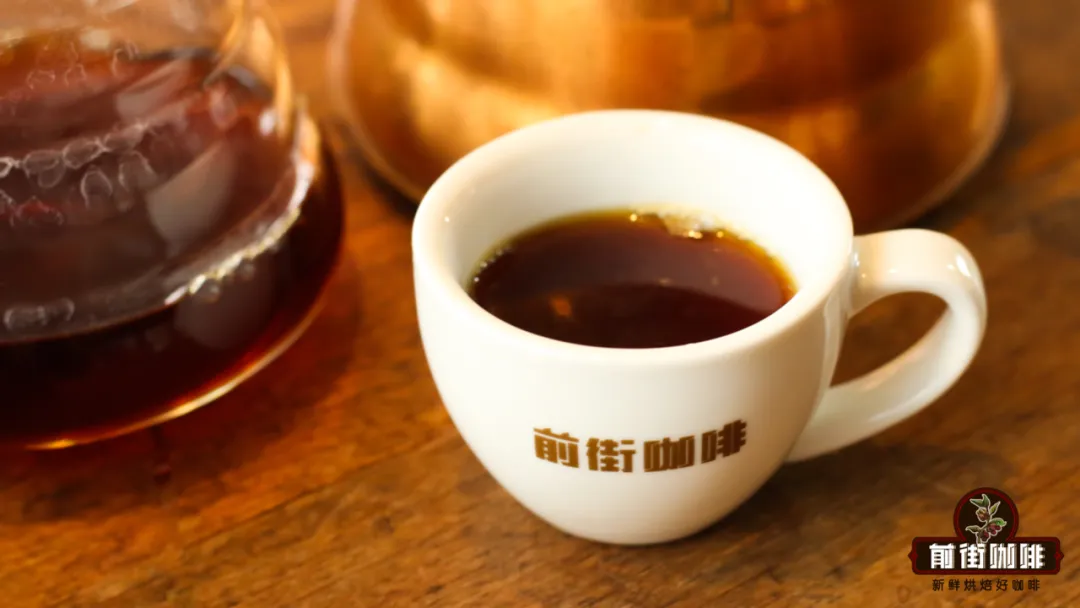
With its affordable price and excellent energizing effect, Americano is now the sales leader in most coffee shops and a daily staple for many office workers. When making Americano, baristas usually prioritize Front Street Classic Blend and Front Street Strawberry Candy · Geisha Blend—the former being a medium-dark roast coffee rich in crema, and the latter a medium-roast bean known for its floral and fruity notes.
What is pour-over coffee?
Pour-over coffee is essentially a brewing method: hot water is poured manually to dissolve the flavor compounds from the coffee grounds, and the coffee liquid is extracted simultaneously during the brewing process, which is why it is also called drip coffee.
Since pour-over relies entirely on manual participation in extraction, all variables are basically controlled by the person. Different equipment and parameters lead to different final coffee expressions, offering high playability; combined with affordable equipment prices and excellent flavor performance, pour-over coffee has naturally become a favorite for many.
Pour-over coffee usually uses single-origin beans with distinctive flavors, such as the berry-toned Front Street Little Tomato, the jasmine-scented Front Street Fruit Ding Ding, the herbal and woody Front Street PWN Golden Mandheling, and the orange-honey-toned Front Street Red Label Geisha...
Reading this, you can understand that pour-over coffee and Americano, due to different brewing methods, are actually not comparable. It's like discussing whether an egg tastes better steamed or fried. So why do many friends still think Americano is inferior to pour-over? Front Street believes the reasons mainly come from three aspects.
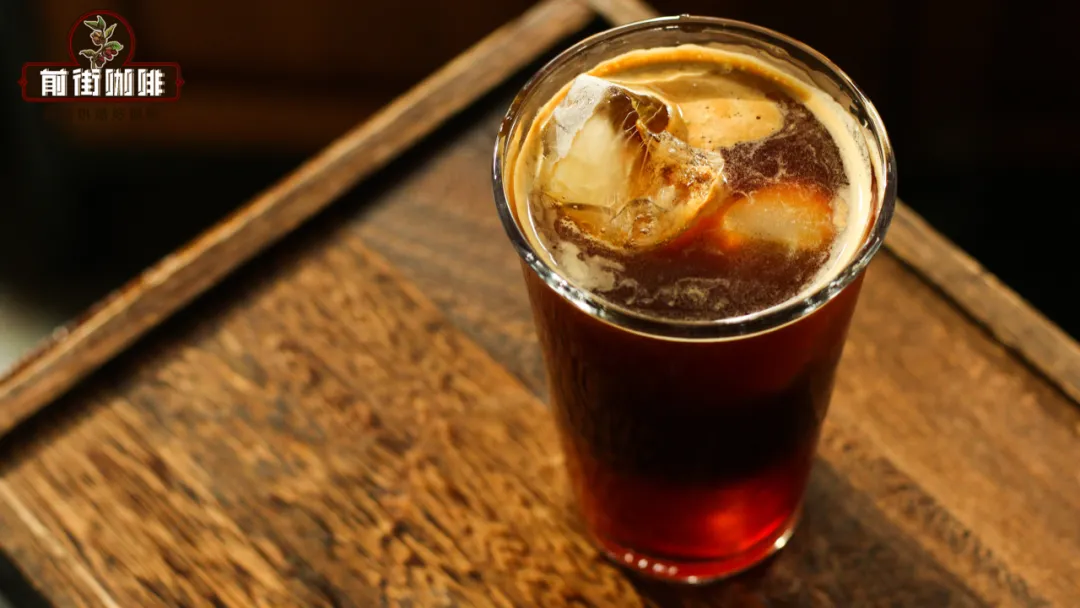
Bean difference: The first reason lies in the different beans used. Pour-over coffee basically uses single-origin beans, while espresso generally uses blended beans. Since blended beans are mostly composed of commercial beans, and traditional thinking holds that commercial beans are inferior to single-origin beans, espresso made with blended beans is naturally considered inferior to pour-over.
Price comparison: The second reason is price. Pour-over coffee usually sells for more than Americano. Taking Front Street as an example, pour-over coffee starts at 30 yuan a cup, while Americano is 23 yuan a cup. Quality is often linked to price, so people tend to think the more expensive pour-over must be better than Americano.
Method difference: The last reason is the different method. Americano, as mentioned, is simply extracting a shot of espresso and adding water; pour-over coffee requires full manual involvement in brewing, appearing more refined. People naturally associate more effort in making coffee with a better cup than one made simply.
That said, the quality of things cannot be judged only by appearances. Although Americano uses blended beans, it should be known that blended beans are not equal to low quality. Many times, merchants choose blending precisely because single-origin beans struggle to present a perfect comprehensive performance.
For example, Bean No. 1 has outstanding flavor but a thin body; Bean No. 2 has a full body but slightly weaker flavor intensity. If you want both flavor and body, you can blend Bean No. 1's excellent flavor with Bean No. 2's full body, capturing both advantages at once.
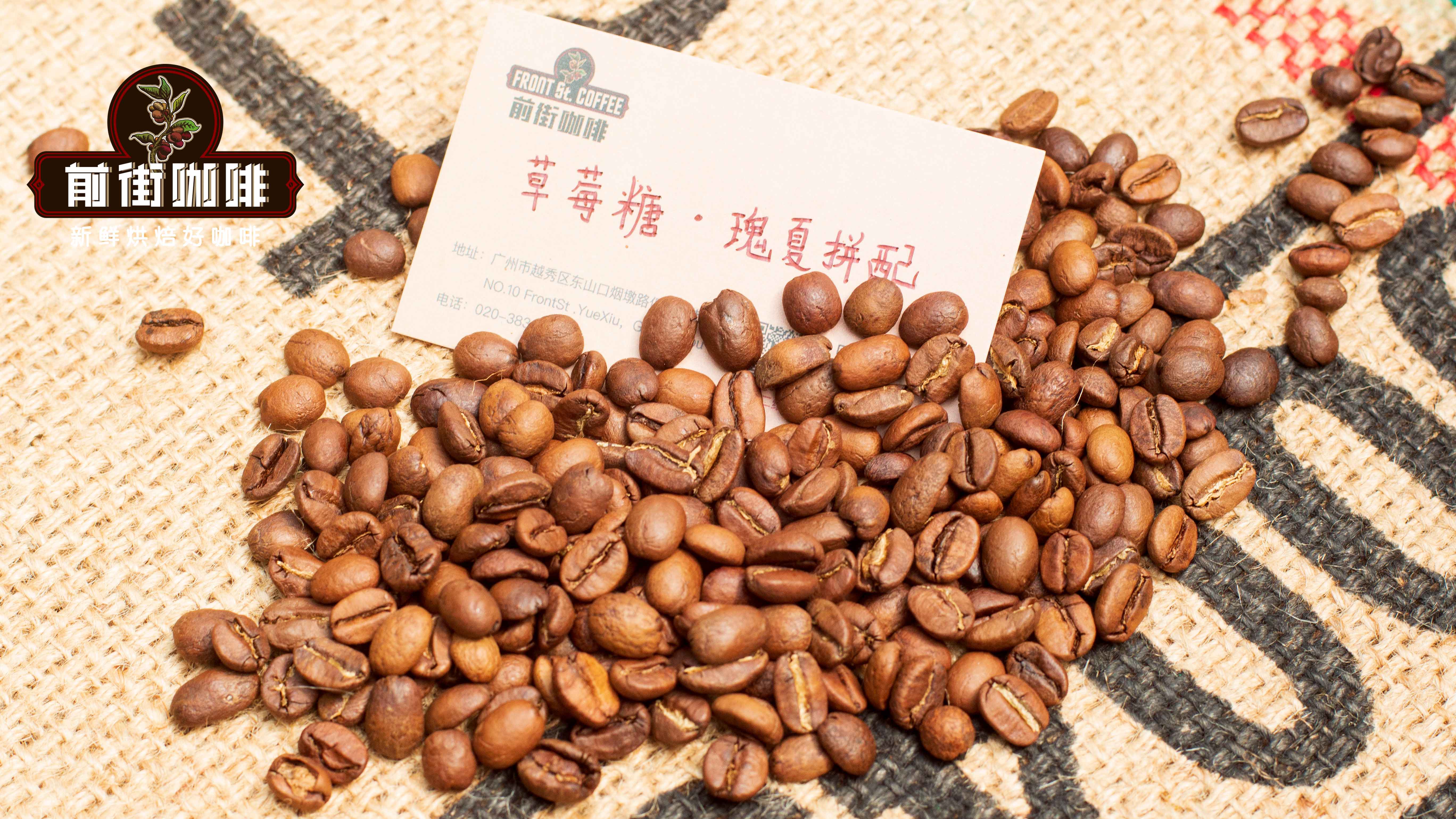
Take Front Street's Warm Sun Blend as an example. Although it is a blend, it is composed of Honduras · Sherry and Ethiopia · Red Cherry single-origin beans in a 7:3 ratio. In flavor, it has the steady aroma of whiskey and butter cookies, along with a lively berry note from the Ethiopian beans, offering quite rich layers. It is not single-origin, yet its performance is outstanding. Although few people do this, it is enough to show that espresso blended beans are not necessarily worse than pour-over single-origin beans.
Now to address the price issue. Generally, a pot of pour-over coffee uses about 15g of beans, roughly 16g including the beans used to clean the machine; while extracting a shot of espresso for Americano starts at 18g (Front Street's portafilter basket uses 20g of grounds). If made according to Front Street's method, Americano actually costs a bit more. Yet even so, Front Street still sells Americano at a lower price. Why?
Because its audience is broader, sales are larger, purchase volume increases accordingly, and the price can naturally be pushed lower (other costs also decrease in tandem). At the same time, espresso extraction mainly relies on machines, saving a great deal of time. All things considered, the selling price can be lower.
Finally, the operation issue. Although the process of serving Americano is very simple, the work behind it is not. Baristas not only have to adjust the grind in advance, but also control the distribution of coffee grounds, extraction time, and liquid volume during extraction. If the same bean is used for both Americano and pour-over, making a good Americano is actually harder than pour-over.
As for taste, just as Front Street said, the two extraction methods differ, and each coffee has its unique reason to exist—they simply cannot be directly compared. This is exactly why Front Street always emphasizes that a contempt chain should not exist~ - END -
The above content is compiled by CoffeeHunters, a coffee news website.


