







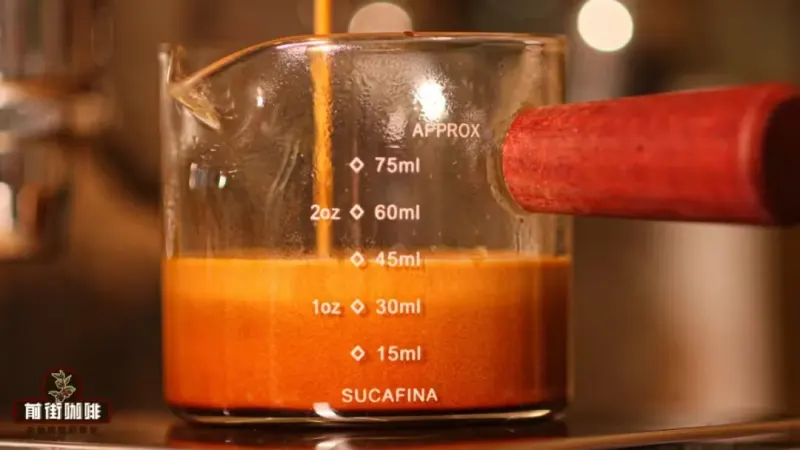
How Do Coffee Particles Affect Espresso Crema?
Thin or missing crema in espresso usually traces back to grind size rather than the machine. Crema forms from carbon dioxide and coffee bean lipids, so dark-roasted beans should produce plenty of foam. When a dark roast still yields a thin layer and the shot runs fast, the grind is likely too coarse, letting water pass through the puck with little resistance.
Coarser coffee particles leave wider gaps in the puck, so hot water escapes quickly and the pump cannot build the pressure crema needs. A practical check is flow time: 20 g of deep roast coffee yielding 40 ml in 32 seconds one day but only 20 seconds the next signals a grind adjustment, not a dose change. Tighten the grind and retest first.
When extracting espresso, the thickness of the crema is often regarded as an important reference for judging the quality of the shot. When the espresso surface lacks that alluring golden-brown foam, many coffee lovers feel confused. This article will first explain the essential composition of crema, then, in response to the phenomenon of thin crema when extracting dark-roasted beans, deeply analyze the most common cause—grinding too coarse—and, combined with Front Street Coffee's daily dialing-in experience, provide specific ideas for grind size adjustment and operating formulas to help you respond correctly when the state of your coffee beans changes.
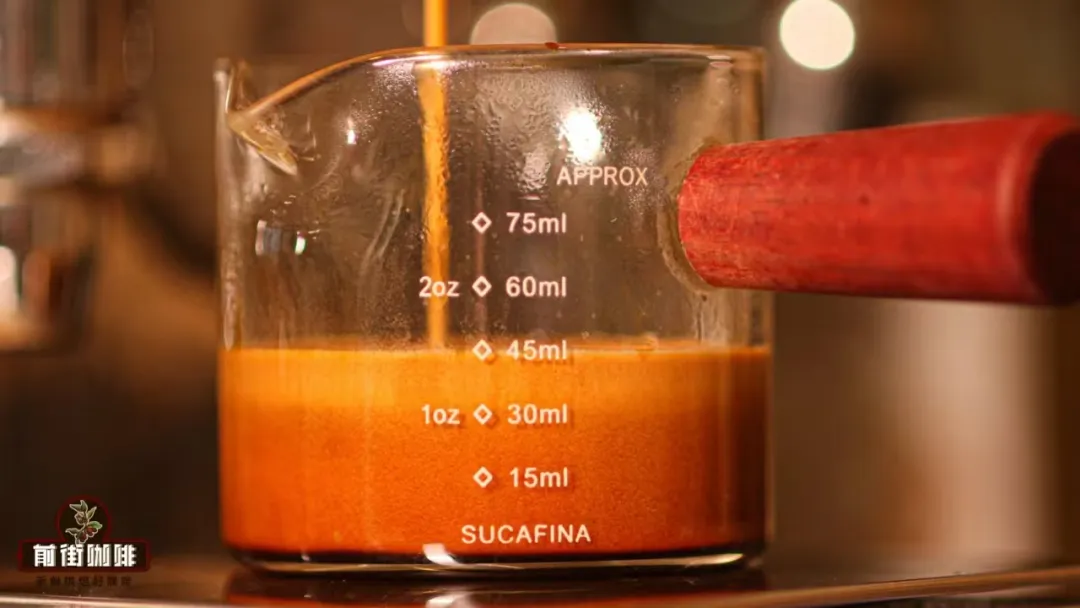
Many people have encountered thin surface crema or even no visible crema at all when extracting espresso. To understand this phenomenon, you first need to know that the main components of crema are carbon dioxide and the lipids contained in coffee beans. When the light-roasted beans you use already have a low carbon dioxide content, the resulting crema will not be thick enough, and that is normal. But if you are clearly using dark-roasted beans rich in carbon dioxide and still cannot extract crema, Front Street believes the problem is most likely in the following two aspects!
1. The grind size is too coarse!
If the espresso lacks crema and the liquid flow rate during extraction is very fast, then it can basically be pinpointed as being caused by grinding too coarse. When the coffee particles are larger, the gaps between the particles become larger as well, and even if you tamp hard, hot water can still easily pass through the puck.
Once the resistance decreases, the coffee liquid passes through the puck faster, and the espresso machine will not output very high pressure to participate in extraction. Pressure is precisely one of the key conditions for producing crema. Without enough pressure, the crema naturally will not come out. This situation occurs most frequently because many people habitually fix one grind setting when making espresso, using it from the first cup to the last, and never adjust it according to actual conditions.
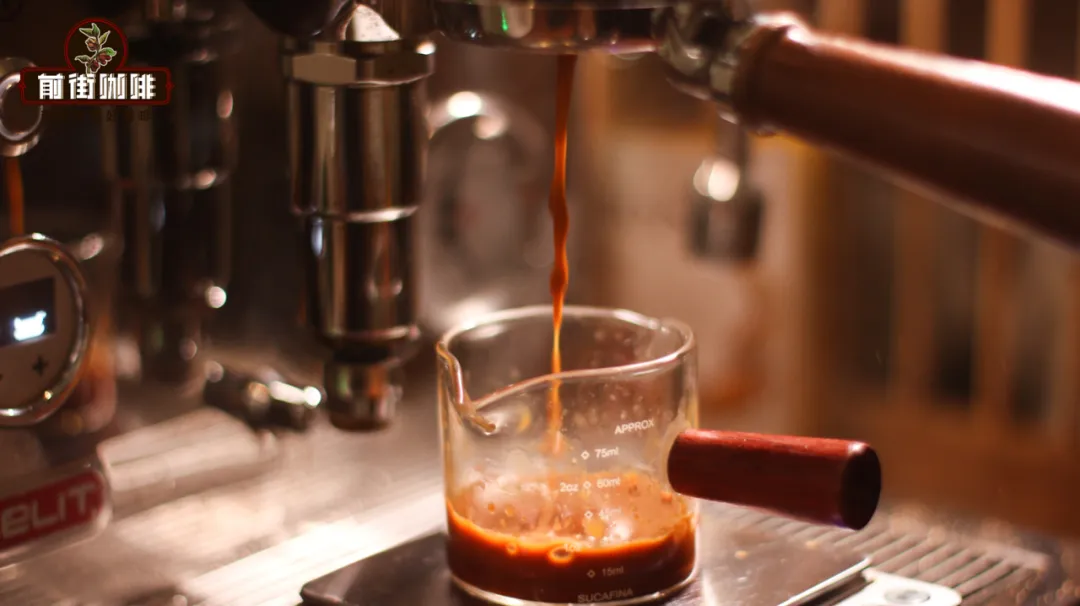
The state of coffee beans is actually changing all the time, and these changes are directly reflected in the espresso flow rate. For example, the day before, Front Street used 20 g of coffee to extract 40 ml of espresso in 32 seconds, but the next day, with the same dose, it took only 20 seconds to extract 40 ml of coffee liquid.
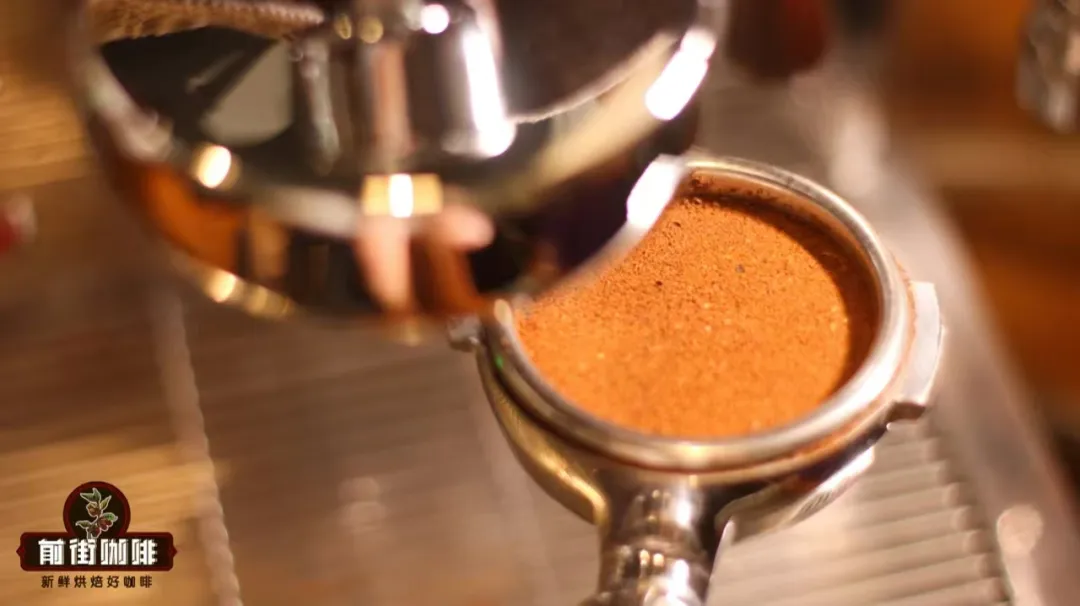
Some friends react quickly: when they see the flow rate become faster, they increase the dose, and when it becomes slower, they decrease the dose. This is indeed a feasible method, but the amount of coffee the basket can hold ultimately has an upper limit. Once the state of the coffee beans fluctuates greatly, it becomes difficult to increase the puck's resistance just by adding or reducing the dose. Without resistance, the espresso machine will not provide the corresponding pressure, and in the end an ideal crema layer cannot form. In this situation, the correct approach is to grind finer!
Take Front Street's practice as an example. Every morning when dialing in the grind, they first follow a fixed formula: 20 g of coffee extracted into 40 ml of coffee liquid within 28–32 seconds. If the time is not within this range, the grind must be adjusted. For example, if the earlier mentioned 20 g of coffee took only 20 seconds to extract 40 ml, then the grind needs to be adjusted finer by 2–3 steps, after which further fine-tuning can be done according to taste (fine-tuning can adjust the liquid weight or the dose).
The above content is compiled by CoffeeHunters, a coffee news website.


