







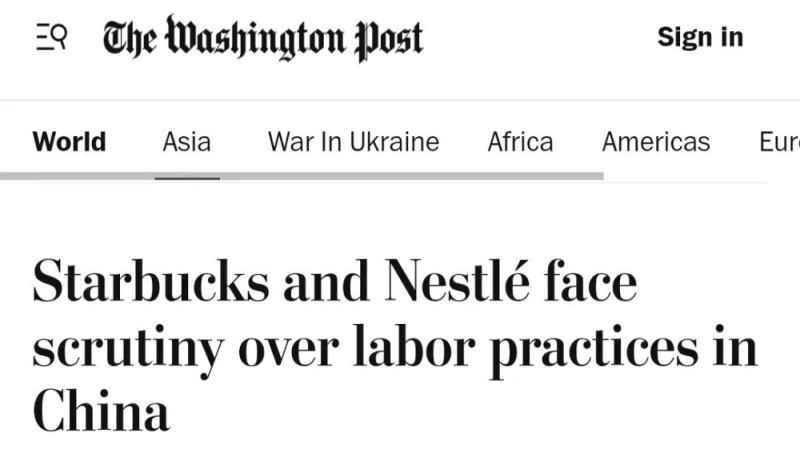
What did the investigation into Yunnan coffee farms find?
Two labor watchdogs, China Labor Watch and Coffee Watch, released reports on independent field investigations in Yunnan Province, China. They found that coffee farms supplying Starbucks and Nestle may not meet certification requirements, describing so-called ghost farms and a coffee money-laundering model in which small family farms informally supply beans to large certified estates.
Investigators made three undercover trips over several months and interviewed 66 people around 26 farms near Pu'er City. Workers are paid by picking weight and often work dawn to dusk, seven days a week, without paid leave, protective equipment, or contracts, which may breach Starbucks C.A.F.E. Practices and Nestle's 4C terms. Both companies said they will investigate.
Recently, two labor watchdog organizations released reports stating that field investigations in Yunnan Province, China, found that coffee farms in the supply chains of Starbucks and Nestlé may have situations that do not meet certification requirements. The reports revealed so-called "ghost farms" and a "coffee money-laundering" model—small family farms informally supply coffee beans to large certified estates, leading to labor practices that may violate the terms of Starbucks C.A.F.E. Practices and Nestlé's 4C certification. Through undercover interviews, investigators found that farm workers are paid by picking weight and often have to work from dawn to dusk, seven days a week, lacking paid leave, protective equipment, and contract protection. Both Starbucks and Nestlé said they will investigate carefully and take necessary measures.
▲
Click to follow | Daily specialty coffee culture magazine Coffee Workshop
According to reports from The Washington Post and Daily Coffee News, two labor watchdog agencies recently jointly released a report. After conducting independent field investigations in Yunnan Province, China, investigators pointed out that coffee farms in the supply chains of Starbucks and Nestlé may not meet relevant certification standards.
The report was jointly completed by New York-based China Labor Watch and the newly established Danish nonprofit organization Coffee Watch.
The report disclosed that in the coffee supply chains of the two companies, there is an operating model known as "ghost farms" and "coffee money laundering." Specifically, small family-run farms informally provide coffee beans to large certified estates that supply Starbucks or Nestlé. Through this model, large estates can both meet expected output and avoid signing detailed contracts with these small farms.
However, this practice may lead to certain labor practices within small farms failing to meet the employment rules promised by Starbucks and the requirements for complete production records.
China Labor Watch said that this year they sent undercover investigators three times over several months and conducted dozens of interviews around 26 farms near Pu'er City that were alleged to supply coffee to Starbucks and Nestlé, interviewing 66 people in total, including coffee farmers, their family members, and local schoolteachers.
Investigators found that farm workers' pay is calculated by picking weight. This means that during the harvest season, they often work from early morning until evening, seven days a week without stopping, in order to earn as much as possible. But this practice has inadvertently encouraged some practices that do not comply with Starbucks' employment rules, such as excessively long working hours, no paid leave, lack of protective equipment, and no contractual protection.
The report pointed out that serious labor abuses exist in the supply chains of Starbucks and Nestlé, and that these practices violate the terms of the two companies' certification programs, namely C.A.F.E. Practices, operated for Starbucks by Conservation International, and the 4C certification adopted by Nestlé.
In response, Starbucks said that its supplier agreements require all farms to keep detailed records of coffee production and purchasing, and "prohibit the informal supply arrangements mentioned in the report."
The company also said that they communicate "regularly" with "farms around the world" about maintaining ethical sourcing standards, and that "suppliers are regularly audited by third parties as part of our C.A.F.E. Practices program to identify any violations of our standards." Starbucks said that once it receives full details of the allegations, it will be "committed to a thorough investigation."
Meanwhile, Nestlé has been sourcing coffee beans from China since the 1980s. A Nestlé spokesperson said the company takes the allegations outlined in the report "very seriously" and has contacted coffee suppliers to "investigate carefully and, if necessary, take corrective action."
Image source: The Washington Post
Disclaimer: Some images in this article are from the internet, and for some content on the website, such as images, we will respect the original author's copyright and indicate the source. However, due to the large volume, some images and texts may not have been credited in time. Please understand. If the original author has any dispute, they may contact the website for handling. Once verified, we will correct it immediately. Compiled and edited by "Coffee Workshop." Please indicate the source when reposting. If there is infringement, please inform us for deletion. Thank you~!
The above content is compiled by CoffeeHunters, a coffee news website.


