







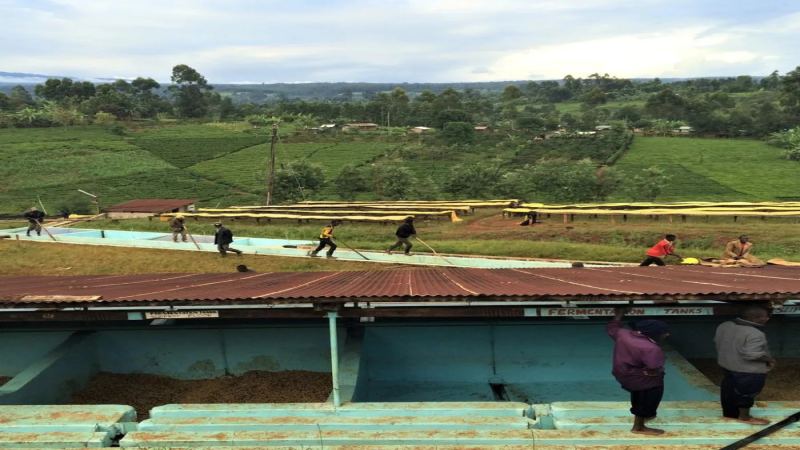
How does the K72 coffee beans process differ from regular washing?
Kenya's K72 method extends fermentation well beyond the 18 to 36 hours used in ordinary washed processing. The longer soak, followed by washing and controlled drying, helps produce the black plum and cherry tomato acidity, plus juicy sweetness, that Kenyan coffee is known for. SL28 and SL34 varieties grown in the Thika region carry those flavors especially well.
In the standard washed method, cherries are floated to remove unripe and rotten fruit, pulped, fermented and then rinsed. K72 repeats fermentation cycles with fresh water, which costs more time, water and labor. Coffee cultivation conditions in Kenya, combined with these varieties and processing choices, explain much of the cup profile roasters look for.
Kenyan coffee stands out in the global specialty coffee scene with its distinct sour notes of black plum and cherry tomato, along with a juicy sweetness. The formation of this flavor profile is owed both to the region's superior geography and climate, and to excellent varieties like SL28 and SL34, as well as the highly distinctive K72 washed processing method. This article will start with the ordinary washed process, trace in detail the origins and evolution of the K72 method, compare the key differences between the two in fermentation duration, processing flow, and cost input, and introduce the SL28 and SL34 coffee beans currently on sale at Front Street Coffee from the Asalia processing station in the Thika region, guiding you to an in-depth understanding of the logic behind Kenyan coffee's unique flavor.
Although Kenya and Ethiopia are both located in East Africa and are neighboring countries, the coffees they produce have distinct flavor profiles. Ethiopian coffee typically exhibits floral notes, refreshing citrus acidity, and a tea-like quality, while Kenyan coffee tends toward bright and rich black plum and cherry tomato acidity, with a juicy sweetness.
Kenya's ability to present such a distinctive coffee flavor is partly due to the country's geographical environment and climate conditions, which are highly suitable for coffee cultivation. At the same time, Kenya mainly cultivates high-quality varieties such as SL28 and SL34, combined with the locally unique K72 washed processing method, giving its coffee prominent acidity and juicy sweetness. This naturally leads one to ask: how exactly did the K72 processing method come to be? And what differences exist between it and the ordinary washed process?
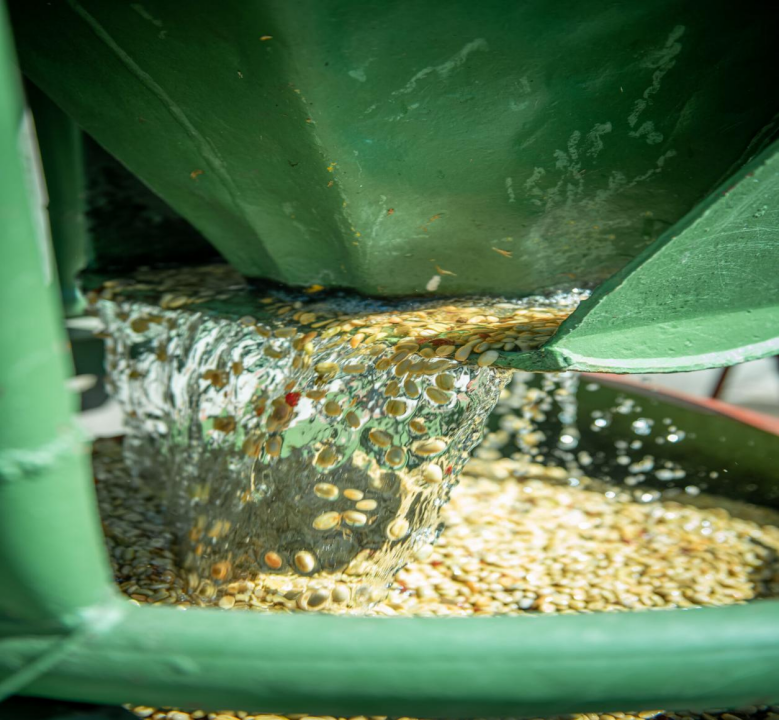
According to Front Street Coffee, Kenya initially also used the ordinary washed process, that is, the wet process. In the conventional washed process, after coffee cherries are picked, they are first poured into a water tank for flotation, thereby removing unripe and rotten fruits. Then the skin and pulp are removed, and the coffee beans still carrying mucilage and parchment are soaked and fermented, usually for 18 to 36 hours, in order to break down the mucilage layer.
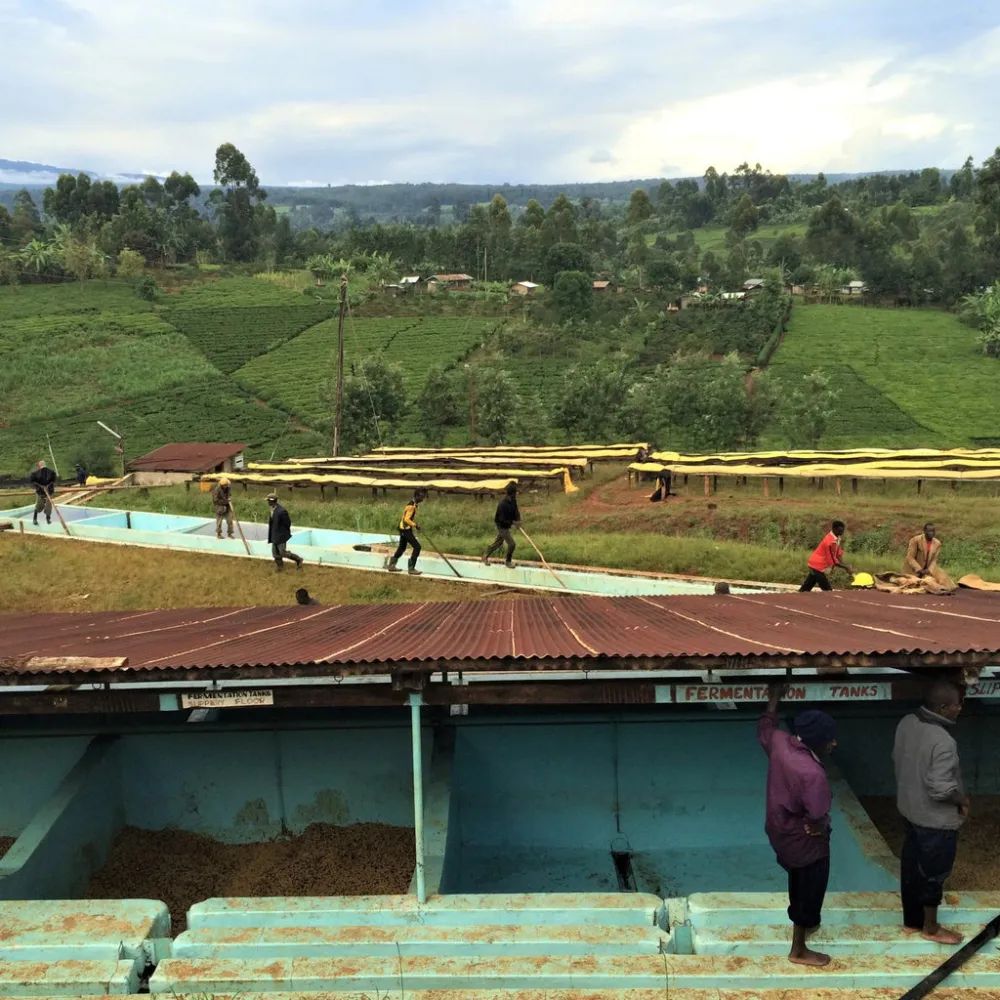
After fermentation ends, some fermenting bacteria and mucilage still remain on the coffee beans, so they need to be washed again with a large amount of clean water. After that, the moisture content is reduced by machine drying or sun drying to 10% to 14%. Finally, a huller is used to remove the remaining parchment and silver skin, and the entire processing flow is complete.
However, coffee cultivation in Kenya is mainly based on the cooperative model common in Africa, in which smallholder farmers deliver ripe cherries to designated processing stations for processing. Although depulping and fermentation themselves do not take much time, sun drying requires at least 5 to 7 days. In addition, because there were limited processing stations in Kenya in the past, when the volume of coffee awaiting processing was too large, there would often be a situation where a large number of already washed coffee beans had nowhere to be dried. In order not to let the wet beans become contaminated or spoiled, people could only put them back into the water tank and wait until there was space on the drying yard before taking them out for sun drying.
This practice of soaking twice in water is called double washing; because it was first adopted by Kenya, this washing method is also called the Kenyan process. Later, people discovered that coffee beans processed in this way not only helped stabilize varieties in production, but also gave the coffee a richly layered fruity acidity.
Through continuous improvement and extension, today's Kenyan 72-hour washed processing method, abbreviated as the K72 processing method, was eventually formed. The current K72 washed process places greater emphasis on precise control of fermentation time. The early steps are the same as the ordinary washed process, and the biggest difference lies in the fermentation stage: first, a 24-hour washed fermentation is carried out, and after the mucilage is removed, the water is changed and fermentation continues for another 24 hours; then the residual components are removed again, the water is changed, and fermentation continues for another 24 hours, totaling 72 hours, after which it is dried.
The fermentation time of the ordinary washed process is no more than 36 hours, while the Kenyan washed process repeats the fermentation stage 3 times, for a cumulative 72 hours. This method of washing after fermentation and repeating the process gives Kenyan coffee beans strong acidity and a delicate mouthfeel.
It should be noted that this processing method consumes a large amount of water and requires frequent water changes to prevent the coffee beans from developing off odors, so its cost is higher than that of the ordinary washed process. However, because it can produce coffee beans with a unique flavor and outstanding quality, many processing stations in Kenya still insist on using the K72 processing method.
At present, Front Street Coffee's Kenyan coffee beans come from the Thika region, are produced by the Asalia processing station, use K72 washed processing technology, and consist of Kenya's main varieties SL28 and SL34. After brewing, the coffee presents flavors of cherry tomato and black plum, with bright acidity, juicy sweetness, and a clean and refreshing mouthfeel.
To learn more information about coffee origins, please scan the QR code to follow: Coffee Review
Long-press the QR code to follow:
TRANSLATE with
x
English
Arabic Hebrew Polish Bulgarian Hindi Portuguese Catalan Hmong Daw Romanian Chinese Simplified Hungarian Russian Chinese Traditional Indonesian Slovak Czech Italian Slovenian Danish Japanese Spanish Dutch Klingon Swedish English Korean Thai Estonian Latvian Turkish Finnish Lithuanian Ukrainian French Malay Urdu German Maltese Vietnamese Greek Norwegian Welsh Haitian Creole Persian
TRANSLATE with
COPY THE URL BELOW
Back
EMBED THE SNIPPET BELOW IN YOUR SITE Bing Webmaster Portal
Back
The above content is compiled by CoffeeHunters, a coffee news website.


