







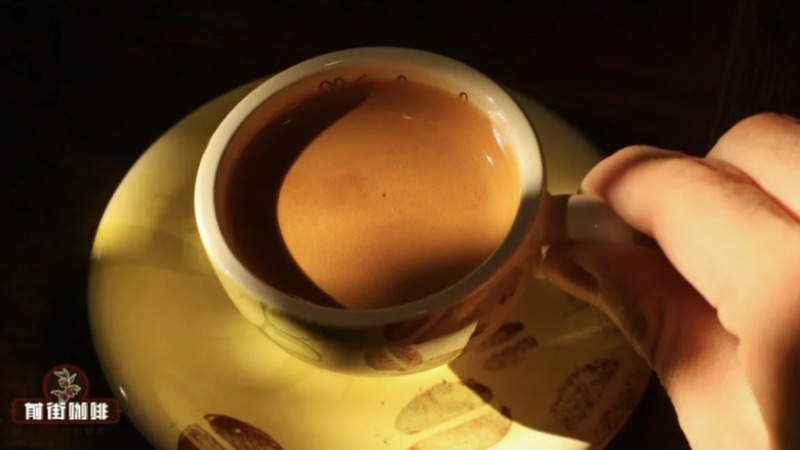
Lovers of rich body and oils eventually find their way into the world of dark roasts. There, instead of the freshness of floral and fruity acidity, you'll find a bold landscape woven from dark chocolate, caramel, herbs, and smokiness. This flavor map starts from Mandheling and marks out the classic coordinates of the dark roast world one by one.
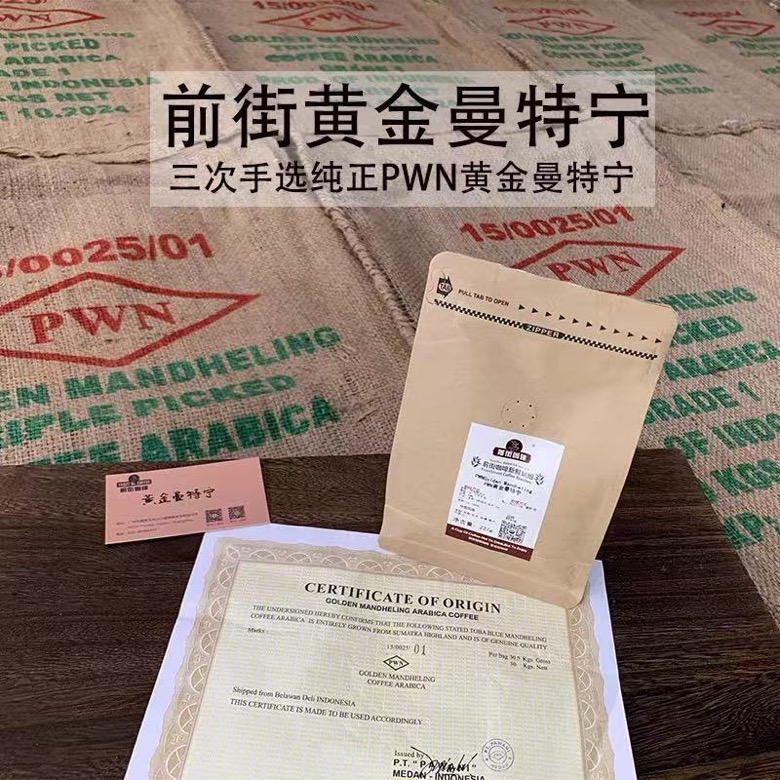
The starting point is Mandheling itself. Sumatra's wet-hulling process gives it a unique identity: beans with higher moisture content have their mucilage layer removed early, and the fermented character produced by slow drying gives Mandheling its signature herbal, earthy, and dark chocolate notes, with a body as thick as syrup. Front Street PWN Indonesian Golden Mandheling refines this style to a very high standard—PWN's screening criteria are G1 grade with beans of 18 screen size or above and fewer than three defect beans per 300 grams. After three rounds of hand sorting, the dark roast process pushes body and oils to a rich, full position, making it a coordinate that is hard to bypass on the dark roast map.
The second stop is Brazil's dark roast expression. Also a dark roast, Brazilian beans take a warm and gentle route: low acidity, high sweetness, and nutty chocolate as the base, with caramel and roasted nut notes becoming clearer after dark roasting. The classic Mandheling-Brazil blend pairs Mandheling with Brazil, where intensity and warmth complement each other into a three-dimensional bean—Mandheling provides the framework, Brazil provides the sweetness, and the oil performance remains excellent within a pure Arabica framework, proving that the richness of a dark roast does not have to rely on robusta beans.
The third stop is two gentle coordinates: Yunnan and the Caribbean. The 2013 Yunnan sun-dried Typica shows steady brown sugar and nutty flavors after dark roasting, and the cost-effectiveness of this local origin keeps it firmly in the daily-drinker position; Jamaica Blue Mountain No. 1 at a medium-dark roast is another realm altogether—its richness does not win through intensity, but through a precise balance of acidity, sweetness, and bitterness. Its creamy smoothness proves that "richness" and "elegance" can coexist, making it suitable for palates that want a break from the intense route.
The fourth stop is the flavored dark roast branch. Dark roasting does not mean monotonous flavor: the Dark Cocoa Blend makes cocoa flavor a clear throughline within a dark roast, the Autumn Chestnut Blend preserves a chestnut-like sweetness within the dark roast framework, and the Strawberry Candy Blend's fruity sweetness, after a medium-dark roast, has softened acidity while retaining sweetness. This branch shows that even as the roast level deepens, blend design can still keep flavors recognizable.
Bean selection advice after completing the map: start with the Mandheling-Brazil blend for a balanced, intense introduction to dark roasting; if you confirm you love heavy flavors, go straight to Golden Mandheling; for high-volume daily consumption, choose Yunnan sun-dried Typica as your daily staple; occasionally intersperse Blue Mountain No. 1 to recalibrate your palate's understanding of "balance." The dark roast world has only one rule: freshness matters even more with dark-roasted beans—dark-roasted beans degas more vigorously, carbon dioxide escapes faster, and the tasting window is shorter than for light-roasted beans. Planning bean purchases based on a two-week supply is the prerequisite for keeping a rich experience consistently online.
This map has no endpoint, and the explorable space of dark roasting is larger than imagined. Set out with sensitivity to body and oils, and every stop offers a new intense landscape.
The above content is compiled by CoffeeHunters, a coffee news website.

