







Where does Yirgacheffe Red Cherry coffee come from?
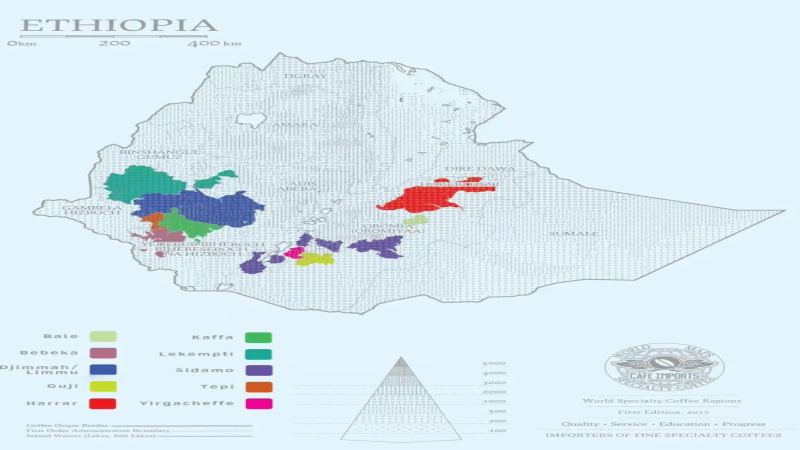
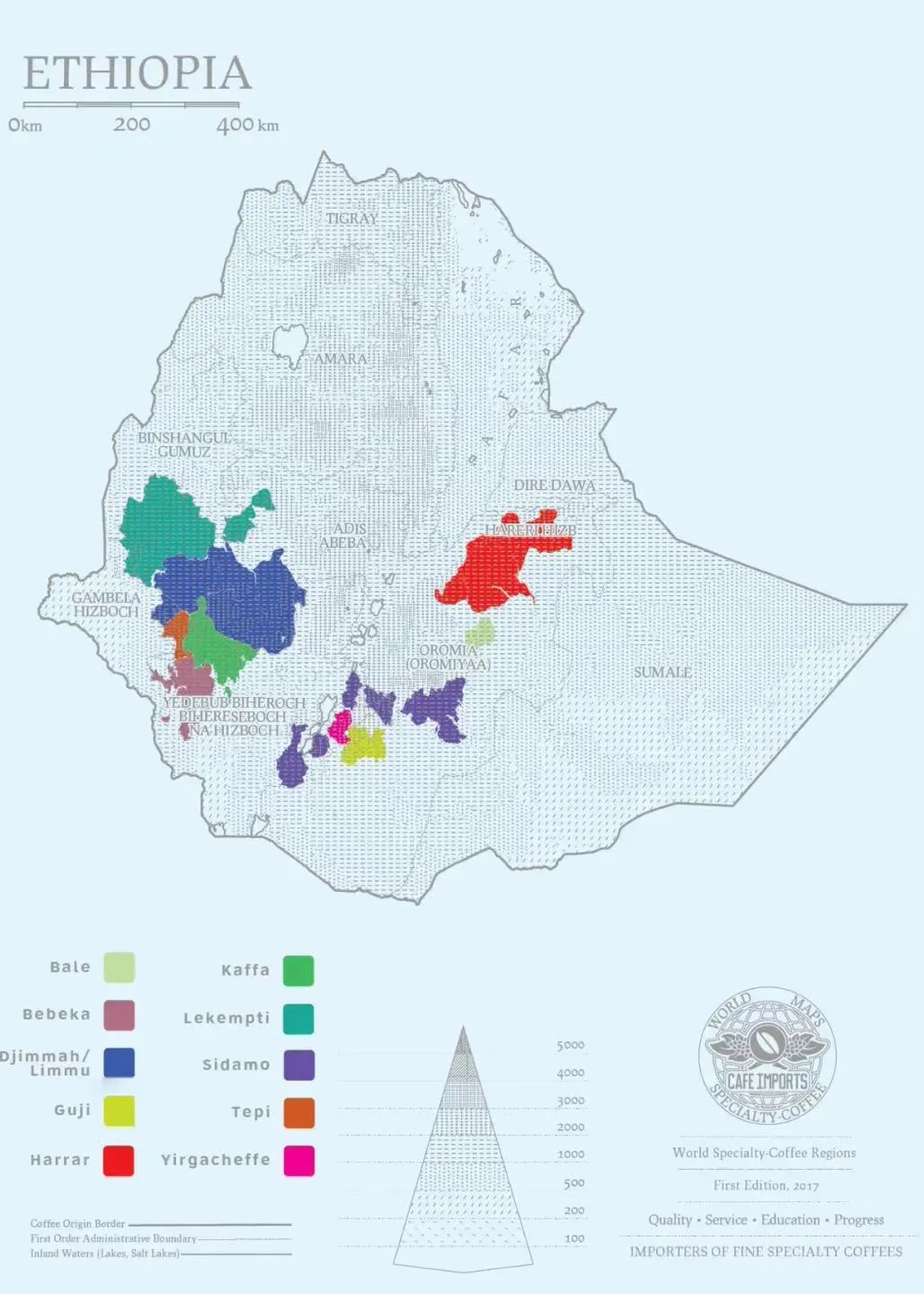
Ethiopia is widely treated as the birthplace of coffee and holds an estimated 10,000 to 15,000 native varieties, with regions such as Sidamo, Yirgacheffe, Kafa and Guji. On the Front Street Coffee list, Yirgacheffe Red Cherry takes its name not from flavor but from Operation Cherry Red, a project started in 2007 by Dutch green bean trader Trabocca.
Operation Cherry Red pays high prices for fully hand-picked, all-red cherries so farmers improve green bean quality. Yirgacheffe was once a small town in the Sidama Zone and became an independent region through a 2019 referendum; its distinctive flavor led to separate recognition as a producing region. Ethiopia remains Africa's largest coffee producer.
Ethiopia is widely recognized as the birthplace of coffee, home to tens of thousands of native varieties and famous for its floral and fruity aromas. On Front Street Coffee's bean list, there is a coffee bean called "Yirgacheffe Red Cherry." Here, "Red Cherry" does not refer to the flavor, but originates from the "Operation Cherry Red" launched in 2007 by the Dutch green bean trader Trabocca. This program incentivizes coffee farmers to improve quality by purchasing fully hand-picked, all-red cherries at high prices. This article will walk you through how Operation Cherry Red operates, its impact on the Ethiopian coffee industry, and the origin background, processing method, and cupping performance of Front Street Coffee's natural Red Cherry.
Ethiopia is not only the largest coffee producer in Africa, but also universally recognized as the birthplace of coffee. The native coffee varieties on this land are extremely rich, with estimates suggesting that the current number of varieties ranges between about 10,000 and 15,000. Local coffee, with its vivid fruit flavors and elegant floral aromas, has won the favor of a large number of enthusiasts.
Today, Ethiopia is home to several renowned coffee-producing regions, such as Sidamo, Yirgacheffe, Kafa, and Guji. Yirgacheffe was originally just a small town under the Sidama Zone—which became an independent region from the Southern Nations, Nationalities, and Peoples' Region through a referendum in 2019. Geographically, it is part of the Sidamo producing region, but because the coffee it produces has such a unique flavor, it was later designated as a separate coffee-producing region.
Front Street Coffee currently offers several coffee beans from Yirgacheffe, one of which is called "Yirgacheffe Red Cherry." So what exactly does "Red Cherry" mean? Is it because it tastes like red cherries?
The answer is no. The "Red Cherry" here actually indicates that this bean comes from a project batch called "Operation Cherry Red." According to Front Street Coffee, the core goal of this program is to help coffee farmers comprehensively improve the quality of green beans.
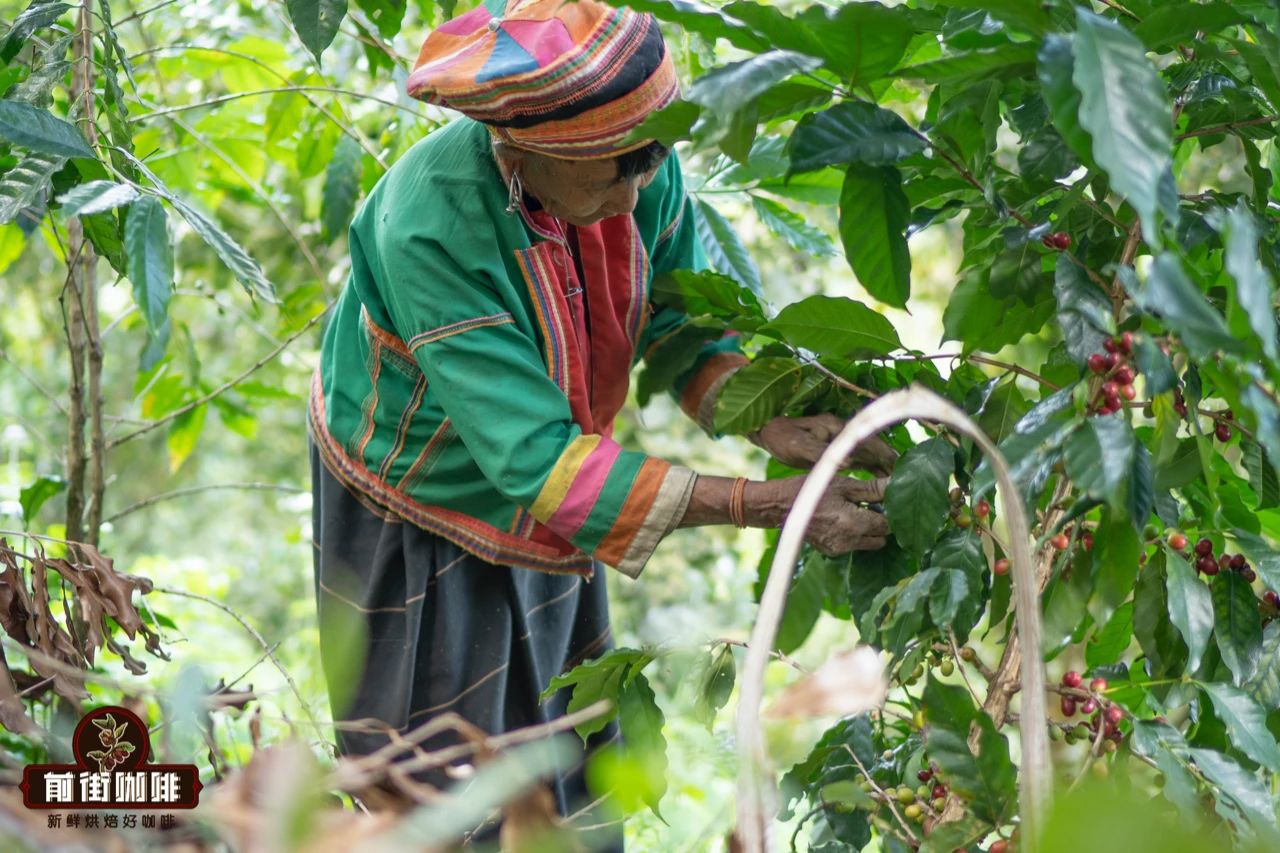
The coffee fruit itself looks like a miniature cherry, and it follows the same rule: the riper it is, the sweeter and more outstanding the flavor. Break open the pulp and you can even smell a faint fruity aroma. Therefore, if you want a cup of coffee to have a full and rich aroma, quality must be strictly controlled during harvesting, and the first principle is to pick only fully ripe red cherries.
In the past, farmers grew coffee trees in their backyards or fields, and when the harvest season arrived, they would collect the fruit and sell it to green bean traders or processing plants. However, coffee prices were low at the time, and in pursuit of speed and income, farmers often did not care about the appearance of the fruit—red cherries, green cherries, and defective cherries were all collected together, trading quantity for earnings. This practice led to inconsistent coffee cherry quality, which ultimately dragged down quality and flavor.
In 2007, Trabocca, the largest coffee bean trader in the Netherlands, stepped in and changed this situation. This company has long been committed to sourcing high-quality raw materials while also valuing environmental protection and farmers' livelihoods. They believed that the old model was not conducive to the long-term development of the industry, so they proposed "Operation Cherry Red."
Specifically, Trabocca invites Ethiopian farms during the harvest season to produce coffee beans in batches of between 1,500 and 3,000 kilograms, but only on the condition that they meet the requirements of Operation Cherry Red: fully hand-picked throughout, and 100% of the cherries picked must be fully red. In return, the company purchases these batches at prices several times higher than the market price.
In this way, both coffee farmers and green bean traders benefit: farmers' incomes increase, green bean quality is guaranteed, and prices naturally rise accordingly. Trabocca's requirement for small batches also gives processing plants enough time and energy to carefully process each batch of fruit.
However, Trabocca does not accept all small-lot coffee beans indiscriminately, even if they meet the basic threshold of Operation Cherry Red. After receiving the beans, the company conducts two rounds of cupping—one in Ethiopia and one in the Netherlands—and only batches that pass the standard will be purchased. In addition, Trabocca invests in processing plants, adds equipment, and provides financial loans and knowledge training to coffee farmers to help them improve their production level and produce higher-quality coffee beans.
Currently, Operation Cherry Red covers multiple processing methods including washed, natural, semi-washed, semi-natural, and experimental coffee. Its main producing regions include Yirgacheffe, Sidamo, Bonga Forest, and Lekempti, all of which are known for their unique flavors.
In short, Operation Cherry Red incentivizes coffee farmers to take every step of coffee berry harvesting and processing seriously by raising the purchase price of high-quality green beans. The coffee beans produced in this way are of better quality and taste better, and are more likely to gain market recognition, thereby selling at relatively higher prices.
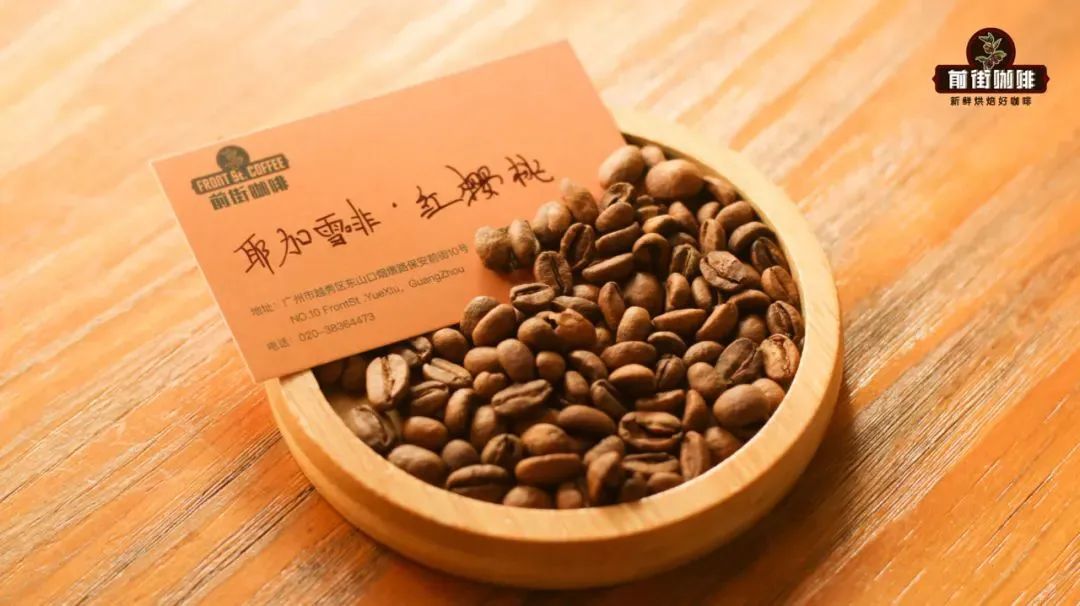
The Red Cherry coffee beans that Front Street Coffee has sourced come from the Yirgacheffe producing region and are processed using the traditional natural method.
The natural method is called "Natural" in English, meaning a natural, non-technological processing method. Since humans discovered coffee in Ethiopia in the 6th century AD, the natural method had always been the only processing technique for coffee circulating in the Arab world.
The traditional natural method requires no contact with water throughout the entire process, and extracting the seed is also very simple: first dry the whole coffee fruit thoroughly in the sun, then use a machine to crush and remove the husk, and you get the beans inside. It can be done anywhere there is sunlight. But the shortcomings of natural coffee are also very prominent—it is extremely dependent on the weather and requires a drying period of up to one month. If wind and rain occur during this month, all previous efforts may be wasted. Therefore, this ancient processing method is usually concentrated in tropical countries with distinct dry and wet seasons, and Ethiopia is one of the typical examples.
For meticulous natural processing, the coffee farmers responsible for post-processing must turn the fruit on the drying beds very diligently during the first three days. This is because the coffee cherries have a very high moisture content at this time, and if they are not turned in time, they will not only be prone to mold but also develop unpleasant sourness or rotten fruit flavors due to uneven heating. Throughout the process, the fresh coffee fruit is spread in only a thin layer, in order to give them better ventilation and drying conditions. After about 14 to 18 days, when the moisture content drops to the target level, they can be bagged and sent to the warehouse.
Considering that the natural Red Cherry comes from a high-altitude region and has rich floral and fruity aromas, Front Street Coffee's roaster made multiple adjustments and ultimately chose a medium-light roast to present this bean. After a few days of resting, Front Street Coffee cupped this natural Red Cherry: the dry fragrance presented a full berry-like sweet-tartness, and when slurped at different temperatures, one could perceive a soft berry sweet-tartness, a fermented note of ripe fruit, an obvious honey sweetness, and a black tea-like finish, with a smooth mouthfeel.
The above content is compiled by CoffeeHunters, a coffee news website.


