







How do the Indonesia protests affect coffee production?
Thousands of workers gathered in Jakarta on October 24, demanding an 8% to 10% minimum wage increase for 2025 and repeal of Job Creation Law provisions on employment and farmer protection. The protests are expected to reach 38 provinces through October 31, overlapping Indonesia's main coffee harvest and bringing factory shutdowns, blocked logistics, and supply chain disruption.
Jakarta police deployed 1,270 joint personnel and set traffic controls around the rally area, while the KSPI union threatened larger nationwide action. Earlier severe weather had already cut coffee production, and rising domestic consumption has squeezed export volumes, leaving the coffee industry to absorb wage pressure, weaker output, and logistics delays at once.
Indonesia recently erupted in large-scale worker demonstrations, with thousands of workers gathering in Jakarta to demand that the new government raise the minimum wage and repeal the Job Creation Law. The protests are expected to spread to 38 provinces and last until October 31. This social unrest coincides with Indonesia's main coffee harvest season, bringing a succession of problems such as factory shutdowns, blocked logistics, and supply chain disruptions. In addition, previous severe weather has already reduced coffee production, while growing domestic consumption has squeezed export volumes, leaving Indonesia's coffee industry facing multiple pressures. This article will sort out the background and demands of the demonstrations, the specific impact on the coffee industry, and the possible future risk trends, providing readers who follow coffee-origin developments with a comprehensive interpretation.
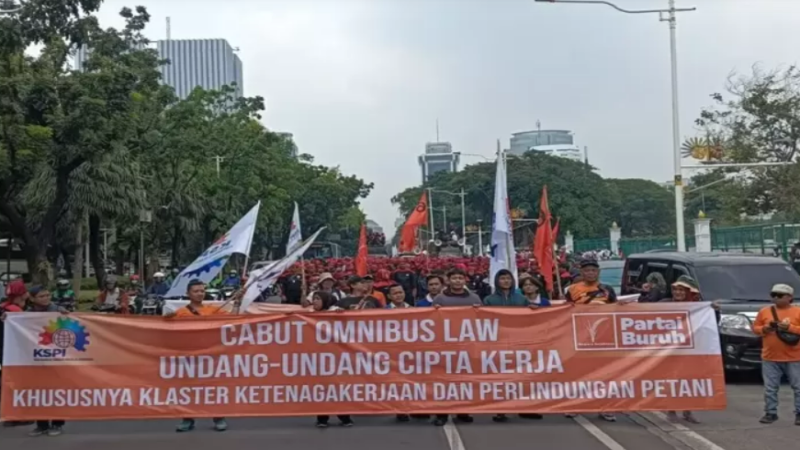
According to reports from local Indonesian media, on October 24, thousands of workers poured into Indonesia's old capital Jakarta for a demonstration, demanding that the new government raise the minimum wage and revoke the Job Creation Law, while threatening to organize even larger nationwide protests.
Reports indicate that Jakarta police deployed 1,270 joint personnel to ensure the safety of the rally and imposed traffic control measures around the workers' demonstration area. However, the president of the Confederation of Indonesian Trade Unions (KSPI) stressed that the workers' core demands focus on two points: first, the minimum wage increase for 2025 must reach 8% to 10%; second, the repeal of relevant provisions in the Job Creation Law, especially those concerning the employment cluster and farmer protection.
It is understood that over the past two years, workers' wages have either stagnated or risen less than inflation, causing workers' real purchasing power to keep declining. The news that the new government plans to set the minimum wage below the inflation rate has made this predicament even worse. Workers believe this move is extremely unfair, so hundreds of thousands of laborers are preparing to take to the streets to ensure that their rights are protected and recognized.
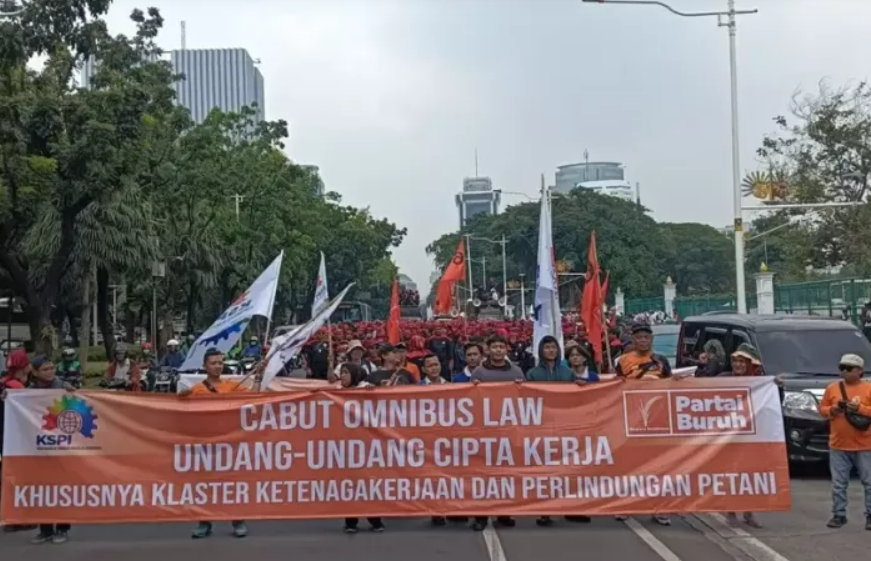
In addition, the demonstrations are expected to last until October 31, affecting 38 provinces and more than 350 regions/cities across Indonesia, with participants including hundreds of thousands of workers and teachers. Demonstrators on site said that if their demands are not met, the protests will continue until workers' rights are treated fairly and upheld.
The demonstrations began in Jakarta, where thousands of workers gathered at Merdeka Square. It is said that subsequent actions will spread to other areas, such as the Riau Islands in West Java. On October 25, demonstrations will be held simultaneously in the capitals of several major provinces, including Surabaya, Medan, and Makassar, and then spread to other areas until October 31.
In fact, this is not the first time the Job Creation Law has triggered large-scale protests. In October 2020, Indonesia's parliament passed the bill, which amended 79 labor laws and involved 1,200 articles, aiming to accelerate economic reform and optimize the investment environment to attract more foreign capital.
However, after the bill was passed, Indonesian trade unions and other organizations argued that it favored corporate interests too heavily and would harm workers' rights and the ecological environment. This triggered nationwide protests, demonstrations, and strikes, with more than 2 million people participating in street demonstrations, which eventually turned into clashes between police and civilians. Demonstrators set fire to and damaged multiple buildings, public facilities, and police posts, and more than 3,800 people were arrested during several days of rioting. At the same time, this incident dealt a considerable blow to multiple industries and the socioeconomic situation of the country.
Focusing on Indonesia's coffee industry, it is currently facing many challenges. Previously affected by persistent severe weather, coffee production has already declined, and combined with rising domestic coffee consumption, coffee export volumes have been greatly squeezed. Indonesia's total coffee bean production for the 2024/25 season is expected to be about 10.9 million bags, but only half of that is for export.
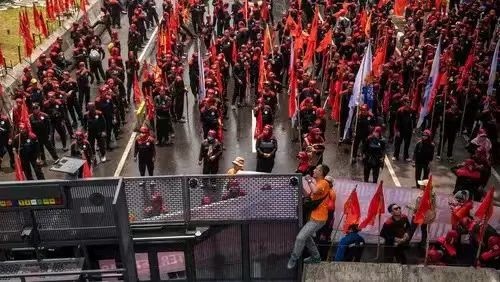
Now, because workers in many places are participating in marches, mostly concentrated in major provincial capitals, quite a few factories have been forced to shut down. This is currently the main harvest season for Indonesian coffee, but labor shortages and factory shutdowns have already affected the processing, production, and delivery of coffee and other products. Not only that, domestic logistics and trade have also been affected, with some supply chains disrupted. At the same time, the situation in the Red Sea has pushed up shipping prices, causing traders to reduce purchases of Asian coffee.
Although the current demonstrations are relatively peaceful, if the government remains silent, the situation may deteriorate or even erupt into conflict, which would further impact multiple industries and economic development in the country.
To learn more coffee-origin news and information, please scan the QR code to follow: Coffee Review
Long-press the QR code to follow:
The above content is compiled by CoffeeHunters, a coffee news website.


