







Will rain in Brazil arabica coffee areas steady output?
Brazil's coffee-growing belt is set to receive effective rainfall, easing a drought as arabica areas enter a new flowering season in November. Months of heat and water shortages have already cut output for the 2024/25 crop year and weakened the planting base for 2025/26, and Amazon basin water levels remain at historic lows, disrupting shipping and raising logistics costs.
Rainfall in the past week reached 25.1 millimeters, about 74 percent of the historical average, though October totals rose against the previous two years without matching the average. The real exchange rate, port delays and the postponement of the EU's EUDR policy are intertwined, leaving the outlook for Brazil's coffee industry output and prices uncertain.
Brazil's coffee-growing regions have finally received effective rainfall, and the long-drought-stricken Arabica areas are expected to find relief in the new flowering season in November. However, months of extreme heat and water shortages have already caused substantial damage to production for the 2024/25 and 2025/26 crop years, while water levels in the Amazon basin remain at historic lows and shipping disruptions are driving up logistics costs. At the same time, multiple factors—including the sharp fall in the real exchange rate, port delays, and the postponement of the EU's EUDR policy—are intertwining to leave the outlook for Brazil's coffee output and prices full of uncertainty. This article reviews the latest weather developments, industry impacts, and market chain reactions, and includes Front Street Coffee's continued attention to origin news.
According to multiple media reports, Brazil's coffee-growing belt is about to receive effective rainfall, and the drought of the past few months is expected to ease to some extent, which is relatively favorable for the growth and development of coffee trees in the new crop season. Especially after entering November, Arabica coffee-growing regions will successively enter a new round of flowering.
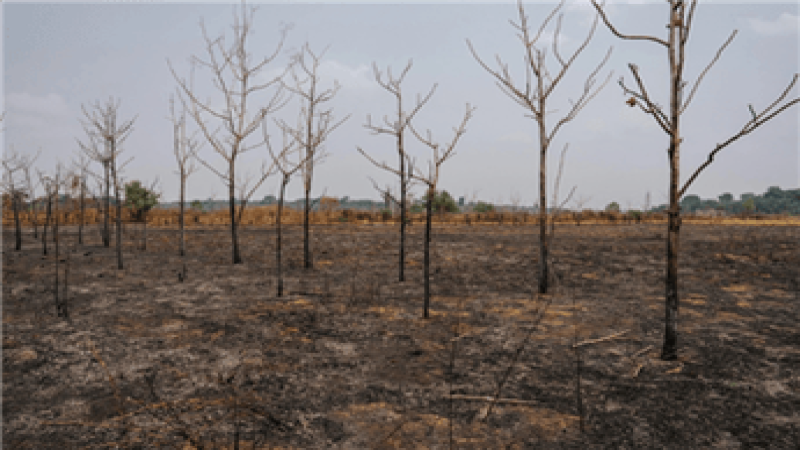
Since April of this year, many parts of Brazil have continued to report hot and rain-scarce weather, and the severity has been considerable. In many major production areas for coffee and other crops, average temperatures have been noticeably high, while rainfall has long been below the historical average for the same period, with some areas even going nearly half a year without a drop of rain. At the same time, several major rivers in Brazil have dried up or seen water levels plunge because of the drought, making the shortage of water resources prominent. These adverse conditions have not only caused a reduction in coffee output for the 2024/25 crop year, but also weakened the planting foundation and production potential for the new 2025/26 crop season.
Data from Brazil's meteorological department show that in the past week, rainfall in the country's coffee-growing areas was only 25.1 millimeters, equivalent to 74% of the historical average. However, cumulative rainfall for the entire month of October increased compared with the previous two years, though it still did not reach the historical average.
Experts from the meteorological agency Climatempo forecast that in early November, Brazil's largest Arabica-producing region—Minas Gerais state—will see heavier rainfall. If precipitation remains stable in the coming weeks, coffee flowering conditions will recover better. But local experts also caution that although continued rainfall can slow losses, it is not enough to fully offset the damage already caused by the earlier severe drought and high temperatures.
It is worth noting that although rainfall has resumed in many parts of Brazil, precipitation in the Amazon region is still low. Combined with rising temperatures and the effects of climate change, the local ecosystem, food security, and transportation infrastructure are facing greater pressure. At present, water levels in important waterways such as the Amazon River, the Negro River, and the Madeira River remain at historic lows.
Wilson Sons, Brazil's largest integrated port and shipping logistics service provider, noted in a report that the drought's impact on domestic shipping is especially obvious, with river transport in particular severely disrupted. The transport of goods such as grain and fertilizer in inland areas has been hindered, and both supply chain time and costs have risen, which may further push up local prices.
For Brazil's coffee industry, the immediate risk is that both prices and cultivation costs are rising. In addition to the drag on logistics and transport caused by the drought, the biggest variable comes from the recent sharp fall in the exchange rate of Brazil's currency, the real.
Affected by unclear fiscal prospects and the approach of the U.S. presidential election, the dollar has strengthened noticeably in the Brazilian market. This week the real depreciated by a cumulative 2.86%, with its exchange rate against the dollar falling to a nearly three-month low. Although the depreciation of the real makes Brazilian coffee more price-competitive in the international market, it also means higher prices for imported production inputs such as fertilizers and pesticides, thereby raising cultivation costs.
In addition, delay rates at several Brazilian ports remain high. Affected by multiple factors including strikes, the export logistics situation has shown no improvement, and export costs have risen accordingly. According to previous reports, these problems have already brought exporters costs of 5.938 million reais. At the same time, the postponement of the implementation of the EU's EUDR policy has temporarily slowed EU demand for coffee, and the reduction in imports has also weighed on international coffee prices. Taken together, the future output and prices of Brazilian coffee are full of uncertainty.
To learn more about coffee origin news, please scan the QR code to follow: Coffee Review
Long-press the QR code to follow:
TRANSLATE with
x
English
Arabic Hebrew Polish Bulgarian Hindi Portuguese Catalan Hmong Daw Romanian Chinese Simplified Hungarian Russian Chinese Traditional Indonesian Slovak Czech Italian Slovenian Danish Japanese Spanish Dutch Klingon Swedish English Korean Thai Estonian Latvian Turkish Finnish Lithuanian Ukrainian French Malay Urdu German Maltese Vietnamese Greek Norwegian Welsh Haitian Creole Persian
TRANSLATE with
COPY THE URL BELOW
Back
EMBED THE SNIPPET BELOW IN YOUR SITE Bing Webmaster Portal
Back
Front Street Coffee suggests that enthusiasts continue to pay attention to weather and exchange rate changes in Brazilian producing regions, as these factors will directly affect the future supply and flavor performance of coffee beans.
The above content is compiled by CoffeeHunters, a coffee news website.


