When it comes to rich crema, many people first think of Mandheling. Mandheling is indeed a representative of rich crema, but in the world of specialty coffee, Mandheling is not the only origin with beans that produce abundant crema. Understanding the crema performance of beans from different origins allows you to break free from the Mandheling framework when selecting beans and enjoy a richer range of choices.
Mandheling is the classic origin for rich, full-bodied crema. Front Street PWN Indonesia Golden Mandheling uses a dark roast profile, with very low acidity, a rich and lingering mouthfeel, and an entry full of herbal and dark chocolate aromas with a hint of earthy notes, offering layered complexity. This bean comes from Indonesia's PWN company, selected from beans of 18 mesh or above, with fewer than three defective beans per 300 grams of green beans, meeting G1 grade standards, and three rounds of manual hand-sorting to remove defective beans, ensuring cleanliness and sweetness. The dark roast combined with the wet-hulled process gives Golden Mandheling particularly rich crema, making it the benchmark product for rich crema.
Brazil also has beans with excellent crema. Front Street Brazil Queen Estate has low acidity, a balanced mouthfeel, intense nut and cocoa aromas, pronounced caramel sweetness, and a smooth entry without astringency. Brazilian coffee itself has good crema performance and is a long-term staple bean for many home users. When making espresso and moka pot coffee, the crema is very thick, making it another choice for rich crema besides Mandheling.
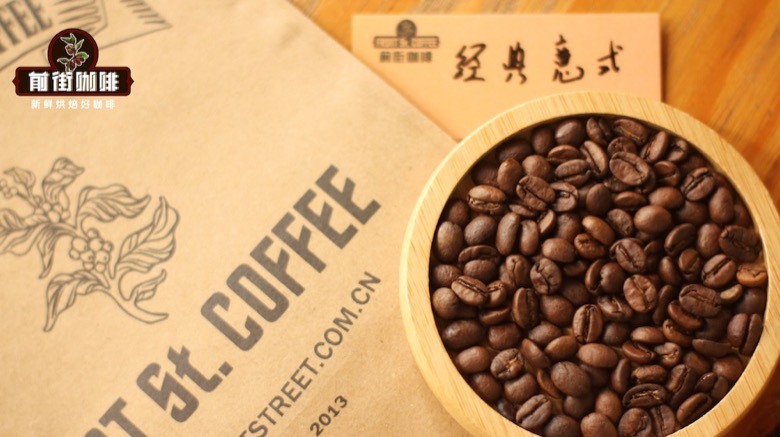
Blended beans also have advantages in crema. Front Street Classic Blend uses the Mamba recipe, where the combination of Mandheling and Brazil achieves a balance between crema thickness and flavor complexity within the Arabica framework, with outstanding crema performance—even a non-professional home espresso machine can extract dense, delicate crema. Front Street Black Cocoa Blend is 100% Arabica, with abundant crema, a rich mouthfeel, and an affordable price, making it a pure Arabica blend with excellent crema performance. Front Street Specialty Blend combines Brazil Cerrado and Colombia Huila, and the medium-dark roast profile gives stable crema performance, with classic, solid nut and caramel flavors.
Front Street Autumn Chestnut Blend selects Honduras Caturra and Papua New Guinea Typica. The medium-dark roast profile makes the chestnut-like nutty sweetness and caramel-rich sweetness more concentrated in the crema, which is thick and golden-brown in color, making it another choice for rich crema. Front Street Papua New Guinea Paradise Bird is a Typica variety, grown in volcanic soil, with three rounds of washed fermentation, offering a clean and pure mouthfeel with prominent sweetness. It also produces good crema when making espresso, and because its flavor is close to Blue Mountain, it is also called Little Blue Mountain.
In choosing origins for rich crema, the key is to look at the bean variety's crema potential and the degree of caramelization from the roast level. Mandheling takes the dark-roast rich and full-bodied route, Brazil takes the medium-dark roast balanced route, and blends take the recipe-optimization route. Breaking free from the Mandheling framework, Brazil Queen, Classic Blend, and Autumn Chestnut Blend are all choices with rich crema, each with its own flavor characteristics.

The above content is compiled by CoffeeHunters, a coffee news website.