







How Does the Coffee Grading System at Gesha Village Work?
Gesha Village Coffee Estate in Ethiopia's Bench Maji region sorts its production into five tiers: Champion's Reserve, Rarities, Growers Reserve, Single-Terroir, and Chaka. The coffee grading system at the 500-hectare estate separates lots by variety, block, and cup quality rather than by a single score, and each tier carries its own criteria for how the coffee was grown, processed, and selected before sale.
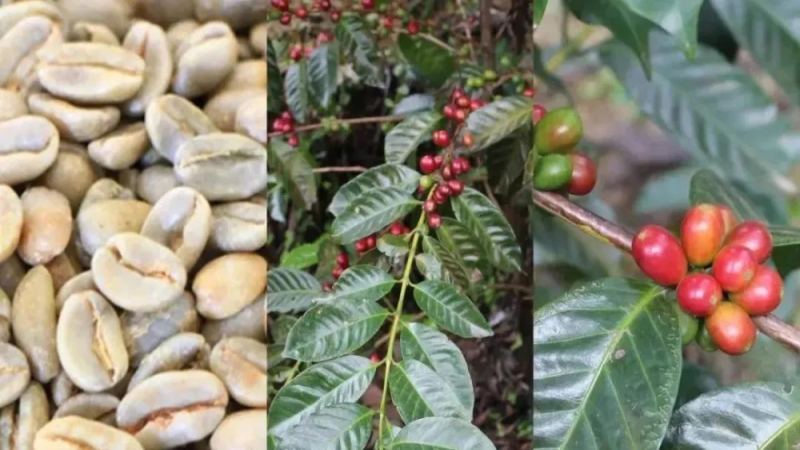
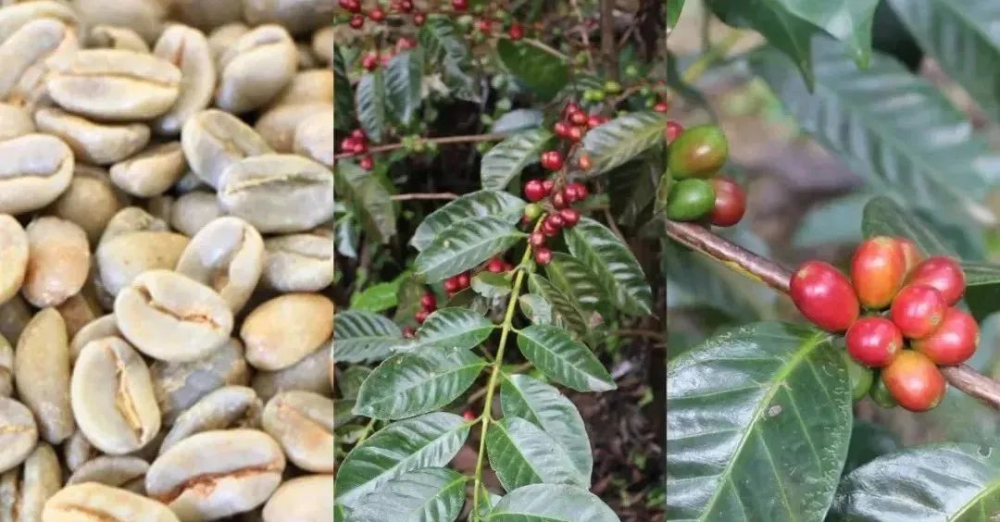
The estate grows three varieties: Gesha 1931, Gori Gesha, and Illubabor Forest 1974, planted across eight blocks. Gesha itself traces back to the Kaffa forest region of southwestern Ethiopia, where it was first identified in the 1930s for leaf rust resistance, before later reaching Panama and reshaping prices at auction.
In 2005, Panama's Hacienda La Esmeralda took first place in the Best of Panama competition with the Geisha variety, setting a new world record at $21 per pound, and Geisha's fame was sealed from that moment on. Tracing its origins, this variety was first discovered in the Gesha region near the Kaffa forest in southwestern Ethiopia. In 2007, director Adam Overton and his photographer wife Rachel Samuel discovered the Gori Gesha Forest while filming a coffee documentary, and later partnered with Willem, owner of Panama's Finca Mula, to establish the 500-hectare Gesha Village Coffee Estate in the Bench Maji region in 2011. The estate cultivates three varieties—Gesha 1931, Gori Gesha, and Illubabor Forest 1974—divided into eight blocks, and drawing on the experience of renowned Panamanian estates, it grades its coffee into five tiers: Champion's Reserve, Rarities, Growers Reserve, Single-Terroir, and Chaka. This article will break down the characteristics and grading criteria of each tier one by one, giving you an in-depth look at this legendary estate's coffee classification system.
In 2005, Panama's Hacienda La Esmeralda stepped onto the stage of the Best of Panama competition and auction with the Geisha variety. That year, this coffee stood out powerfully among the many competing lots with its delicate floral notes, jasmine-like aroma, and peach and bergamot tonalities, taking the championship with a score far ahead of its peers. In the subsequent auction, this lot of Geisha fetched a high price of $21 per pound, setting a world record at the time, and the Geisha variety has been in the public eye ever since.
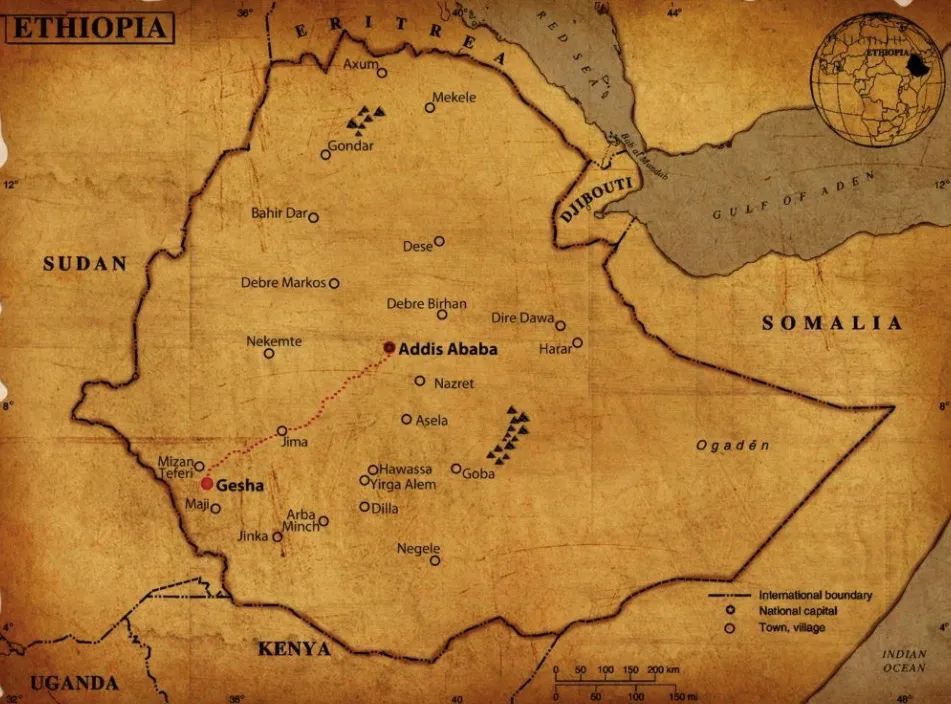
Through subsequent tracing of its roots, people discovered that the Geisha variety actually originated in Ethiopia. In the 1930s, it was first discovered in the Gesha region near the Kaffa forest in southwestern Ethiopia, and it drew attention at the time because of its resistance to leaf rust. The variety was subsequently sent to coffee research institutions in several countries, and ultimately rose to fame in Panama.
After Geisha became famous, many estates and countries introduced it for cultivation, including director Adam Overton and his photographer wife Rachel Samuel. In 2007, the couple was commissioned by Ethiopian authorities to travel there to film a coffee-themed documentary. While shooting on location in the Bench Maji region, they accidentally discovered the Gori Gesha Forest, and the idea of founding a coffee estate of their own was born.
In 2009, the couple met Willem, owner of Panama's Finca Mula, and the three of them traveled back to Ethiopia together, embarking on a journey to find the birthplace of Geisha. They came to a place in Bench Maji called Gesha Village and delineated the area most likely to be the original Geisha. In 2011, they formally established an estate here, naming it "Gesha Village Coffee Estate," commonly known in Chinese as 瑰夏村庄园.
Gesha Village Coffee Estate stands out as quite unusual in Ethiopia, entirely different from the vast majority of small local farms. It is a large farm covering 500 hectares, complete with its own dedicated processing facility and a coffee variety laboratory.
Currently, three coffee varieties are planted at Gesha Village Coffee Estate: Gesha 1931, Gori Gesha, and Illubabor Forest 1974. The estate is divided into eight blocks, and each block is planted with only one of these varieties.
Gesha 1931 takes its name from the year the Geisha variety was discovered—1931. This variety was first unearthed in Ethiopia, then passed through multiple countries, and ultimately made its name in Panama. Gesha 1931 is a native Geisha variety that the estate owners found in the Gesha forest; genetic comparison shows it is extremely close to Panama Geisha, hence the name. This variety is mainly planted in three blocks of the estate: Oma, Surma, and Narsha.
Gori Gesha, on the other hand, is a native Geisha bean variety discovered in 2011 after the estate was established, in the Gori forest 12 miles outside the estate, and it takes its name from that location. It is planted in three blocks: Bangi, Shewa-Jibabu, and Shaya.
Illubabor Forest 1974 is a variety with antibody characteristics bred by the Ethiopian Coffee Research Center, discovered in 1974 during a survey in the Illubabor forest. Currently, this variety is planted only at Gesha Village Coffee Estate.
The coffee grading at Gesha Village Coffee Estate does not follow Ethiopia's traditional system; instead, it draws on the practices of some renowned Panamanian estates, dividing coffee into five tiers: Champion's Reserve, Rarities, Growers Reserve, Single-Terroir, and Chaka.
Champion's Reserve/Farm Reserve accounts for only 3.7% of the estate's annual production and represents the very top lots after rigorous selection at every stage. This tier is further subdivided into Champion's Reserve and Farm Reserve, and currently can only be obtained through Gesha Village Coffee Estate's global auction channel.
Rarities accounts for 10% of the estate's annual production, with quality second only to the Champion's Reserve, and is often chosen by coffee competition participants for competitions.
Growers Reserve accounts for 15% of annual production, and the threshold for inclusion is scoring 88 points or above on the SCA's 100-point cupping system.
Single-Terroir comes from a single block and is a single variety; its flavor intensity is weaker than Growers Reserve, and there is no hard requirement regarding cupping score.
Chaka is a Geisha blend launched by Gesha Village Coffee Estate, mixing all the estate's blocks and varieties together without emphasizing subdivision. "Chaka" means "forest" in an ancient Ethiopian language, and Gesha Village Coffee Estate itself sits at the edge of a primeval forest on the Ethiopian highlands; the name also implies that this lot draws on the terroir essence of the entire estate's forest.
To learn more about coffee origin information, please scan the QR code to follow: 咖评
Long-press the QR code to follow:
TRANSLATE with
x
English
Arabic Hebrew Polish Bulgarian Hindi Portuguese Catalan Hmong Daw Romanian Chinese Simplified Hungarian Russian Chinese Traditional Indonesian Slovak Czech Italian Slovenian Danish Japanese Spanish Dutch Klingon Swedish English Korean Thai Estonian Latvian Turkish Finnish Lithuanian Ukrainian French Malay Urdu German Maltese Vietnamese Greek Norwegian Welsh Haitian Creole Persian
TRANSLATE with
COPY THE URL BELOW
Back
EMBED THE SNIPPET BELOW IN YOUR SITE Bing Webmaster Portal
Back
The above content is compiled by CoffeeHunters, a coffee news website.


