







Where Does Sweetness in Coffee Come From in Light Roasts?
Sweetness in coffee comes from two places: compounds already present in the green bean and changes created during roasting. In light-roasted Arabica beans, sweetness develops first as heat is applied, with acidity building just behind it. That is why a pour-over can taste sweet and soft rather than sharply sour, and why roast level decides how the two balance out in the cup.
Cupping forms place acidity and sweetness side by side because both reach the taste buds together, and sweet aroma adds to the impression at the olfactory level. A natural-process Arabica lot, brewed with a controlled coffee-to-water ratio, moderate water temperature, and staged pouring, shows how parameters can lift perceived sweetness while limiting astringency and harsh sour notes.
Many coffee enthusiasts hope that pour-over coffee can present a style full of sweetness and soft acidity, rather than being simply sharp and sour. So, where exactly does the sweetness in coffee come from? How does the roast level influence the ratio of sweetness to acidity? In daily brewing, what techniques should be used to amplify sweetness and suppress astringency? Starting from the laws of flavor development, this article will sort out the relationship between roasting and flavor description, and taking a natural-process bean as an example, it will break down in detail the complete approach to expressing a high-sweetness, low-acidity taste through parameters such as the coffee-to-water ratio, water temperature, and staged pouring.
When making coffee for guests, as long as the person is a new face, Front Street Coffee always first asks, "Do you prefer it on the sour side or not sour?" In earlier years, most people would decisively choose not sour, and some even said a little bitterness was fine. But as specialty coffee culture has grown stronger, the number of people willing to try sour coffee has clearly increased, and sour-style coffee has gradually become the preference of many, with light-roast beans becoming an especially sought-after choice in the pour-over world.
But in the end, compared with coffee that has only sharp acidity, what the public really favors is actually a expression of acidity with sweetness. This is also why everyone is always pondering how to brew light-roast beans sweeter, or repeatedly discussing how to make coffee show a higher sense of sweetness.
"Sweetness" comes both from the beans themselves and from roasting
Those who have participated in cupping should have experienced that acidity and sweetness are placed right next to each other on the evaluation form, indicating that when slurping, these two sensations stimulate the taste buds together. When we describe coffee as sweet, we do not mean only sweetness at the taste level, but also sweet aroma at the olfactory level. Therefore, from the perspective of tasting, only sour coffee with a sweet aromatic foundation can count as a high-scoring flavor performance. And to make coffee have balanced acidity and sweetness, the roasting stage plays a decisive role.
From the time green coffee beans are heated to the end of roasting, sweetness is the first flavor to be developed, and acidity follows closely after. According to the laws of flavor development, as the roast level deepens (and time lengthens), sweetness will continue to rise until it reaches a peak (usually in the medium to dark roast range), and then it begins to fall back rapidly. So if judging sweetness only from the roasting perspective, medium roast often retains more sweetness.
As ordinary consumers, although we cannot influence the roaster's tradeoff between acidity and sweetness, we can infer the bean's "sweetness content" with the help of flavor descriptions.

If you are just starting out and want to try high-sweetness coffee, you can begin with Front Street Coffee Strawberry Candy·Geisha Blend, Front Street Coffee Blackberry, and Front Street Coffee Sidra. These beans are mostly honey-processed and anaerobic natural, with flavors interwoven with grape, melon, dried fruit, and fermented notes. The sweet aroma is prominent, and the acidity is moderate;
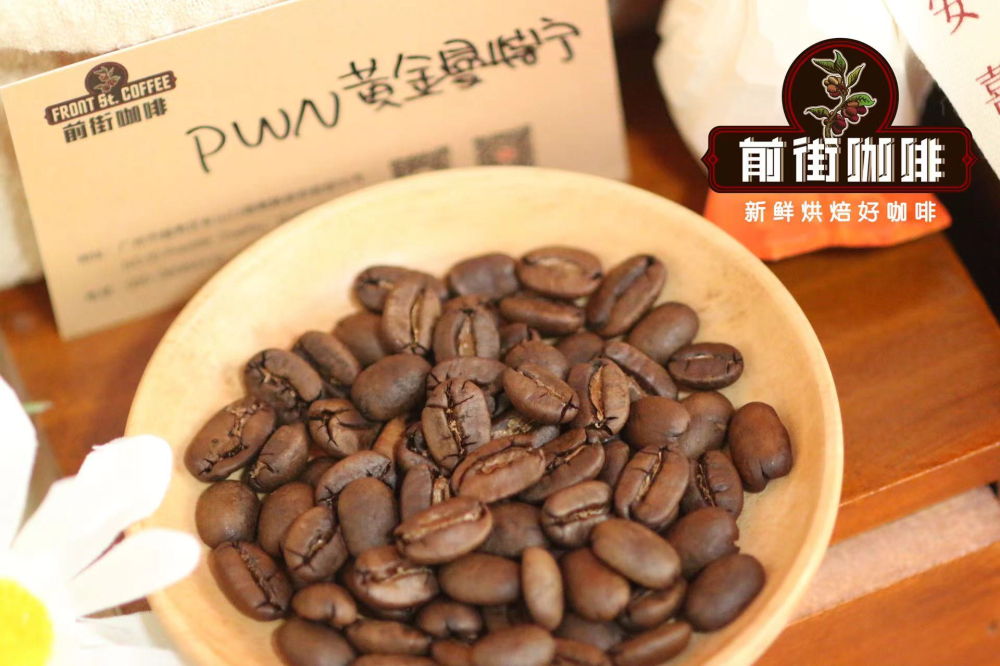
If you prefer coffee that is rich and has a sweet aftertaste, you can choose Front Street Coffee PWN Golden Mandheling, Front Street Coffee Queen's Estate, and Front Street Coffee Blue Mountain No. 1. These single-origin coffees use medium-dark roasting and carry sweet aromatic notes such as nuts, toffee, and chocolate, making it easier to highlight sweetness after brewing.
Acidity is often released in a concentrated way earlier than sweetness
Coffee extraction can be roughly divided into three stages. The first stage most easily releases light-molecular aromatic substances, such as floral notes and bright fruit acidity; the second stage extracts a large amount of caramelized substances, with flavors related to sweetness such as vanilla, sucrose, chocolate, nuts, and cream taking the lead; by the final stage, larger molecules that are harder to dissolve begin to appear in large amounts, mainly pushing the coffee's mouthfeel toward heavy, woody, sharp, and even bitter negative expressions.

Therefore, brewing coffee sweet essentially means increasing the proportion of sweet substances as much as possible, that is, finding a reasonable plan to "suppress bitterness and enhance sweetness." Returning to today's topic, if you want to improve the sweetness of light-roast beans while preserving the pleasant aromas of the early stage, you first need to ensure that the acidity and aroma of the first stage are controllable, and then grasp the second stage as the key extraction focus.
Combining with yesterday's shared content, Front Street Coffee selected a natural-process coffee bean known for its sweetness to demonstrate how to present a high-sweetness, low-acidity taste in brewing.
How to brew light-roast natural coffee sweet?
As Front Street Coffee said yesterday, natural-process coffee has rich and varied fruit flavors, along with a slight boozy feel and sweet fermented aroma. Therefore, in terms of parameters and technique, besides highlighting the acidity and sweetness of floral and fruity flavors, it is also necessary to improve the coffee's overall body and richness. Front Street Coffee achieves this by widening the coffee-to-water ratio, raising the water temperature by 1–2°C, increasing the number of pours, and coordinating with technique.
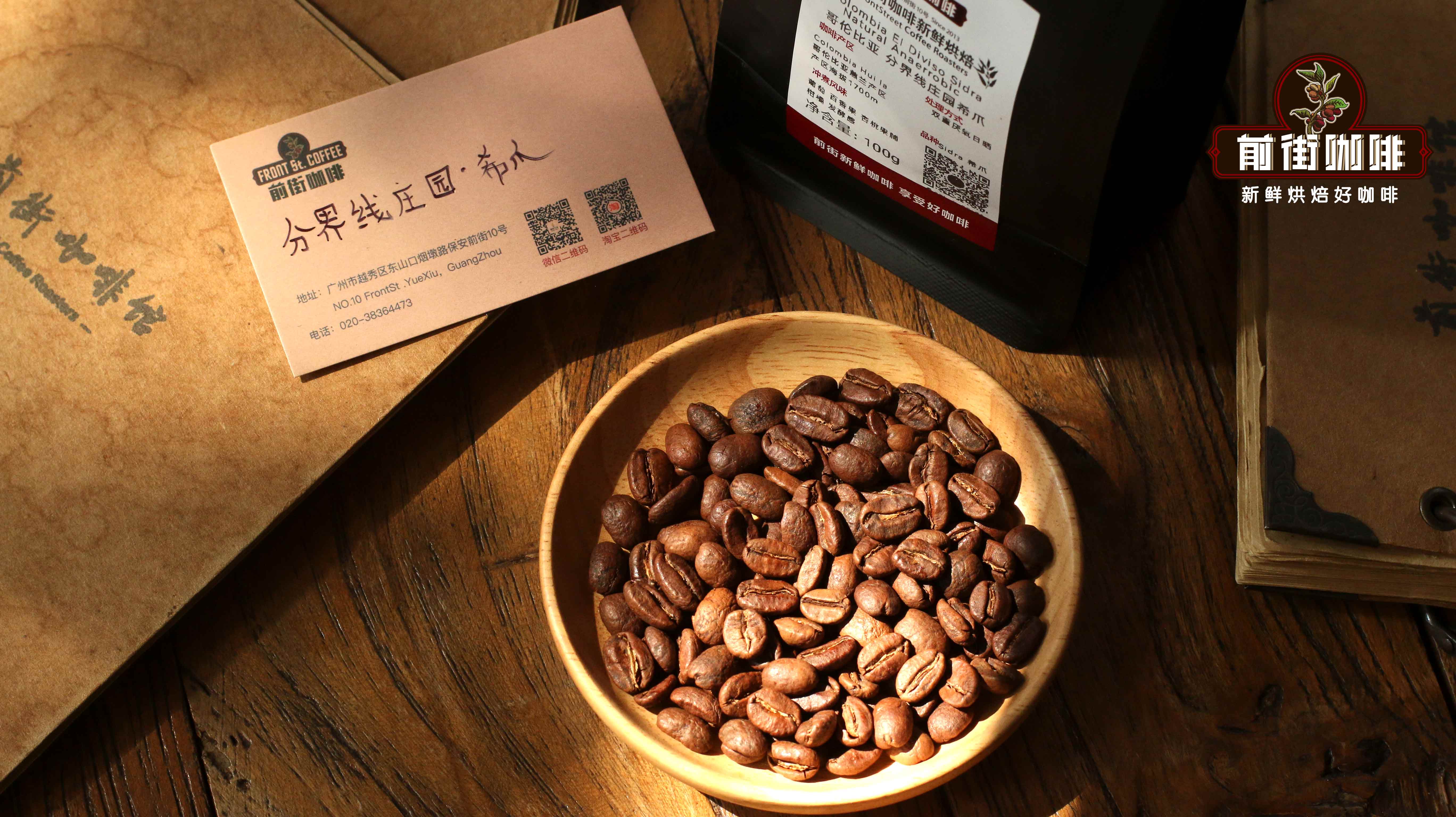
Coffee bean: Front Street Coffee Sidra - Colombia·Finca El Diviso
Dose: 15 grams
Coffee-to-water ratio: 1:16
Grind size: regular fine grind (EK43s setting 10)
Dripper: V60
Water temperature: 93°C
Staged pouring: four pours (30g/70g/70g/70g)
For the first pour, add 30g hot water and bloom for 30 seconds, making sure all coffee grounds come into contact with water and are in the same pre-extraction state;
After 30 seconds, use a small stream (4ml/s) and pour the second stage of 70g from the center in a clockwise small circle, with the aim of letting the coffee continue to degas while raising the coffee bed to about 3/5 of the dripper. Finish pouring in about 55 seconds, and the scale should read 100g;
When the liquid level drops to the point where the coffee bed is about to be exposed, begin pouring the third stage of 70g, still maintaining a slow small stream of 4ml/s. At this point, the circling amplitude can be a bit larger than in the second stage, intended to bring out more sweet substances. Finish pouring at about 1 minute 15–20 seconds, and the scale should read 170g. Be careful not to pour too quickly, so as not to push the water level too high, and try to keep a balanced rhythm between the drainage rate and the pouring amplitude.
When the coffee bed is exposed again, pour the final 70 grams. The technique is the same as the second stage, and try to control the stream so it does not circle too widely, because that can easily disturb the coffee bed and cause under-extraction. Finish pouring at about 1 minute 45 seconds. The final total water amount is 240g, and the whole process takes 2 minutes 12 seconds.
The natural Geisha brewed by Front Street Coffee using this method delivers an obvious clear sweetness on entry, with ripe fruit flavors like blackcurrant, melon, sugarcane, and blueberry jam. Compared with the usual three-pour method, the acidity is much softer, the body is thicker, and the sweet aftertaste is lasting. Even as the temperature drops, the various fruit sweetnesses remain full, and the finish carries a faint hint of rose aroma.
The above content is compiled by CoffeeHunters, a coffee news website.


