







How Does Geisha Coffee From San Isidro Labrador Taste
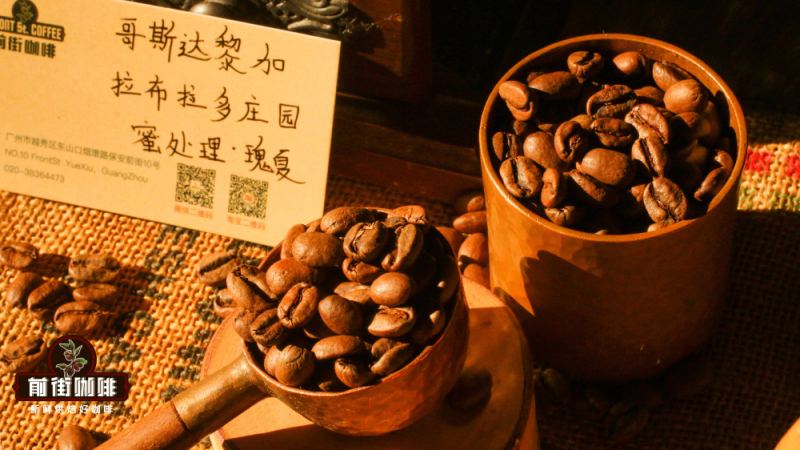
The honey-processed Geisha from Hacienda San Isidro Labrador in Costa Rica's Tarrazú region cups with cherry, orange, yellow peach, floral aromas, and an oolong tea finish. The coffee farm sits around Santa María de Dota at roughly 1,950 meters, spanning 6 hectares, and the lot comes roasted medium-light. A Hario v60 three-pour recipe brings out its juicy body and elegant florals.
Owner Johel Monge Naranjo is a third-generation grower who left coffee for land surveying and later returned, now running the estate with his son Matias; the family has placed repeatedly in COE auctions. Steep terrain blocks Atlantic weather while Pacific air and daytime sun reach the trees. Altitude there runs 1,900 to 2,100 meters, with distinct dry and rainy seasons.
Hacienda San Isidro Labrador is located in the Santa María de Dota mountains of Costa Rica's Tarrazú region, at an altitude of about 1,950 meters, with a microclimate featuring distinct dry and rainy seasons. The estate owner, Johel Monge Naranjo, is a third-generation coffee farmer who once switched careers to land surveying and, after retiring, returned to coffee, running the estate together with his son Matias and achieving repeated success in COE auctions in recent years. This time, Front Street Coffee has acquired the estate's honey-processed Geisha, which features notes of cherry, orange, yellow peach, floral aromas, and oolong tea. This article will introduce the estate's background, processing method, and cupping performance, and share Front Street Coffee's medium-light roast recommendations and Hario v60 three-pour brewing parameters, letting you experience this bean's juicy character and elegant floral aromas.
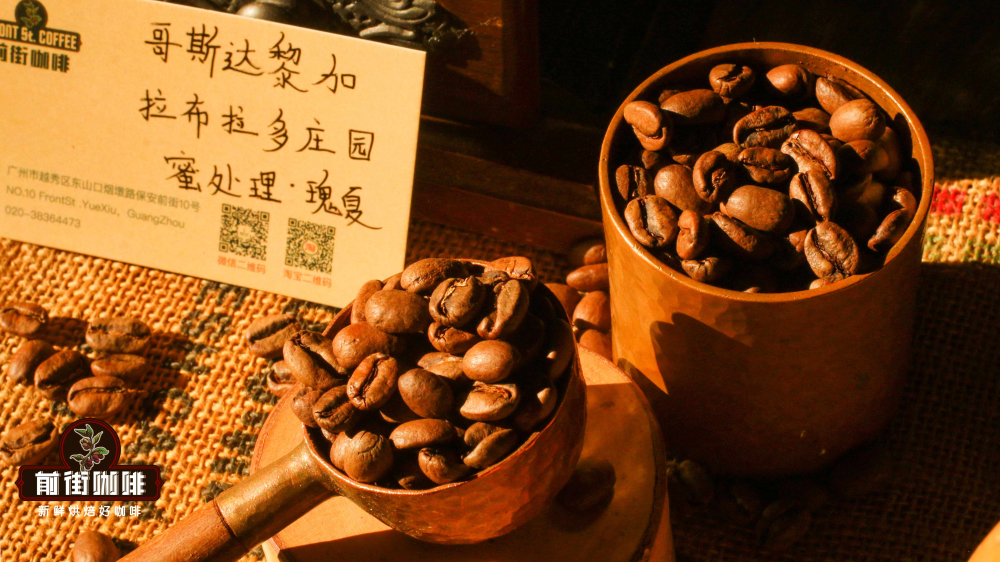
Costa Rica Hacienda San Isidro Labrador Honey-Processed Geisha
Country: Costa Rica
Region: Tarrazú, Quebradilla
Estate: Hacienda San Isidro Labrador
Altitude: 1,900–2,100 meters
Variety: Geisha
Processing method: Honey process
Flavor: Cherry, orange, yellow peach, floral, oolong tea
Hacienda San Isidro Labrador is located in Costa Rica's renowned Tarrazú region, with its coffee farm situated around Santa María de Dota, covering a total area of 6 hectares. The steep terrain forms a natural barrier for the coffee trees, blocking the intrusion of Atlantic weather while welcoming the warm, moist air currents from the Pacific, and providing abundant sunlight during the day. The estate sits at an altitude of about 1,950 meters, with a clear division between dry and rainy seasons, creating a distinctive microclimate for the growing area.
As a third-generation coffee grower in the family, estate owner Johel Monge Naranjo was influenced by his elders from a young age, gaining exposure to every aspect of the coffee industry and ultimately building it into a successful business.
When Johel was fifteen, his father gave him a plot of land and expected him to make a living from coffee cultivation, hoping he would become a diligent, down-to-earth coffee farmer. However, by the age of twenty-one, Johel had developed a new ambition—to study land surveying. So he sold the coffee farm he had inherited from his father, and afterward worked as a land surveying engineer for more than twenty years. After retiring, the restless Mr. Johel decided to return to coffee cultivation, purchasing a plot of land called San Isidro Labrador and picking up once again the work he had loved most as a child.
On ordinary days, the elderly gentleman manages Labrador Estate together with his son Matias Monge, focusing on the production, cultivation, and quality control of specialty coffee. After graduating from university, Matias worked for several years as a mechanical engineer, but perhaps driven by the family's generations-deep passion for coffee, he eventually returned to the family farm to help his father run the coffee business.
Under the family's joint management, Labrador Estate has in recent years appeared multiple times in COE green bean auctions thanks to its high-quality coffee, achieving several impressive results:
2017: Won first place in COE
2018: Won second place in COE
2019: Won first and third place in COE
2022: Won second place in COE
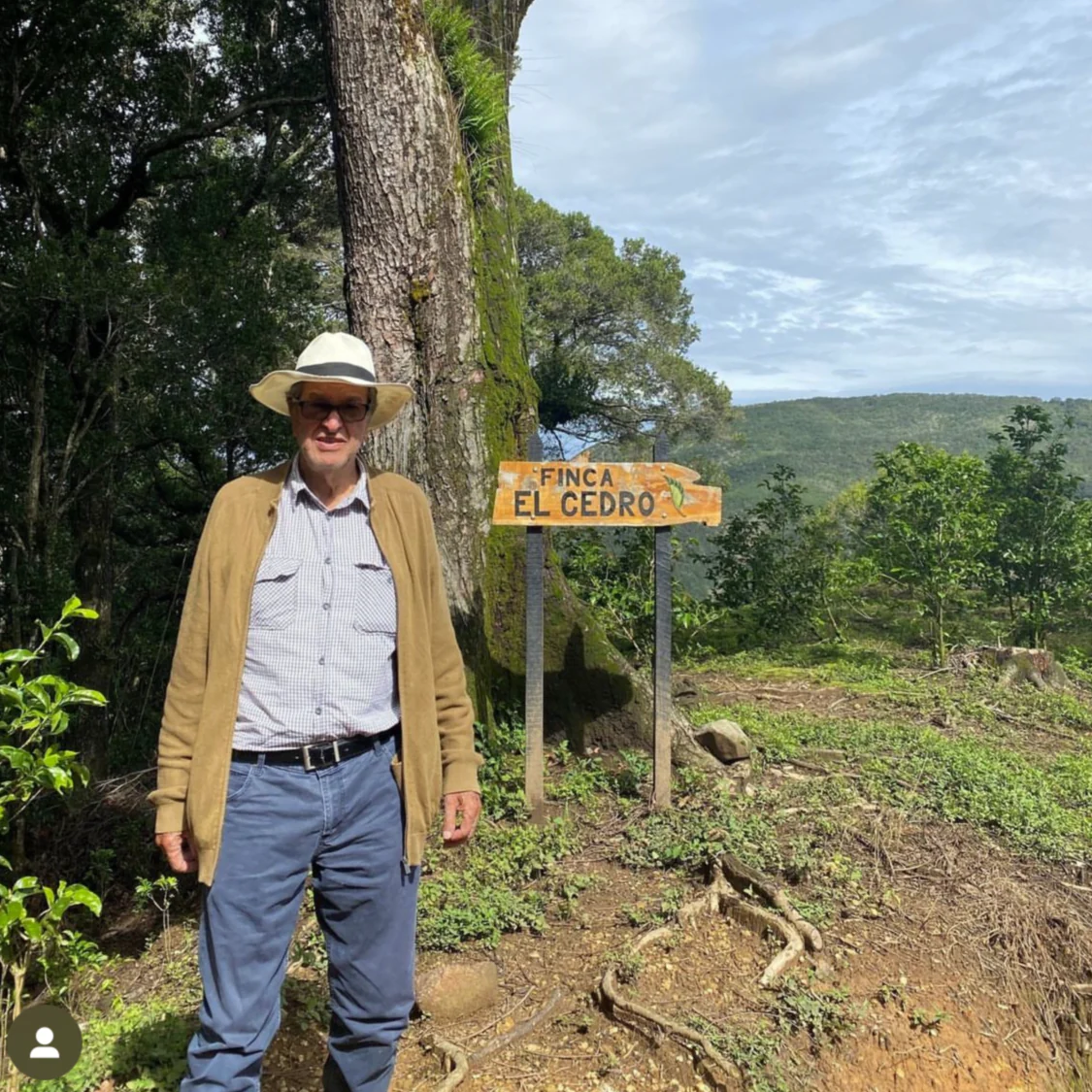
2023: Won first place in COE together with Finca El Cedro
2024: Won second place in the COE experimental category
It is worth mentioning that Labrador Estate was acquired by Don Ricardo about 9 years ago; in other words, what we now call Hacienda San Isidro Labrador is nominally a sub-estate under Don Dario Farm.
The San Isidro Labrador coffee beans that Front Street Coffee has acquired this time use the honey processing method favored by many enthusiasts, which not only gives the Geisha a delicate pink floral aroma but also lends the coffee a distinctive tropical fruit character. In micro-lot processing, Johel draws on years of accumulated green bean processing experience to fully bring out the advantages of honey processing. This method is one of Costa Rica's signature techniques, allowing the coffee beans to concentrate their aromas, develop abundant sweetness, and show remarkable layering.
In fact, the honey processing procedure is not complicated, but to achieve the ideal result, one must pay attention to many details, and it is also more time-consuming and labor-intensive than natural and washed processing. First, the ripe cherries that have been picked are sent into a pulper to remove the skin and pulp, and then the green beans, still covered in intact mucilage, are spread out on suspended mesh screens to dry. During this period, the cherries must be constantly turned to ensure even exposure to heat. Because of their slippery outer layer, the parchment beans stick to one another and gradually harden at the same time. Once the moisture loss reaches a suitable level, they can be sent to the warehouse for storage.
In order to preserve the floral aromas and fruity acidity compounds of this honey-processed Geisha while highlighting its candy-like sweetness, Front Street Coffee's roaster believes that a medium-light roast level is most suitable.
After two days of degassing and resting, the Front Street Coffee team couldn't wait to cup this bean. At the dry aroma stage, the honey-processed Geisha from Labrador Estate gave off a rich pink rose floral aroma, along with fruity notes of cranberry, yellow peach, and grape, making it very pleasant to smell; after hot water was poured in, the coffee released a fresh scent of citrus and honey.
After breaking the crust and skimming off the grounds, Front Street Coffee tasted a pronounced juicy quality in the coffee, accompanied by flavors of grape, orange, and cherry, along with a black-tea-like sweetness and elegant floral aromas. As the temperature gradually dropped, the sweet-and-sour notes of citrus and apricot became lighter and lighter, with a clean finish, making each sip feel like drinking a cup of lightly sweet fruit tea and lifting the spirits.
Generally, when brewing high-altitude hard beans, the flavor tends toward pronounced acidity. Under a medium-light roast, the internal structure of the coffee beans is still relatively hard, so a higher water temperature and a finer grind are needed to extract more aromatic substances. For a coffee with such complex aromas as Geisha, Front Street Coffee recommends choosing fresh coffee beans to better present its flavor and mouthfeel. All coffee sold by Front Street Coffee is freshly roasted within 5 days, as we well understand the importance of freshness and hope that customers receive coffee beans at their optimal flavor period so they can be brewed and enjoyed directly.
For brewing, Front Street Coffee used a Hario v60 dripper, with 15 grams of coffee grounds, ground to the coarseness of fine granulated sugar (80% passing a No. 20 standard sieve), a water-to-coffee ratio of 1:15, a water temperature of 91°C, and a three-pour extraction.
Front Street Coffee first pours 15 grams of coffee grounds into the dripper and tares the scale to zero, then pours 30g of water in the first pour for a 30-second bloom while starting the timer, using a small stream throughout and circling from the center outward, taking care to wet the entire coffee bed.
For the second pour, switch to a slightly larger stream and pour 120g of water, with the aim of lifting the entire coffee bed; the stream should be poured vertically and evenly, and at this point the timing scale shows 150g, with the pour finishing at around 55 seconds.
When the liquid level drops to the halfway point, begin the third pour, using a small stream and a small circle to add 90 grams, trying to keep the circling not too wide so as not to disturb the coffee bed and cause under-extraction. The final total water volume is 240 grams, and the drip finishes at around 2 minutes 10 seconds. After removing the dripper, swirl the coffee in the server to even it out and it is ready to taste.
The above content is compiled by CoffeeHunters, a coffee news website.


