







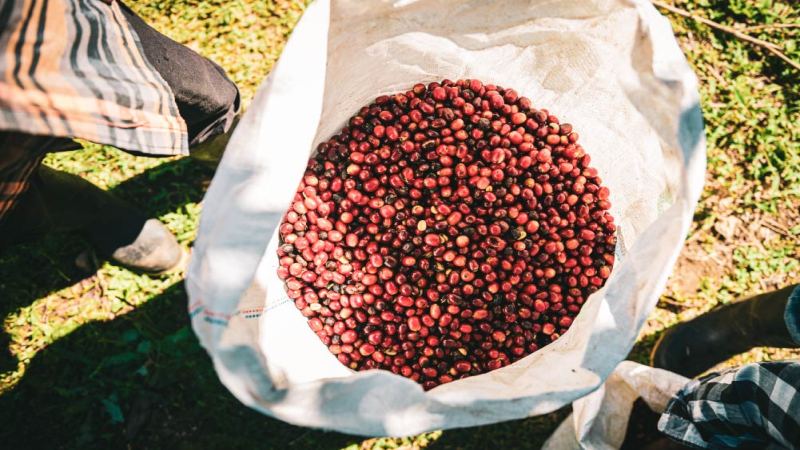
Why Does Arabica Coffee Thrive in Colombia's Andes?
Colombia ranks as the third-largest coffee producer in the world, and its output comes entirely from the western Andes, where high elevations, volcanic soils and varied microclimates support Arabica coffee. Of the country's 15 producing regions, Huila is the most widely known, while Tolima has grown into the third-largest producing area.
South America's combination of tropical climate, rainfall of roughly 1,000 mm a year and mountain terrain above 300 meters gives coffee cultivation a strong natural base, though Brazil still leads global output. Colombia's complex Cordilleras and volcanic ash soils let each region build its own terroir, which is why Huila and Tolima taste noticeably different.
Colombia, with the high altitudes, volcanic soils, and diverse microclimates of the Andes, is the world's third-largest coffee-producing country. Among the country's 15 province-divided producing regions, Huila is the most famous, while Tolima has risen to become the third-largest producing region. This article will review Colombia's geographical advantages for coffee, focus on the terroir characteristics of Huila and Tolima, and mention Front Street Coffee's everyday beans series.
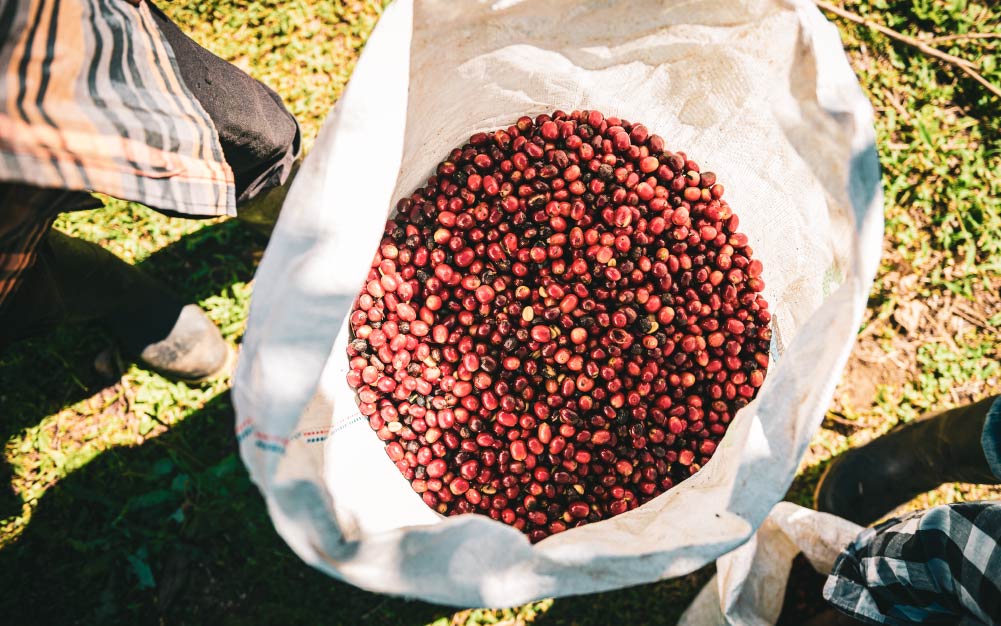
Compared with other coffee-producing countries in Central and South America, Colombia enjoys uniquely vast land, and its complex terrain creates rich climate types, providing a superior natural foundation for growing high-quality Arabica coffee. Today, Front Street will introduce you to Colombia's specialty coffee regions.
South America lies in the southwestern hemisphere, and its land area ranks fourth among the continents. Its western part is crossed by the Andes, forming a landscape dominated by plateaus, hills, and mountains, with many volcanoes and elevations between 300 and 3,000 meters; the east is the vast Amazon River basin, crisscrossed by rivers and gently sloping.
South America's climate is mainly tropical rainforest and tropical savanna, warm and humid, with an average temperature above 20°C. The continent receives abundant rainfall, with about 70% of the area reaching an annual precipitation of 1,000 mm. A suitable climate, ample rainfall, high-altitude mountain areas, and volcanic soil make the continent's agriculture well developed, and many countries grow coffee. Brazil's coffee production ranks first in the world, while Colombia, relying on its unique terrain and climate, has become the world's third-largest coffee producer.
Colombia is located in the northwest of South America and has both sea and land. Its terrain is broadly divided into the western Andean region and the eastern plains. The east is mainly plains with lower elevations, so all coffee is grown in the western Andes. After checking coffee maps, Front Street found that the Andes are mainly divided into the Eastern, Central, and Western Cordilleras, with average elevations exceeding 3,000 meters and volcanoes throughout. Volcanic ash provides fertile soil for crops, and coffee grows along the highlands of these mountain ranges.
Colombia lies in the tropics. The eastern plains and coastal areas have a tropical rainforest climate, the northwest has a tropical savanna climate, and the mountains at elevations of 1,000 to 2,000 meters have a subtropical mountain climate. The layered mountainous terrain brings complex and changeable microclimates, allowing Colombia to have harvest seasons throughout the year, with fruits maturing one after another at different times.
Colombia is vast and has a total of 15 coffee-producing regions, all divided by province. The main producing regions include Cauca, Santander, Antioquia, Narino, Tolima, and Huila.
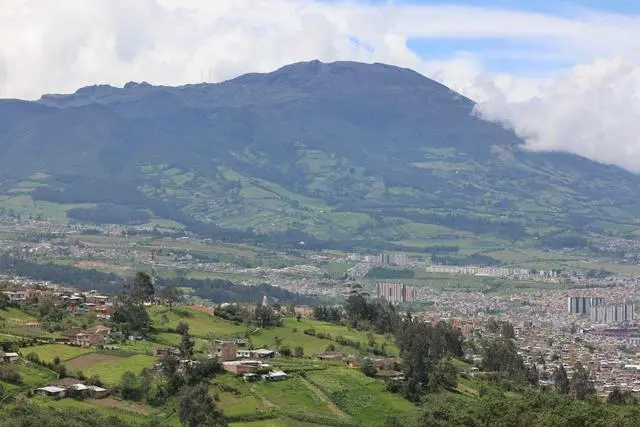
Among them, the best known is the Huila producing region, named after the famous local Huila Volcano, which is also Colombia's highest volcano. This region is located in southwestern Colombia, in the valley between the Eastern Cordillera and the Central Cordillera. The canyon provides a good barrier and the climate is mild. In addition, the Magdalena River, Colombia's largest river, flows through this area, providing abundant water, making it an ideal place for coffee cultivation. As a result, many well-known estates have emerged, such as El Diviso and El Roble.
In FrontStreet Coffee's everyday beans series, there is a coffee from Colombia's famous Huila producing region, made with the Caturra variety and processed by the washed method. When brewed, it presents flavors of dark chocolate, nuts, and caramel, with a clear sweet aftertaste and an overall balanced profile. At lower temperatures, it has a slight fruit acidity, making for a very comfortable mouthfeel.
In recent years, Tolima, located in west-central Colombia, has gradually emerged and is currently Colombia's third-largest coffee-producing region, accounting for 12% of the country's annual coffee output.
Tolima is adjacent to Huila and Cauca. The north-south-trending Andes (M. Andes) and Cordillera (M. Cordillera) run through the entire region, and between the two mountain systems flows the Magdalena River (R. Magdalena) from south to north.
The name Tolima comes from the Pijao people who first lived here. In their ancient language, tolima means "snowed." Farms in Tolima are generally slightly larger than those in other producing regions in southern Colombia, usually between 10 and 15 hectares. The cooperative model is also common locally, with farmers sending small batches of fresh coffee cherries to the cooperative's processing plant. Some farmers also process the day's picked cherries themselves using their own small-scale facilities.
The above content is compiled by CoffeeHunters, a coffee news website.


