







Where Is Panama Coffee Cultivation Concentrated?
Panama's coffee cultivation is concentrated in three areas of Chiriqui province in the west: Boquete, Volcan and Renacimiento. They sit around the Baru Volcano, whose ash-rich soil and microclimate support high-quality lots, and the country built its specialty reputation largely on the Geisha variety grown there.
Coffee arrived with European colonists in the 19th century, when output mattered more than quality and Panama produced about one-tenth of neighboring Costa Rica. After world prices fell, growers formed the Specialty Coffee Association of Panama and used competitions and exhibitions to promote geisha coffee beans and other specialty lots.
Although Panama has a limited land area, it occupies a key position in the global specialty coffee map thanks to its unique terroir. Its coffee cultivation is mainly concentrated in three regions of Chiriqui Province in the west: Boquete, Volcan, and Renacimiento, forming a superior microclimate environment around the Baru Volcano. This article reviews the development of Panama's coffee industry from a yield-oriented focus to specialization, explains in detail the geographical advantages of the Boquete production area and the distribution of well-known estates, and introduces the history, cultivation scale, and competition performance of Elida Estate. It also includes flavor descriptions of related Front Street Coffee products, providing coffee lovers with a complete framework for understanding the production area.
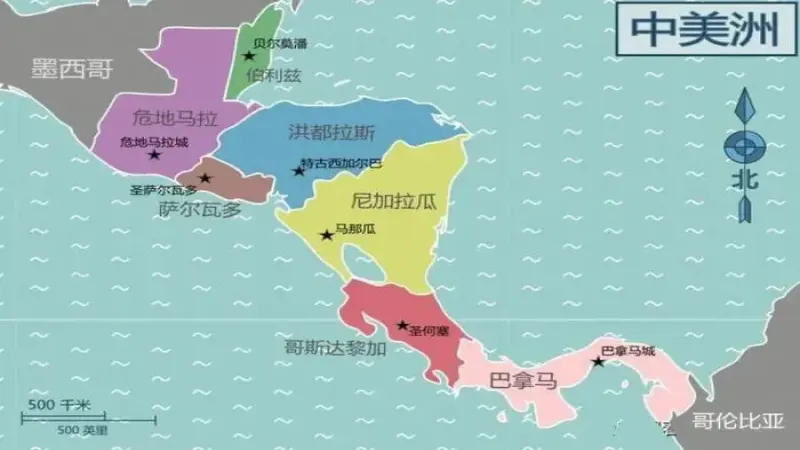
This narrow strip of land in Central America connecting North and South America has limited territory in each country, yet it contains extremely diverse natural resources. The region is dominated by plateaus and mountainous terrain, with large areas covered by mountainous forests, and along the Pacific coast extends a volcanic chain more than 1,300 kilometers long.
Because it is close to the equator and has a special geographical layout, Central America has developed multiple climate types, from tropical to Mediterranean-style. Volcanic ash deposits make the soil especially fertile, making agriculture an important industry in the region, with agricultural products such as coffee and bananas as major exports. For this reason, several countries famous for coffee have emerged in Central America, including Honduras, Costa Rica, and Panama. Among them, Panama enjoys a very high reputation in the international coffee market thanks to the Geisha variety.
When European colonists arrived in Panama in the 19th century, they also brought coffee seedlings. However, in that era there was no concept of specialty coffee, and people placed more emphasis on output quantity. Panama's coffee production at that time was only one-tenth that of neighboring Costa Rica. After international coffee prices continued to decline, Panama's growers noticed that consumer demand for high-quality specialty coffee was growing, so they formed the Specialty Coffee Association of Panama (SCAP), and by participating in various specialty coffee exhibitions and competitions, they raised the international profile of Panamanian coffee.
After gaining international recognition, the Specialty Coffee Association of Panama began independently organizing the "Best of Panama (BOP)" competition, establishing a reputation base for Panama's high-quality coffee beans. In the 2004 BOP competition, the Geisha variety took first place with outstanding performance. From then on, Geisha coffee beans became widely famous and repeatedly set new records for international coffee auction prices.
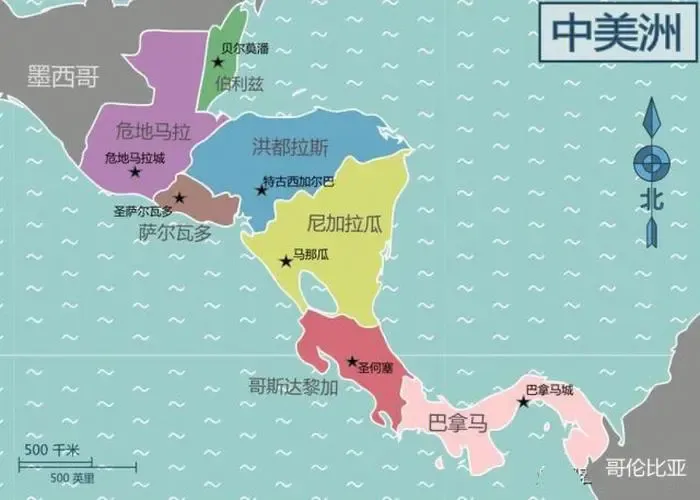
The ability to produce high-quality coffee is inseparable from Panama's own geographical environment and climatic conditions. Panama is located in southern Central America, bordering Colombia to the east and Costa Rica to the west. Its terrain rises and falls, with interlacing valleys and ravines. Apart from plains distributed along the northern and southern coasts, most other areas are mountainous.
Affected by the equator, Panama has a tropical maritime climate, humid during the day and cool at night, with an average annual temperature between 23 and 27 degrees Celsius. The year is divided into a dry season and a rainy season, with average annual precipitation of 1,500 to 2,500 millimeters. The country has many high mountains and volcanoes, rich forest and river resources, and, together with unique microclimatic conditions, provides an ideal growing environment for crops such as coffee.
Panama is divided into 10 provinces and 5 indigenous regions. Specialty coffee cultivation is mainly concentrated in Chiriqui Province in the west, specifically distributed across three areas: Boquete, Volcan-Candela, and Renacimiento. Boquete and Volcan surround the country's famous Chiriqui Volcano (also known as Volcan Baru), while Renacimiento is located in the western part of Chiriqui Province along the border with Costa Rica, with the Talamanca Range as its main body.
Boquete is Panama's most famous production area. Its name comes from Boquete town, located east of Chiriqui Volcano. Chiriqui Volcano is the country's highest peak, reaching 3,477 meters above sea level. Plateaus and basins are distributed among the mountains, and the slopes at elevations of 1,200 to 2,000 meters are mainly developed as coffee plantations.
The temperature in this area ranges from 11 to 27 degrees Celsius, neither too cold nor too hot. At the same time, the large temperature difference between day and night is conducive to the slow growth of coffee cherries and the full development of flavor. In addition, moderate rainfall, fertile soil nourished by volcanic ash, abundant sunshine, and the local unique microclimate enable Boquete to produce high-quality coffee. Front Street Coffee has a Geisha from the Boquete production area, washed process, medium roast. On the palate it presents lemon-like acidity, with bergamot and honey flavors, accompanied by a green tea note, and a refreshing mouthfeel.

The Boquete production area gathers many well-known estates, including Hacienda La Esmeralda, Duncan Estate, and Elida Estate. In the 2024 Best of Panama BOP competition, the Lamastus family won the Producer of the Year award. The family owns Elida Estate, El Burro Estate, and Luito Estate, among which Elida Estate is the most famous.
The history of Elida Estate can be traced back to 1918, and it is owned by the Lamastus family. The estate name Elida comes from the name of the wife of the then farm owner Robert Louis Lamastus, and it is now managed by their son Wilford Lamastus.
Elida Estate has a total area of 65 hectares, more than half of which is located within Baru Volcano National Park. Within the estate, 30 hectares are used for growing coffee trees, while the remaining 35 hectares remain primary forest. Coffee cultivation extends from 1,670 meters to 1,850 meters above sea level, making it one of the highest-altitude coffee estates in Panama. In addition, Elida Estate's processing plant is built halfway up the mountain, so after the coffee cherries are picked they can be sent to the factory for processing immediately, ensuring the quality of the coffee cherries and thereby achieving high-quality coffee.
The estate mainly cultivates high-quality varieties such as Geisha, Typica, and Caturra. In this year's BOP event, Elida Estate's Geisha won the natural group championship with 95.13 points. At present, Front Street Coffee has Catuai coffee beans from Elida Estate, using natural processing. After brewing, a faint wine aroma brought by natural processing can be smelled. On the palate it presents flavors of peach, raisins, and orange, with caramel-like sweetness, a green tea-like mouthfeel, and outstanding cleanliness.
The above content is compiled by CoffeeHunters, a coffee news website.


