







Can coffee make you feel drunk, and why is Dirty served in small cups?
Dirty coffee is essentially espresso poured over cold milk, so it looks like an iced latte with no ice. It cannot make you drunk; the effect comes from caffeine and from the hot-and-cold layering, not alcohol. Because that layering collapses within minutes, the drink is made and finished on the spot rather than delivered.
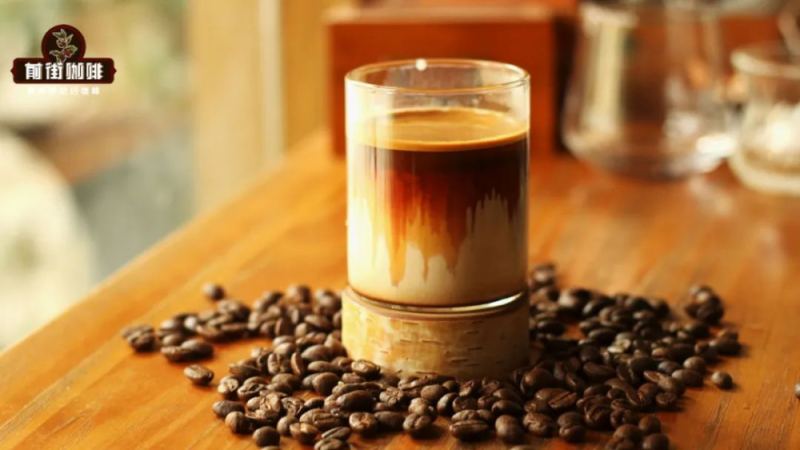
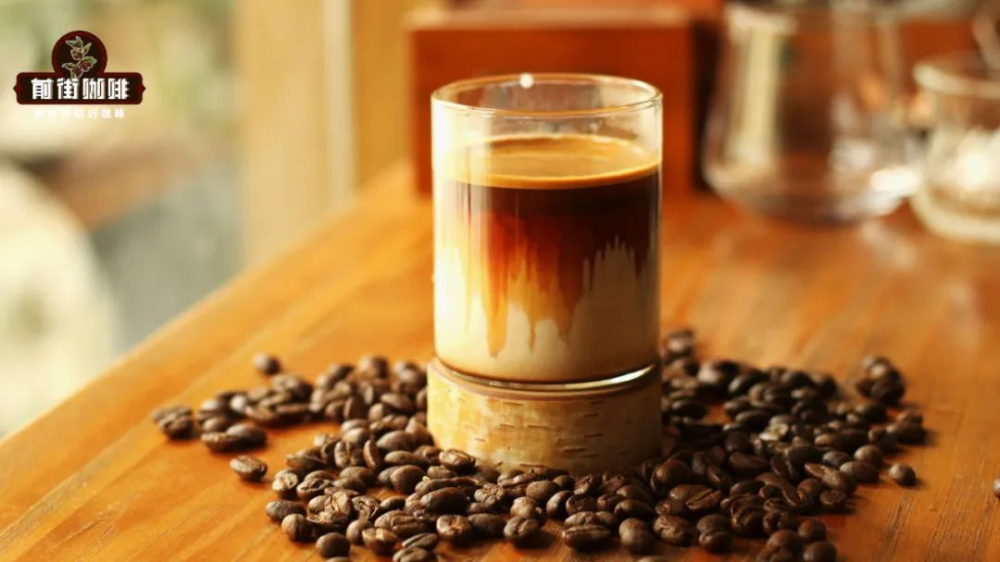
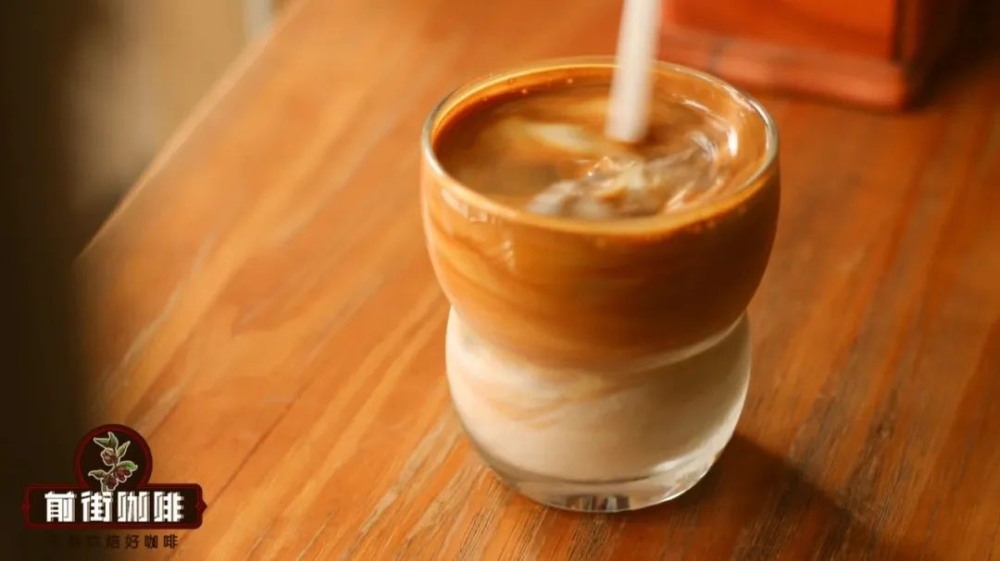
The layering is the whole point. Espresso falls slowly onto cold milk, creating a dark-to-light gradient and a crema cap. Stir it with a straw and it becomes hard to tell from an iced latte. The dirty coffee milk ratio usually runs a small cup with a high coffee-to-milk proportion, which is why it is drunk in a few sips.
Dirty is often mistaken for an iced latte without ice, but in fact, everything from the cup size and layering to the drinking rhythm has its own particularities. It relies on the layering of espresso and cold milk to create an alternating hot-and-cold mouthfeel, but because of this it is extremely fragile—leave it for ten minutes and its appearance is completely ruined, and after twenty minutes it is almost indistinguishable from milk tea. Precisely for this reason, Dirty cannot withstand the jolts of delivery the way a latte can. This article will break down, one by one—from production details and flavor changes to delivery tests—why this cup of coffee must be made and drunk on the spot, and how it differs in essence from ordinary milk coffee.
A friend asked Front Street Coffee, what is a Dirty? We answered, it's just espresso added on top of cold milk. The other person was puzzled for a moment—isn't that just an iced latte? Front Street Coffee "retorted," you can understand it as the "no-ice version." The other person was completely confused—isn't it still the same thing? Front Street Coffee continued to "retort," it's different, it's a smaller cup.

If we talk only about the essence, Dirty and an iced latte with the ice removed really aren't that different. Both belong to the typical milk coffee structure, both favor transparent glass cups when served, and even the order of pouring is the same. If you use a straw to stir them evenly, you might even find it hard to tell which cup is which.
However, once you shift your gaze to the production process, you'll discover that compared with an ordinary iced latte, making a qualified Dirty often requires being particular about far more details—especially when it comes to achieving the layering of coffee and milk, where Dirty's demands are almost exacting.
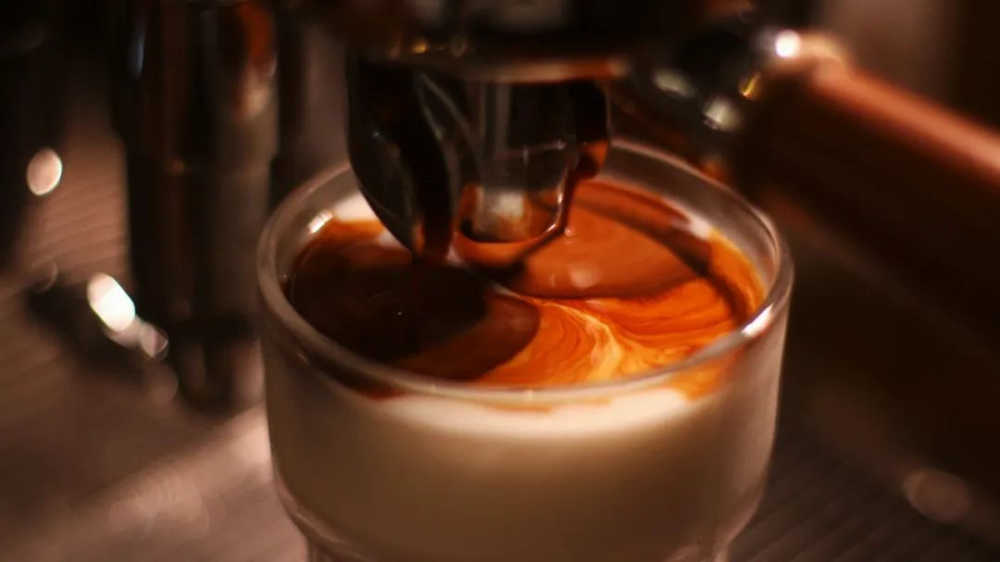
Once the ingredients are ready, the barista lets the espresso fall slowly onto the surface of the cold milk. Through the collision of the two, a gradient pattern from dark to light emerges along the wall of the cup, and the停留 of the crema also creates a visually pleasing layered effect. After we've finished admiring it with our eyes, we have to immediately take a big sip—no straw—and directly experience that sensation of hot and cold interweaving, as well as the fusion that comes from the collision of bitter coffee and sweet milk. The further down you drink, the more the ratio of espresso to milk keeps changing, allowing the taste buds to receive multiple satisfactions in a single drink.
In order to push the essence of Dirty to the extreme, besides paying attention to the layering effect, many specialty coffee shops also adjust the milk ratio and the espresso extraction method, and replace ordinary fresh milk with Ice Blogger purified milk, which has a richer texture. The cup holding the coffee is also pre-chilled in the refrigerator to make an "ice cup," or ingredients like nut crisps, flower petals, and cinnamon powder are sprinkled on top, making the mouthfeel richer and more three-dimensional.
With its photogenic layering, stunning hot-and-cold mouthfeel, and guilt-free small cup size, Dirty is no longer seen today as a "no-ice latte," but rather as a representative product with more of a specialty coffee style, and it has become one of the signature items at many cafés.
As the saying goes, beautiful things are always fleeting. The beautiful layering gives Dirty multiple advantages, but it also shortens this cup of coffee's tasting window and makes it incredibly "fragile."
For example, Front Street Coffee makes a Dirty according to the shop's serving standards (ice cup + Bright Fresh Pasture fresh milk + Sunflower·Warm Sun blend espresso). The freshly made coffee has a clear layering, and on the palate you can feel the distinct temperature difference between the upper layer of crema and the lower layer of milk—a true ice-and-fire sensation.
But after sitting for 10 minutes, the white portion begins to turn cloudy, the milk becomes somewhat lukewarm, and most of the crema on top has dissipated; after sitting for 20 minutes, the Dirty in Front Street Coffee's hands has turned the color of milk tea, and the milk has become room temperature. As time passes, not only is the appearance gone, but the joy of drinking a Dirty is lost as well. And this is also one of the reasons why, when you order a Dirty, the barista urges you again and again.
At this point, some friends might be curious: Dirty and latte both belong to the milk coffee category, so why do iced lattes and hot lattes both support delivery, while Dirty does not?
Next, let Front Street Coffee imitate a delivery rider for once, and then (pretend to) pack up a Dirty and a hot latte for delivery, and see what happens.
At the very beginning, the Dirty in the takeaway cup has a beautiful layering, and the freshly made hot latte also has intact latte art; but after just a few shakes from Front Street Coffee, the espresso and milk in the cold drink gradually mix through the swaying, and the pattern on the hot drink also becomes blurry as the foam begins to dissipate.
After shaking for dozens of times, the hot latte, once the lid is lifted, still has a small amount of pattern and foam on top, while the Dirty has already been reduced to a "stirred no-ice latte." If these two cups of coffee really were delivered over a long distance as in daily life, presumably by the time the Dirty reached us it would have long lost its layering, making it hard to recognize as a "dirty coffee." But a latte won't—because whether or not there is latte art, it doesn't妨碍 it being a hot latte, only the mouthfeel will be less velvety than when freshly made.
- END -
The above content is compiled by CoffeeHunters, a coffee news website.


