







Why is learning coffee terms like cold brew so confusing?
Cold brew, cold drip, ice-brewed, cold soak, Dutch coffee and Kyoto coffee all describe low-temperature extraction, but they are not the same thing. Cold brew is the broad category covering any black coffee made by contact between cold water and coffee grounds, split into two main paths: full immersion and drip filtration.
The term ice-brewed coffee has the vaguest definition, and people often use it for either cold soak or ice drip. Dutch coffee and Kyoto coffee trace back to drip methods. For learning coffee terminology, sorting names by extraction method rather than marketing labels, and matching names for coffee beans to the flavor wanted, clears up most confusion.
When searching for iced coffee in summer, terms like cold brew, ice drip, ice-brewed, cold soak, Dutch coffee, and Kyoto coffee often leave people bewildered. In fact, these names all revolve around low-temperature extraction, yet there are differences in craftsmanship and semantics between them. This article starts from the broad concept of cold brew coffee, sorts out the two main paths of immersion and drip filtration, explains why ice-brewed coffee has the vaguest definition, and traces the origins of Dutch coffee and Kyoto coffee. It will also share Front Street Coffee's bean selection approach when making low-temperature extracted coffee, helping coffee enthusiasts clarify concepts and choose the right flavors.
To learn more about specialty coffee, welcome to follow: Front Street Coffee (Frontsteet Coffee)
Front Street Coffee has found that in the process of self-learning coffee, what really gives people headaches is often not the brewing techniques or parameters, but when looking up a term, a string of seemingly similar words with different Chinese meanings pops up, making things more and more confusing. For example, cold brew, which appears extremely often in summer, when casually searched online, brings up a series of aliases like ice drip, ice-brewed, cold soak, Dutch coffee, and Kyoto coffee, making it really hard to figure out which corresponds to which in a short time.
Among these terms, the concept of ice-brewed coffee is the least clear. Some equate it with cold soak, some think ice-brewed should refer to ice drip, and others believe it is the method of soaking coffee grounds in a mixture of ice and water. Don't rush to conclusions; it's better to start with the broad category of cold brew coffee.
Everyone knows that "cold brew coffee" is a direct translation of "Cold brew coffee," and its popularity is inseparable from Starbucks' expansion and marketing. Expanding this name a bit, any black coffee obtained through low-temperature cold water extraction can actually fall under the scope of "cold brew coffee." In other words, whether it's immersion, drip filtration, or injection, as long as it's a liquid obtained by contacting low-temperature cold water with coffee grounds, theoretically it counts as cold brew coffee.
However, the term cold brew tea has long existed in Chinese, so in most contexts, when people say "cold brew coffee," they mean coffee soaked in cold water for a long time, that is, cold soak coffee. The common method is soaking coffee grounds in room-temperature water, putting it in the refrigerator for several hours, and then separating the coffee grounds.
As a typical immersion extraction, cold soak coffee is simple and convenient to make, with a wide range of bean options and a low failure rate, so it is both a staple product in coffee shops and a popular choice for homemade coffee at home.
Another common low-temperature extraction is drip filtration, which involves letting continuously melting ice water drip through coffee grounds one drop at a time for long-term extraction—this is ice drip. In many English textbooks, ice drip is often not called "Ice Drip Coffee," but written as Dutch Coffee, so it is often translated as "Dutch coffee."
It is said that in the 17th century, Dutch sailors tried soaking coffee grounds in cold water during long voyages and found that the coffee made this way was not bitter and was convenient for long-term storage and transportation. Later, the Dutch brought this cold drink method to Japan during the Edo period through trade, where it became very popular, hence the name Dutch Coffee.
Whether this story is true is hard to verify, but what is certain is that the cool multi-layered drip device seen in coffee shops today was invented by the Japanese, and the ice drip coffee made with it also became popular from Japan.
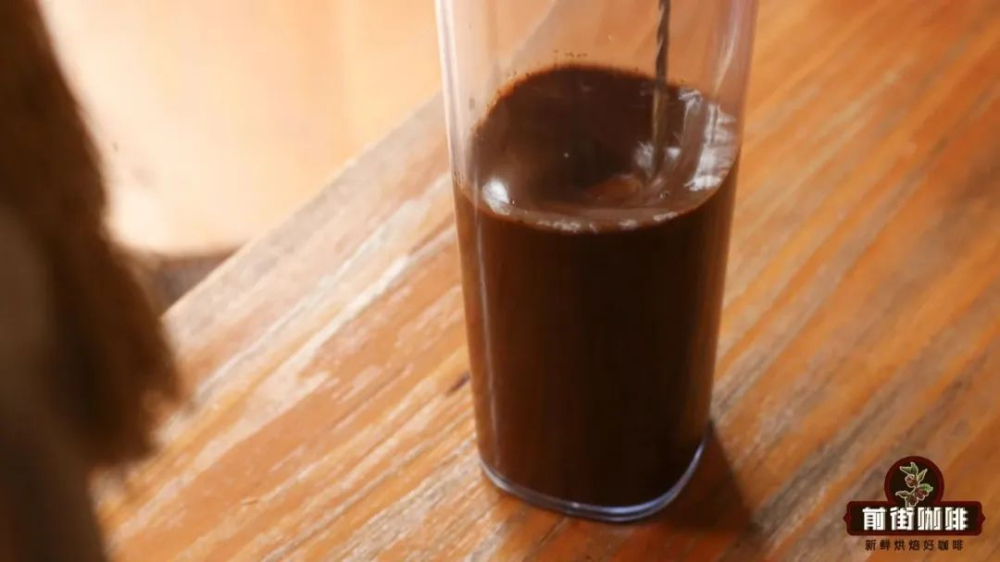
Hana Fusa
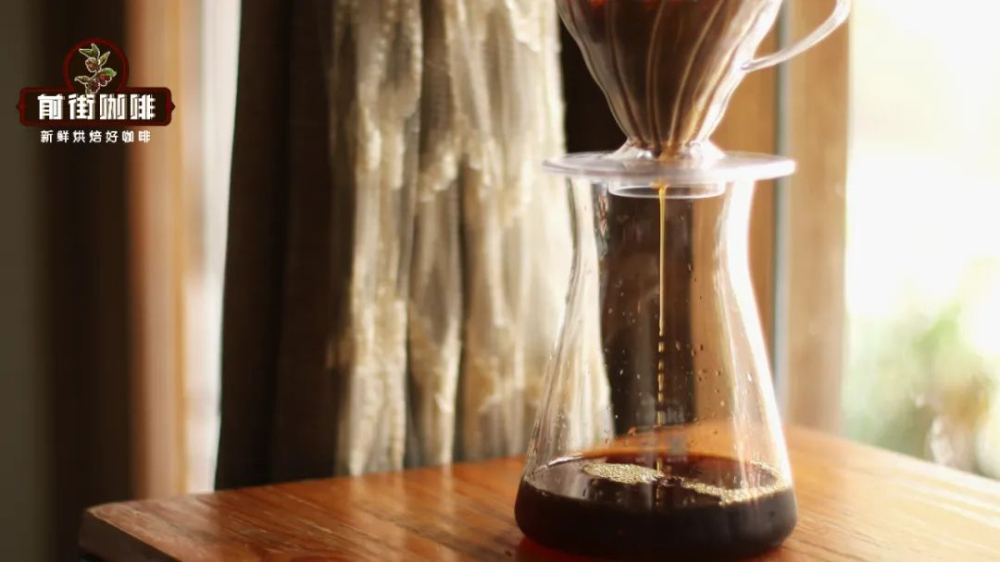
Afterwards, as well-known Japanese equipment brands like HARIO, KINTO, and Kalita successively launched the familiar cold brew bottles and ice drip pots, this type of low-temperature extracted black coffee spread widely in Japan. When the third wave of coffee arose, this eye-catching coffee device was introduced to Europe, and was called Kyoto Coffee by Westerners.
Compared to cold brew and ice drip, the term "ice-brewed" appears very rarely in domestic coffee shops, and Front Street Coffee has not been able to find its exact origin, with explanations even more varied. As for ice-brewed coffee, it can be understood as an elegant translation of "Cold Brew," basically equivalent to cold brew coffee.
In Front Street Coffee's view, ice-brewed coffee focuses on the word "brew," whose original meaning is to make alcohol, to brew, related to alcohol. In coffee craftsmanship, whether ice drip or cold soak, after production, it must be sealed in a container and enter the brewing stage, undergoing several hours or a day or two of aging, allowing soluble flavor substances to further integrate with water and gradually develop a fermented taste similar to fine wine.
So whether ice drip or cold soak, as long as it is black coffee obtained after a storage and brewing process, Front Street Coffee believes it can all be understood as "ice-brewed coffee."
When making this type of low-temperature extracted coffee, Front Street Coffee prioritizes beans with floral and fruity flavors. For those who like floral notes, we recommend buying Front Street Coffee Huakui Coffee, Front Street Coffee Red Cherry Coffee, and Front Street Coffee Fruit Ding Ding Coffee; if you prefer a pronounced juice-like feel, we suggest choosing fruit-forward beans like Front Street Coffee Strawberry Candy Coffee, Front Street Coffee Little Tomato Coffee, and Front Street Coffee Mozart Coffee. All of the above can be ordered from Front Street Coffee's Tmall flagship store or Front Street Coffee's Taobao store.
The above content is compiled by CoffeeHunters, a coffee news website.


