







Which estates define coffee cultivation in Chimborazo Province?
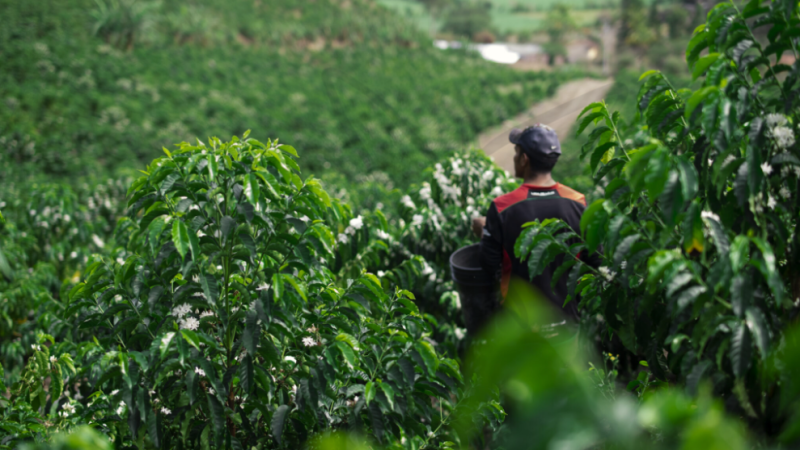
Ecuador's coffee cultivation is concentrated in the central highlands of the Andes, forming a north-south pattern. Pichincha and Loja provinces are long established, while Chimborazo Province has drawn attention in recent years. Its volcanic ash soil and mild, humid climate suit coffee, and Hacienda Lugmapata is the province's most representative estate.
Ecuador's total coffee production is smaller than Brazil's or Colombia's, but its terroir and elegant cup profile have earned growing recognition abroad. Coffee arrived in the 19th century, yet cacao dominated until witches' broom and black pod disease damaged that crop, prompting farmers to turn to coffee. The Andes provide the altitude and volcanic fertility behind this shift.
Along the Andes Mountains in western South America, volcanic ash soil and a mild, humid climate have nurtured many major coffee-producing nations. Although Ecuador's output is smaller than that of Brazil and Colombia, its unique terroir has helped it gradually emerge on the scene. The country's specialty coffee is mainly concentrated in the central highlands of the Andes, forming a north-south distribution pattern. Among these, Pichincha Province and Loja Province have long enjoyed greater recognition, while Chimborazo Province has also begun to attract attention in recent years. This article will review Ecuador's coffee-growing history and geographical advantages, with a focus on the characteristics of the Chimborazo Province growing region and the province's most representative estate, Hacienda Lugmapata, guiding readers through the coffee landscape of this "Equator Country."
South America is rich in natural resources, with the world's longest mountain system—the Andes—running through its western side, and it is also one of the highest large mountain systems in the world, dotted with volcanoes and abundant in both water and forest resources. The continent is dominated by a tropical climate, with most areas falling under tropical rainforest or tropical savanna climates, warm and rainy, and combined with the fertility brought by volcanic ash, this creates ideal conditions for coffee cultivation. It is precisely for this reason that South America has given rise to several major coffee-producing nations, such as Brazil, Colombia, and Ecuador.
Beyond Brazil and Colombia, the two countries that consistently rank at the top in production, beans from other growing regions have been appearing more and more often in coffee shops in recent years, and Ecuador is one of them.
Ecuador's total coffee production is not particularly high, but thanks to its special growing environment and elegant flavor profile, it has gradually won recognition in the international market. Coffee was introduced to Ecuador as early as the 19th century, but at the time cacao was the dominant industry in many South American countries, and coffee cultivation did not receive sufficient attention. After entering the 20th century, cacao trees were hit by witches' broom and black pod disease, severely damaging farmers' interests, and only then did people turn their attention to coffee, which subsequently developed into one of Ecuador's main industries.
However, this period of development did not last long. The coffee price crisis that broke out in the 1990s caused Ecuador's coffee production to plummet, and the government shifted its support to the oil industry, leaving the country's coffee sector advancing noticeably slower than other South American nations. Only in recent years has Ecuador's coffee industry begun to get back on a path of recovery.
Front Street Coffee has learned that "Ecuador" means "equator" in Spanish, which is why the country is also known as the "Equator Country." Ecuador possesses natural conditions highly suitable for coffee cultivation. Located in northwestern South America, bordering Colombia and Peru, it is a country with both coastline and inland territory. The equator passes through its northern part, while the Andes run through the entire country from south to north, dividing the nation into three major regions: the western coastal area, the central highlands, and the eastern region.
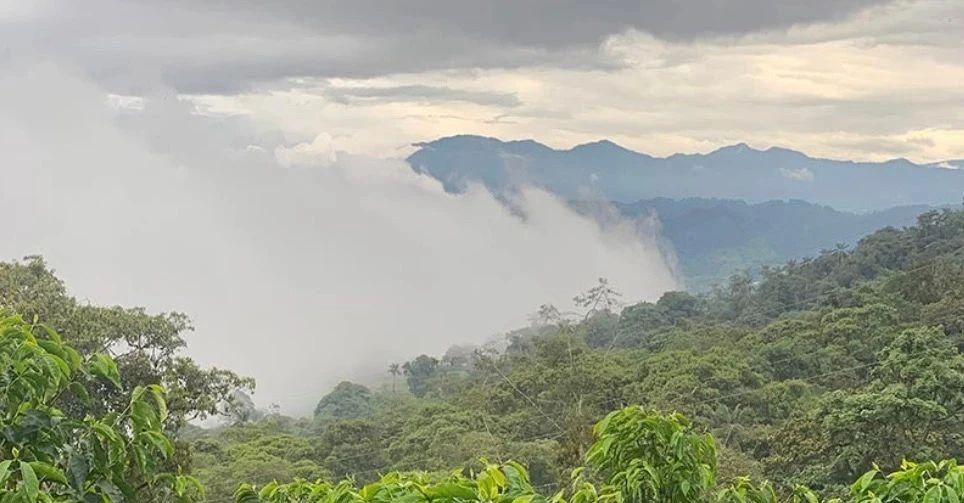
The specialty coffee growing regions are mainly distributed in the central highlands, that is, the Andes range, which consists of the Cordillera Oriental and Cordillera Occidental. Between the two ranges lies a plateau that is high in the north and low in the south, with an average elevation of between 2,500 and 3,000 meters, and a large number of volcanoes, including Cotopaxi, hailed as one of the world's highest active volcanoes. This region is dominated by tropical savanna and subtropical forest climates, and peaks above 4,000 meters are covered in snow year-round. The diverse climate, abundant rainfall, volcanic soil, and snowmelt water together make this an important coffee-producing area.
While consulting maps, Front Street noticed that Ecuador's coffee-growing regions are distributed in a way similar to Colombia's, roughly divided into two parts, north and south: the north is dominated by Carchi, Imbabura, and Pichincha provinces, while the south is concentrated in Loja, Azuay, and Chimborazo provinces.
At present, Ecuador's best-known growing regions are Pichincha Province and Loja Province, though Chimborazo Province has also begun to make a name for itself in recent years.
Chimborazo Province is located in central Ecuador, about 150 kilometers south-southwest of the capital, Quito. The province takes its name from a conical extinct volcano within its borders—Chimborazo. At 6,272 meters above sea level, Chimborazo is the country's highest peak. This dormant volcano has numerous craters, and its summit is covered with large amounts of glaciers. Thanks to this, local agriculture and animal husbandry are relatively developed, and coffee is mainly grown at elevations of 1,650 to 2,000 meters. The fertile soil created by the volcano, together with pure glacial meltwater and ample sunshine, provides excellent ecological conditions for coffee cultivation.
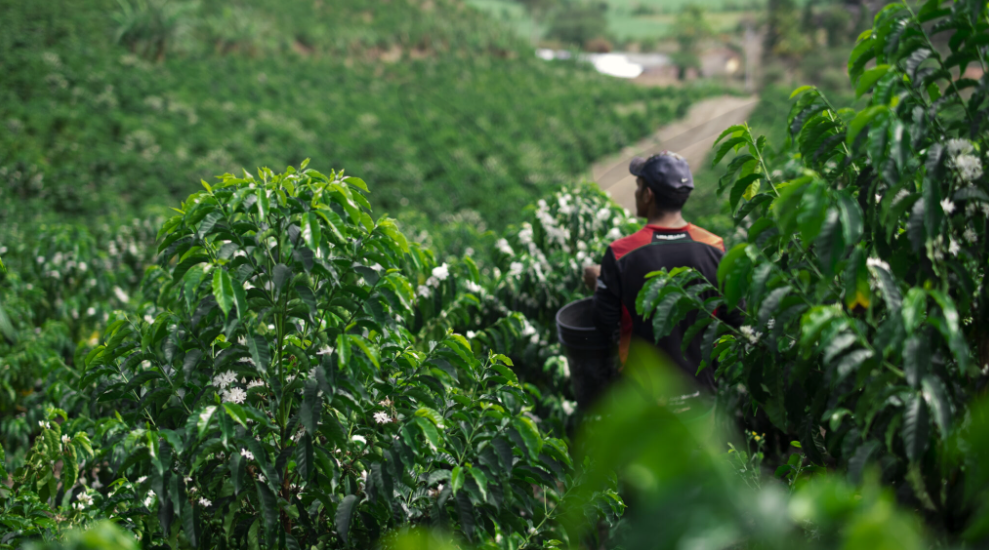
Among the growing regions of Chimborazo Province, the most famous estate is undoubtedly Hacienda Lugmapata, an enterprise run by Merino Dávalos and his family, located in Pallatanga, Chimborazo, Ecuador. Although the estate only began growing coffee in 2012, it now has about more than 50,000 coffee trees, covering multiple varieties such as Bourbon, Sidra, Typica Mejorado, and Pache.
The estate won the 2022 Cup of Excellence (COE) championship in Ecuador. In addition to growing coffee itself, the estate is also committed to improving the lives of residents in Pallatanga and the surrounding area, teaching them how to produce high-quality coffee, and it purchases coffee from nearby smallholder farmers, processing and selling it collectively.
The above content is compiled by CoffeeHunters, a coffee news website.


