







How Does Water Pouring Affect Coffee Extraction?
The way water is poured during pour-over brewing shapes coffee extraction as much as the coffee-to-water ratio or water temperature. Stream height, amplitude, and landing point all change how much the coffee bed is agitated, which controls how fast flavor compounds dissolve. Three common pouring faults cause uneven extraction: uneven height, pouring from too high, and pouring onto the filter paper edge. Fixing them reduces bypass water.
Agitation speed matters because a falling stream carries force into the coffee bed. More agitation releases flavor compounds faster; less slows them down. A pour that lands on the paper edge instead of the grounds lets water slip past the bed as bypass, weakening the cup. Standardizing stream position and height makes results repeatable across brews. Improper pouring can also undo a good ratio during a long brew.
In the process of pour-over coffee, the pouring method is often overlooked, yet its impact on the final flavor is no less significant than parameter settings. When many coffee enthusiasts encounter unsatisfactory extraction, the first thing they suspect is the coffee-to-water ratio or water temperature, while neglecting the force and path of the water stream itself. In reality, the height, amplitude, and landing point of the pour all directly alter the agitation efficiency and extraction uniformity of the coffee grounds. This article, from Front Street's perspective, will sort out three common incorrect pouring methods—uneven height, pouring too high, and pouring onto the filter paper edge—and explain why they cause extraction deviations, while offering practical tips to reduce bypass water and improve extraction quality, helping you brew a better cup of coffee more consistently.
It's not just about parameters—an incorrect pouring method can also prevent suitable parameters from delivering good results. But because its presence is relatively subtle, many friends, when they brew a bad-tasting cup, instinctively look at parameter issues first. Little do they realize that the pouring method is also very important.
Why is the pouring method so important? The water stream we pour carries a strong force because it has a certain distance from the coffee bed. This force gives the hot water penetrating power and serves to agitate the coffee grounds. Agitation increases the dissolution rate of substances in the coffee grounds. The more times you agitate, or the greater the amplitude, the faster the flavor compounds are released from the grounds, and vice versa.
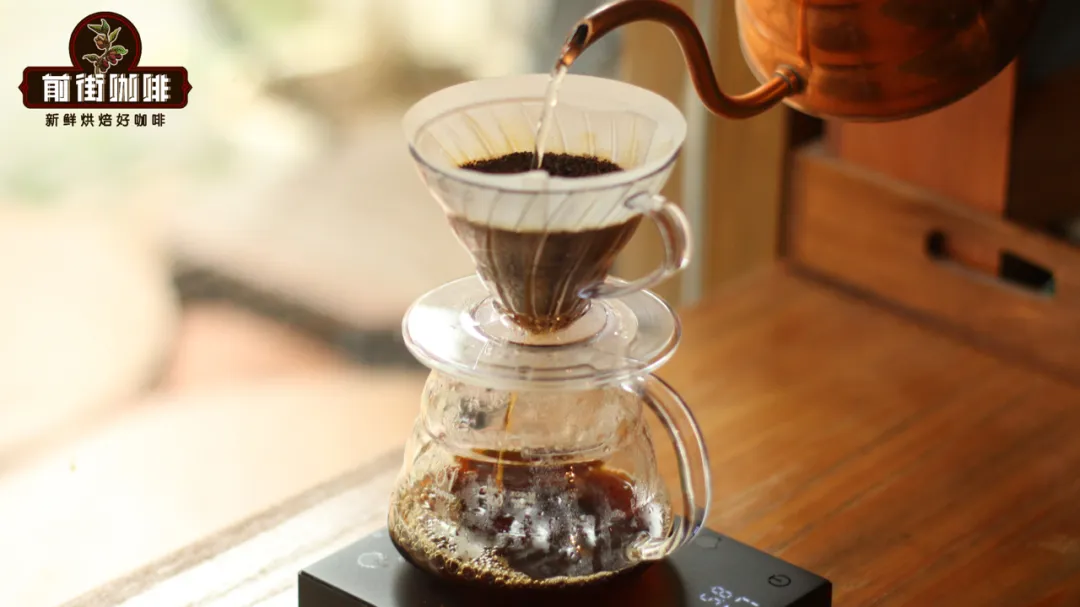
So we can see that the poured water stream is also an important participant in coffee extraction. If we want to achieve a well-extracted cup of coffee, we need to pour the water at the right position and in a reasonable manner. Yet many friends overlook exactly this key point. Because the poured stream is not quite standardized, the coffee extraction deviates, and the final result is hard to drink. Therefore, today Front Street will share some incorrect pouring methods! To help everyone brew delicious coffee more effectively! Mistake #1: Uneven height This is an incorrect pouring method that many friends easily trigger in their early days! To ensure the coffee bed in the dripper receives water evenly, we pour in a circular pattern. But often, the height during the circular pour is not uniform—it rises and falls, going high and low—which easily leads to uneven extraction.
Because the pouring height determines the impact force of the water stream—in other words, height determines the agitation force of the stream. With the same amount of water, the higher you pour from, the stronger the impact force, and vice versa. When the height fluctuates during a circular pour, it means the coffee bed has a high probability of receiving uneven extraction. To make a delicious cup of coffee, we need to avoid all negative probability events as much as possible! Therefore, when pouring in circles, it's best to pour from a consistent height to ensure extraction uniformity. Mistake #2: Too! High! Continuing from the previous point, the higher you pour, the stronger the water stream's impact—that's true! But many friends deliberately raise the pouring height significantly to achieve stronger penetration. Doing so may backfire and reduce extraction efficiency.
There are two reasons: First, when pouring too high, the water stream has more surface area in contact with air, which causes it to lose more heat, so the water temperature during extraction isn't as high as it originally was—in other words, it reduces extraction efficiency to some extent. Second, once the pouring height reaches a certain point, the falling stream is no longer a continuous flow but breaks into individual droplets. Having lost continuity, the droplets no longer possess strong penetrating power, making it hard for them to push through the surface of the coffee bed and losing their agitation effect, thus reducing extraction.
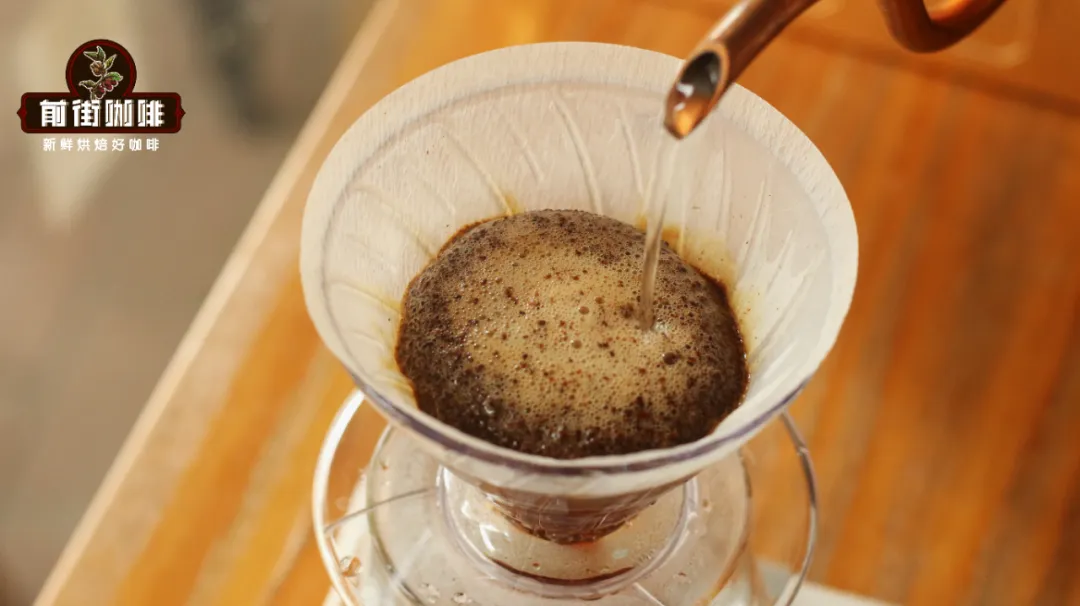
So we'd best limit the pouring height to about one fist's distance above the coffee bed surface. Mistake #3: Pouring onto the filter paper edge This is a mistake Front Street frequently mentions—during the circular pour, the amplitude is too large, causing water to hit the filter paper at the edge of the coffee bed.

This situation easily leads to under-extraction and overly low concentration, especially for drippers with prominent flow-restricting ribs (such as the V60) . Because the ribs prevent the filter paper from fully adhering to the dripper, and all these non-adhering areas are spaces where hot water can flow! When hot water hits the filter paper, it directly penetrates through the paper and flows out through these spaces. In this case, the hot water not only fails to extract coffee grounds but also dilutes the existing coffee concentration. So we need to appropriately reduce the amplitude to minimize bypass water. That way, the coffee won't be as prone to overly low concentration and under-extraction!
The above content is compiled by CoffeeHunters, a coffee news website.


