







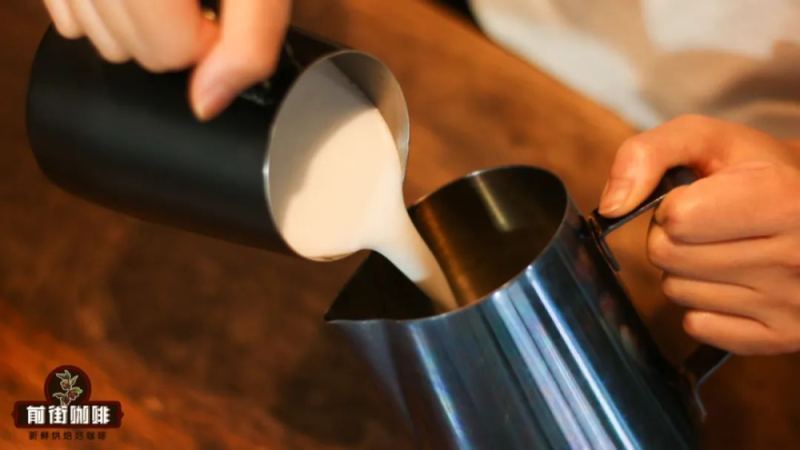
Why Transfer Steamed Milk When You Froth Milk for a Latte?
Transferring steamed milk between pitchers is a standard step in latte art because it fixes foam that turned out rough. Pouring the milk from one pitcher into another re-blends the foam, removes large bubbles, and breaks up clumps, restoring the fine, fluid texture needed to pour clean patterns. It also lowers the difficulty of latte art, since smoother foam flows more predictably from the spout.
Milk foam is made of proteins wrapping countless tiny air bubbles created by steam. Coarse bubbles from a poor steaming, foam that is too thick, or foam left sitting until it separates all make patterns hard to pour. Transferring milk uses the impact of pouring to recombine the foam and liquid. Pitcher choice, the amount of milk used, and the pouring angle all affect the final pattern, alongside the latte milk coffee ratio.
In the process of coffee latte art, transferring milk is an operation that is often mentioned but easily confuses people. Why is it necessary to pour steamed milk foam from one pitcher into another? What benefits does this actually bring? Starting from the sharing of Front Street Coffee, this article provides a detailed analysis of how transferring milk improves milk foam quality, including effects such as re-blending, eliminating large bubbles, and breaking up clumps. It also explores how transferring milk reduces the difficulty of latte art, as well as details to note when creating latte patterns, such as pitcher selection, the amount of milk used for incorporation, and the pouring angle, helping coffee enthusiasts understand the principles and techniques behind latte art more systematically.
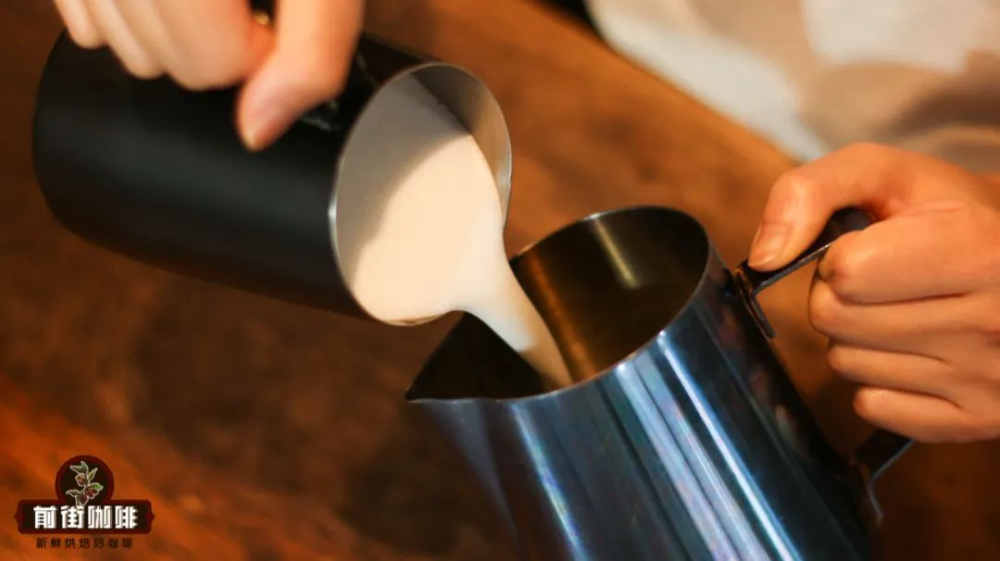
This operation has a special name in the coffee community, which is what Front Street often mentions — "transferring milk."
What exactly does transferring milk do?
Similar to the preparation of many beverages, coffee latte art also relies heavily on the state of the ingredients and technique. The action of transferring milk, on the one hand, can improve the quality of the ingredients in certain situations, and on the other hand, it can also make latte art patterns easier to form. Front Street will first talk about ingredient quality. Since the patterns are drawn with milk foam, the ingredient referred to here is naturally the milk foam.
The essence of milk foam is actually the proteins in milk (mainly proteins) wrapping countless tiny air bubbles created by steam. Setting aside technical factors for now, the finer and silkier the milk foam used for latte art is (that is, the better its fluidity), the easier it is to draw delicate and complex patterns.
However, in actual operation, mistakes often make the milk foam insufficiently fine, making it difficult to create ideal patterns. For example: improper operation during steaming causes a large number of coarse bubbles to mix into the milk foam, giving it a very rough overall texture; or it is steamed too thick, causing its fluidity to become very poor; or after steaming it is left too long, so the milk foam clumps and separates from the milk, making it unusable.
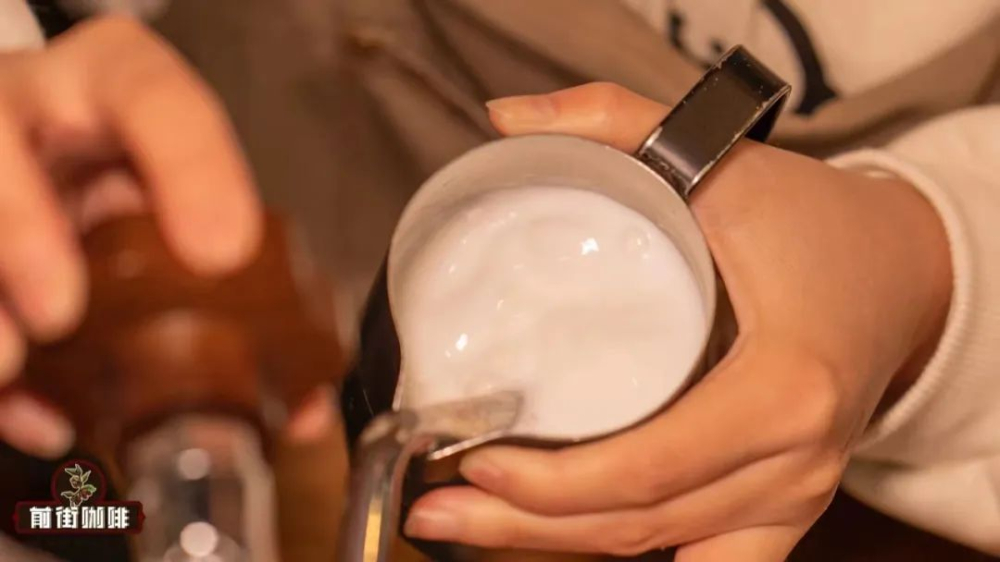
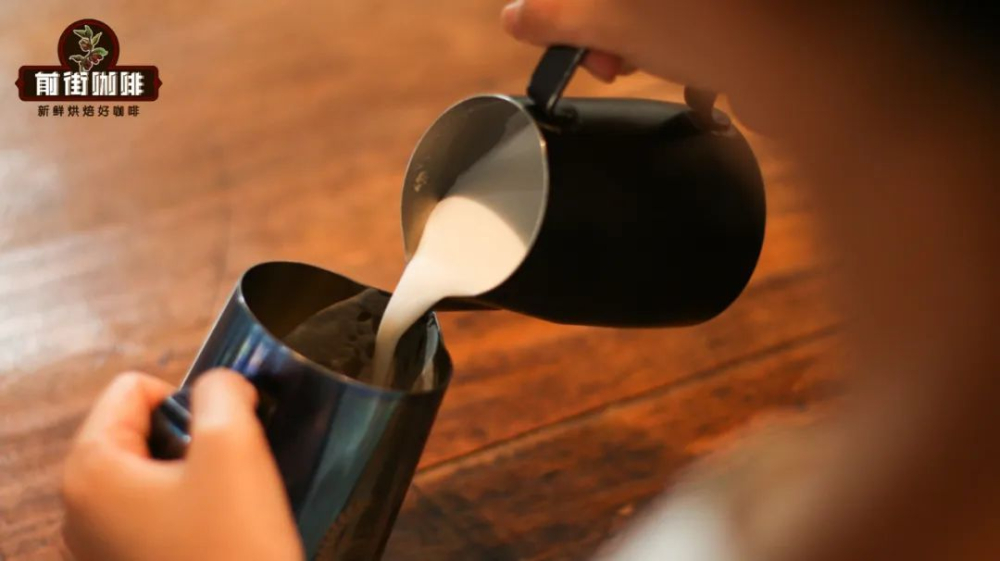
When these situations occur, transferring milk is a very good remedy. This is because the pouring process creates impact force, and this force can improve the milk foam in three ways: first, the milk foam is carried into the milk by this force and re-blended together; second, the impact force breaks many rough large bubbles, leaving only sturdy small bubbles; third, clumped and hardened milk foam is also broken apart.
After this optimization, the milk foam can regain its fluidity, and because the coarse bubbles and clumps are gone, the whole thing becomes finer and is perfect for latte art.
Why can transferring milk reduce the difficulty of latte art?
To put it more artistically, latte art is the process of using milk foam as paint to create a picture on the "canvas" of crema. But to make the milk foam float on the surface of the crema and form lines, the pitcher must be tilted to a certain angle so that the spout is as close as possible to the liquid surface. Only in this way can the impact force be reduced and the milk foam remain on the surface. In other words, the pitcher plays the role of a paintbrush in this "studio."
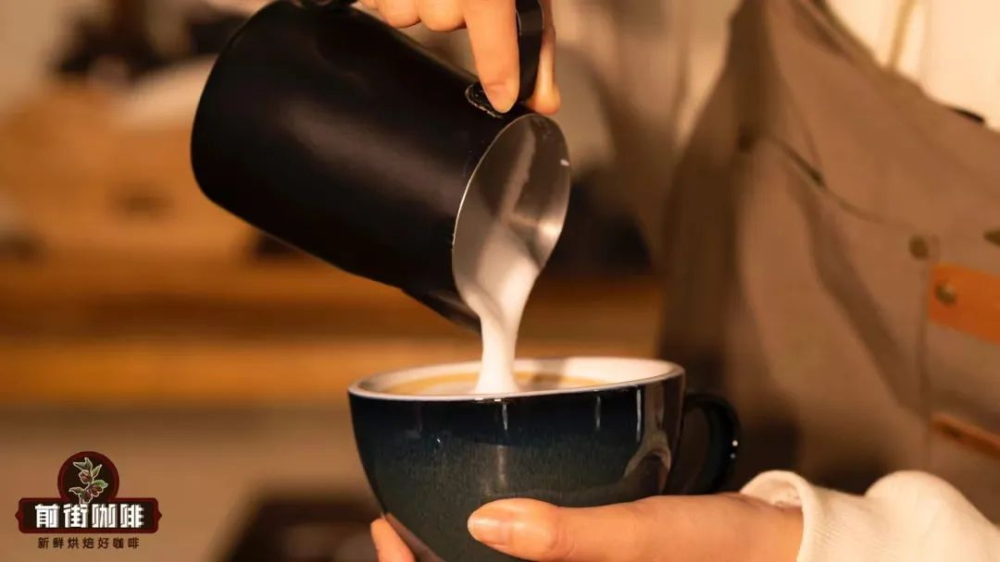
In addition to tilting the pitcher, another method commonly used by baristas is to increase the amount of milk used during incorporation so that the liquid level rises. As long as enough incorporation is done and the liquid level in the cup reaches a suitable height, even if the pitcher is not tilted much, the spout can still be close to the liquid surface. But this technique is only suitable for some basic patterns. If you want to make rippled patterns or relatively complex combination patterns, you cannot incorporate too much, because that would compress the drawing space.
At times like this, transferring milk is very worth using. By controlling the amount of milk and then switching to a large pitcher, we can maximize the tilt angle of the pitcher and thereby create more complex latte art patterns.
Many friends may ask: then why not just use a large-capacity pitcher to steam the milk? Wouldn't that be more convenient?
That is true, but a large pitcher has more space and also requires more milk when steaming. However, the amount of milk we actually need for latte art is far less than the amount required for steaming in a large pitcher. Therefore, steaming with a small pitcher first and then pouring it into a large pitcher for latte art is a way to get the best of both worlds.
However, it should be noted that the action of transferring milk also has its particular requirements. For example, you cannot pour from too high, otherwise extra bubbles will form; after pouring, it should be used as soon as possible, because milk foam treated this way deflates more quickly.
- END -
The above content is compiled by CoffeeHunters, a coffee news website.


