







How Does the History of Blending Coffee Beans Explain Sour SOE?
Most SOE shots taste sour because of how espresso beans evolved. The first espresso machines pulled single-origin coffee, before terms like SOE existed. Later, supply shortages pushed people toward Robusta, whose harsh dark-roast bitterness led to blending coffee beans with Arabica to dilute the flavor and cut costs. Blends then became the espresso standard for their consistency, and single-origin espresso only returned with the specialty wave.
Erna Knutsen's specialty coffee concept and James Hoffmann's competition use of SOE brought light-roasted single-origin beans into the espresso domain. Beans like Mandheling and Brazil still favor dark roasting, while many cafés choose medium-light roasted SOE for commercial reasons. Because light roasts preserve more fruit acids, the shift from blends back to soe coffee explains why most SOE shots taste noticeably more acidic than traditional espresso.
Why do most SOEs taste sour? Behind this question lies the complete evolutionary history of espresso beans, from single origin to blends and back to single origin again. From Front Street's perspective, this article sorts out the causal relationship between SOE and blends: early espresso was itself SOE, blends became mainstream due to cost and consistency, and it was not until Erna Knutsen proposed the concept of specialty coffee and James Hoffmann promoted SOE in competitions that light-roasted single-origin beans entered the espresso domain. The article also explains why beans such as Mandheling and Brazil still insist on dark roasting, and the commercial considerations behind coffee shops choosing medium-light roasted SOE.
So here comes the question: why are most SOEs sour? To answer this, we first need to untangle the causal thread between SOE and blends. Why are most SOEs sour? Although SOE is a concept that only became popular in recent years, back when the espresso machine was first invented, the espresso people extracted was in fact SOE. It was just that at the time there were no such terms as single origin, blend, or SOE—people simply knew the coffee beans in their hands came from Mocha, Brazil, or Colombia, and took that for granted.
Later on, as the consumer market gradually took shape and war opened up a gap in material scarcity, the supply of certain coffee beans became a problem, and people had to look for other beans as substitutes. Robusta was the popular "stand-in" of the time. Under dark roasting, Robusta's bitterness is quite harsh. Clearly, not everyone could accept that taste. So people came up with a great idea: blend coffee beans!
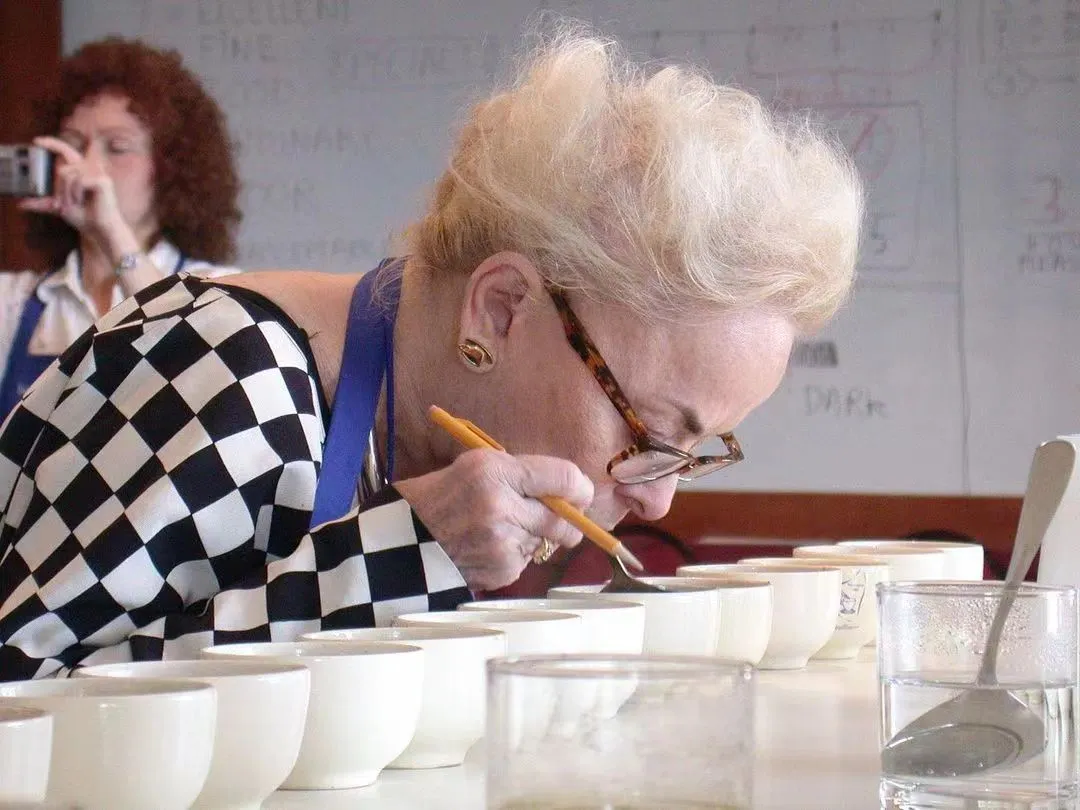
By adding some Arabica, they could both dilute Robusta's flavor and reduce the proportion—that is, the importance—of Arabica used. Because it was so practical, this practice spread quickly, and before long, blended coffee beans became popular. Even after entering an era of abundant resources, the practice of blending coffee beans did not stop! Because people found that blends had far too many advantages! Beyond saving costs and diluting the importance of each bean, the strengths of one bean could fill in the weaknesses of another, and most crucially, consistency was extremely high. So even today, blends remain the espresso mainstay of major cafés. It was not until Ms. Erna Knutsen proposed the concept of specialty coffee that the era of blends reigning unchallenged began to show a crack. In the article "Why Is Most Coffee Sour Nowadays?", Front Street elaborated in detail that the reason coffee beans were dark-roasted for such a long time was not only the limitations of roasting equipment at the time, but also the impact of the uneven quality of coffee beans.
After Ms. Erna Knutsen proposed this concept, a host of industry leaders worked through various means to improve coffee bean quality, including: establishing standards, spreading scientific cultivation, and purchasing high-quality coffee at high prices (such as the "Red Cherry Project") and so on. These methods could help and motivate coffee farmers to grow and harvest coffee more carefully, in order to obtain high returns. And so, gradually, coffee bean quality began to improve! Once bean quality improved, people no longer needed extremely dark roasts to mask the negative flavors of low-quality coffee. Through experimentation, they found that without the burnt bitterness brought by dark roasting, beans could give off more alluring floral and fruity aromas. From then on, coffee beans were roasted lighter and lighter. But this only applied to single-origin coffee; in the espresso domain, people were still bound by "tradition."
This situation was not broken until 2007! Because Mr. James Hoffmann brought the concept of SOE "Single Origin Espresso" to world coffee competitions. At the time, the vast majority of baristas were studying how to blend multiple beans into a delicious dark-roasted coffee, while Mr. Hoffmann took a different path, using a light-roasted single-origin coffee bean to make espresso. As expected, because SOE's floral and fruity aromas were so outstanding, he won the championship in the competition. Only then did baristas realize that espresso, too, should not be limited to a certain preset. That is how the concept of SOE spread!
In summary, we can understand that most SOEs are sour because they use lighter roasting, which allows more regional flavors to be tasted. But as Front Street mentioned at the beginning, not all SOE coffee beans use medium-light roasting—for example, Mandheling, for example, Brazil. Through years of subtle influence, people's impression is that they must be dark-roasted. Ultimately, it is because the impression left by their dark-roasted versions is too strong, which is why this came about: Only dark-roasted Mandheling can be Mandheling! Therefore, even though light roasting might deliver a better performance, people are still willing to use dark roasting to prepare these beans. So then, why are most SOEs in coffee shops sour?
This brings us to another reason: to provide customers with more choices! The classic dark-roasted blend is an indispensable presence in every coffee shop, and once a shop has a dark-roasted coffee bean, when choosing another bean as SOE, everyone will choose a medium-light roasted coffee bean in order to offer more options. If they also chose a dark-roasted bean, the homogenization would be far too severe~
The above content is compiled by CoffeeHunters, a coffee news website.


