







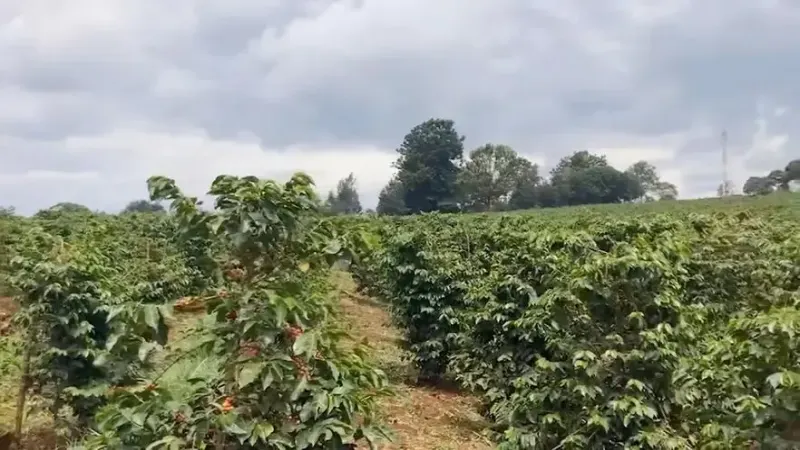
How did coffee cultivation shape Kenya's Nyeri region?
Nyeri sits on the slopes of the extinct Mount Kenya volcano, where fertile volcanic soil, glacier meltwater, and a high-altitude microclimate give Kenyan coffee its layered body and juice-like acidity. Coffee reached Kenya in the 19th century with French missionaries, and by the end of that century nearly 50 plantations had been established.
Kenya was then a British colony, and the colonial government controlled coffee cultivation while locals supplied labor. Land reform later let Kenyans grow their own coffee and returned land held by European settlers, laying the groundwork for the smallholder model that still defines production. Where can coffee be grown well depends on altitude, soil, and water like these.
Kenyan coffee is world-renowned for its multi-layered mouthfeel and juice-like acidity, and Nyeri is the most dazzling producing region in this East African coffee powerhouse. This article will start from the colonial origins of Kenyan coffee, tracing its historical trajectory from introduction by missionaries to the formation of the smallholder model, then delve into the unique terroir conditions of the Nyeri region—the fertile volcanic soil brought by the extinct volcano Mount Kenya, glacier meltwater, and the high-altitude microclimate. By understanding this background, coffee enthusiasts can more deeply appreciate why Nyeri coffee can present such a distinct regional flavor. Front Street Coffee will also continue to follow high-quality lots from this region.
The African continent is predominantly plateaus, with an average elevation of about 750 meters, and is known as the "Plateau Continent." This land is dotted with numerous mountain ranges, volcanoes, lakes, and rivers. Because the equator runs through its center, most areas have a tropical climate, with an average annual temperature exceeding 20°C. With abundant natural resources, Africa's agriculture is quite prosperous, and many countries are famous for coffee production, such as Ethiopia, Kenya, and Tanzania. Among them, Kenyan coffee has won the favor of many coffee professionals with its richly layered flavors and juice-like acidity.
Although Kenya borders Ethiopia, the birthplace of coffee, its coffee industry started relatively late. In the 19th century, French missionaries brought coffee to this land. At that time, Kenya was still a British colony, and the British controlled the lifeblood of agriculture, including coffee cultivation, while locals could only engage in cheap labor. However, the British soon discovered the profit potential of coffee cultivation, so they vigorously promoted the industry. By the end of the 19th century, nearly 50 coffee plantations had been established in Kenya.
Entering the 20th century, conflicts between the colonial government and Kenya's indigenous people occurred frequently, and land reform followed. For the first time, Kenyans were allowed to grow their own coffee, and the lands of European landlords were confiscated. The distribution plan at that time laid the prototype for the smallholder cultivation model. Afterward, the government actively supported the coffee industry: in 1934, an auction system was established to increase coffee income, and subsequently a coffee quality grading system was drafted to improve cultivation quality; by the 1950s, an agricultural bill further granted farmers land-use rights, enabling them to become self-sufficient and increase their earnings.
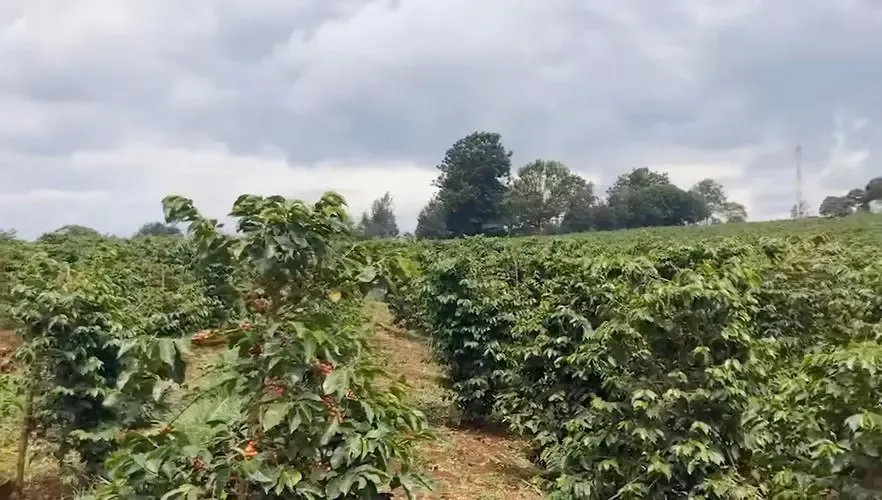
Of course, the production of high-quality coffee beans cannot be separated from Kenya's climate and environment. Kenya is located in eastern Africa, with the equator running through its center, the East African Rift Valley running north-south, and most of the country consisting of plateaus with an average elevation of 1,500 meters. The eastern branch of the East African Rift Valley cuts the highlands into eastern and western parts. Several volcanoes also stand within the country, among which the extinct volcano Mount Kenya in the central highlands, at 5,199 meters above sea level, is the second-highest peak in Africa.
Kenya belongs to the tropical monsoon zone. Most areas have a tropical savanna climate, the coastal areas are relatively hot and humid, and the highland climate is relatively mild. March to June and October to December are the rainy seasons each year, and annual temperatures range between 12 and 24°C. The country is rich in natural resources. High-altitude mountainous areas, volcanic soil, sufficient sunshine, and moderate rainfall together support developed agriculture and tourism.
Coffee is mainly grown in central and western Kenya. The central region brings together well-known producing areas such as Nyeri, Kiambu, and Kirinyaga. These producing areas are all distributed around the extinct volcano Mount Kenya and benefit from fertile volcanic soil, suitable sunlight, and rainfall, giving rise to Kenya's highest-quality coffee. Among them, Nyeri is the country's most prestigious producing area.
Nyeri is located in central Kenya, exactly where the extinct volcano Mount Kenya is situated. This area is surrounded by Mount Kenya and Mount Aberdare, and the eastern end of the East African Rift Valley also winds through here. Snowmelt from the mountains brings local residents pure, cool water. Coffee trees are planted on slopes at altitudes of 1,200 to 2,300 meters. The high-altitude mountainous areas, fertile soil developed from volcanic rock, and abundant glacier water resources together create high-quality coffee beans and also make Nyeri one of Kenya's pivotal coffee-producing regions.
The above content is compiled by CoffeeHunters, a coffee news website.


