







Judging Americano Quality: Words to Describe Coffee Smell
An Americano is judged from a tasting perspective on three dimensions: smoothness and finish, balance of taste, and aroma and strength. The espresso itself and how it was extracted decide the result, because water only dilutes what is already in the shot. A drink that stays clean, balanced, and aromatic across the cup meets the standard.
The drink traces back to World War II, when American troops in Italy diluted espresso to soften its intensity, and the name spread through Italian cafes in the United States. Cafes today differ in method, some pulling the shot first and adding water, others pouring water first. Words to describe coffee smell help tasters compare aroma between cups and spot weak extraction.
Americano has long been one of the most commonly consumed black coffees in daily life, but how to judge the quality of an Americano from a tasting perspective is not something everyone can clearly explain. This article starts with the history of Americano, sorts out the differences brought by various preparation methods in cafés, and provides specific criteria for judging a good Americano from three dimensions: smoothness and finish, balance of taste, and aroma and strength. At the same time, drawing on the output experience of Front Street Coffee shops, it explains that espresso quality and extraction control are the key determinants of Americano flavor, helping coffee enthusiasts have a clearer basis for judgment when ordering in daily life.
The reasons Americano is popular are varied—some drink it to wake up and refresh, some enjoy it for quenching thirst and cooling down, some value its effects on reducing swelling and fat, and of course, some are simply addicted to coffee, and Americano happens to be one of the fastest to serve and most affordable black coffee options... It is precisely under the combined effect of these factors that this cup of black coffee, made by diluting espresso with water, has long ranked among the well-known popular beverages.
Today, Americano can be found everywhere, so as ordinary consumers, from what dimensions can we judge whether this daily staple coffee is good or bad? Today, Front Street Coffee will approach this from a tasting perspective and talk with everyone about what kind of "watered-down coffee" can truly be called a generally good-tasting Americano.
Americano = Americans' coffee?
It is said that in the late stages of World War II, American troops stationed in Italy simply could not adapt to the intense taste of espresso, so they added water to dilute it before drinking. This way, they retained the coffee's flavor while getting a smooth, refreshing drink—a perfect solution. Later, as waves of immigration progressed, cafés opened by Italians in the United States also followed local customs, putting this "light version of black coffee" on the menu and naming it "Americano," which quickly gained widespread popularity.
What differences can there be in Americanos across cafés?
Whether it is the old-school method of extracting the espresso first and then adding water, or the Oceania-style modified approach of pouring water first and then adding the espresso, essentially it is a cup of espresso with a concentration of about 7-12%, paired with hot water or an ice-water mixture.

Among these, the amount of water added usually depends on the cup size and the shop's output settings, and the same goes for water temperature—from 60°-70°C suitable for immediate drinking, to 80°-90°C to prevent takeaway coffee from cooling too quickly in winter, and even the practice of directly pouring boiling water exists. Although these details do indeed cause some variation in the taste of Americano, they are by no means the root cause of the obvious differences mentioned above.
Since everyone understands that an Americano is composed of water and espresso, and water itself is colorless and tasteless, serving only to dilute, then the source of the problem can only lie with the espresso. Ultimately, when we drink an Americano that makes us frown, the crux clearly lies in the type and quality of the beans used, as well as the barista's control over extraction. Regarding issues in the preparation process, everyone can refer to our previous article: Why does your Americano always fall a bit short?
So, what is a good cup of Americano?
If we temporarily set aside personal preferences for coffee's acidity, bitterness, strength, weakness, or other taste dimensions, and look solely at the flavor expression brought by the espresso, an outstanding Americano should satisfy the following three points:
1. Smooth, with a pleasant finish
As is well known, a standard Americano has a beautiful golden foam floating on the surface—crema. It not only affects the mouthfeel when the coffee enters the mouth, but also contributes some aromatic substances to the coffee at the olfactory level, and is also one of the important indicators of coffee freshness. Therefore, to ensure stable extraction while giving the espresso both good aroma and rich crema, most coffee shops currently still prioritize medium-dark roasted beans when making Americano.
Front Street Coffee once mentioned in the article "If light roasts are for fruity acidity, what are dark roasts for?" that compared with the rich and varied flavor profile of fruity-acidic coffee, dark-roasted coffee is mainly characterized by caramelized aromas, often described as chocolate, cocoa, cream, nuts, etc., which makes the coffee's own characteristics lean toward being more one-dimensional. Compared with those ever-changing acidity notes, this type of Americano places more emphasis on whether it has pleasant qualities such as body, smoothness, and sweet aftertaste.
In short, a good Americano is inevitably smooth on entry, with no unpleasant sensation after swallowing. Conversely, if the moment it enters your mouth there is a burnt tire-like smell, or it is dry, rough, and catches in the throat, then it probably cannot be called "good coffee."
2. Balanced taste, not bitter, not sharply sour
Unlike other coffee brewing methods, espresso is a high-pressure extraction process. It is like a magnifying glass—the good parts of the coffee are amplified, and the bad parts are amplified as well. In other words, bitter coffee tends to become more bitter, and sour coffee tends to become more sour. Therefore, judging whether an Americano tastes good depends more on whether the espresso, after being diluted with water, can still maintain balance in taste. Is it bitter? Is it sharply sour? If neither, then without needing to say more, we can conclude that this is a pleasant black coffee.
3. Aromatic, not bland
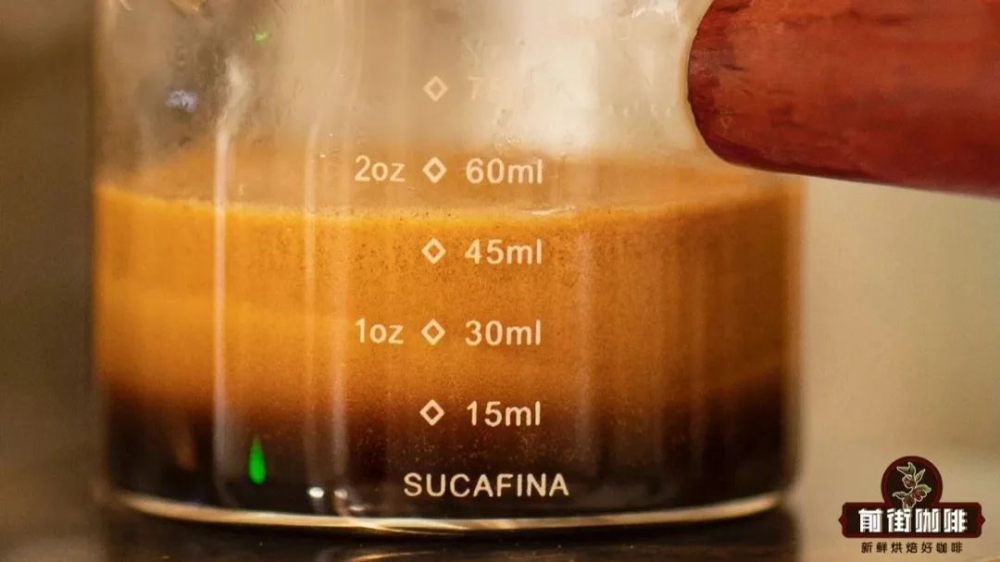
In the field of coffee brewing, managing the extraction rate is crucial. Under-extraction makes the coffee bland and tasteless; over-extraction makes the coffee astringent with off-flavors. As a beverage that is diluted with water after extraction is complete, whether it is a hot Americano or an iced Americano, its flavor core always lies in those few dozen milliliters of espresso.
Taking the Sunflower Warm Sun blend routinely produced at Front Street Coffee shops as an example, ensuring that the espresso can express flavors such as vanilla, cream, chocolate, fermented wine aroma, and berry-like sweet acidity, and will not become bland after adding a certain proportion of water, while possessing a balanced profile—then the barista's calibration task for the day is complete.
In summary, when you drink an Americano that is smooth in mouthfeel, clean in finish, balanced overall in acidity, sweetness, bitterness, and sweetness, and also showcases the main flavor characteristics of the coffee beans, then congratulations—you really ordered the right cup of coffee!
The above content is compiled by CoffeeHunters, a coffee news website.


