







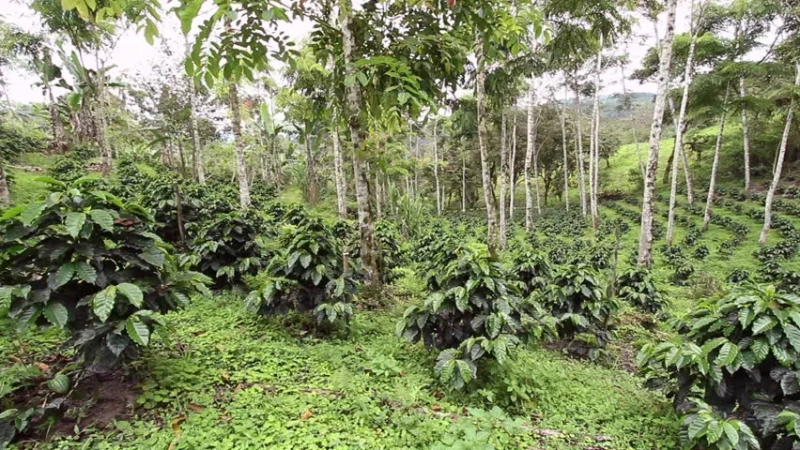
Which arabica coffee origin country does this estate represent?
Ecuador is the arabica coffee origin country in focus here, and Loja Province in the south is its key high-altitude region. Finca El Molino, established by CVM, grew from a seedling nursery into a harvesting and processing center and placed well in Ecuador's COE competitions in 2022 and 2023, helped by Geisha plantings.
Coffee reached Ecuador in the early 19th century, with the first plantations in Manabí in the 1860s. Cacao long dominated exports, and coffee only rose after disease hit cacao in the late 1920s. The 1990s price crisis cut production, and oil later took over the economy. Growers and roasters are now rebuilding the sector.
In Ecuador, where the Andes Mountains run the length of the country, diverse climates and volcanic soils give rise to unique coffee flavors. Loja Province, an important producing region in the south of the country, is known for its high-altitude cultivation, and La Noria Estate is located here. Established by CVM, this estate gradually developed from an initial seedling nursery into a coffee harvesting and processing center, and achieved excellent results in Ecuador's COE competitions in both 2022 and 2023. This article will guide you through the ups and downs of Ecuador's coffee industry, take a deep look at the terroir of Loja Province, and analyze how La Noria Estate rose to the championship with varieties such as Geisha.
South America is the fourth-largest continent in the world by area, rich in diverse natural resources. The Andes Mountains run almost the entire length of western South America from north to south, and this continent is also one of the regions with more frequent volcanic activity in the world. The warm, humid climate and abundant rainfall provide a favorable growing environment for crops such as coffee. South America is home to several coffee-producing countries, including Brazil, Colombia, and Ecuador.
Coffee's arrival in Ecuador can be traced back to the early 19th century. In the 1860s, the country's earliest coffee plantations appeared in the coastal areas of Manabí Province. However, cacao had long been Ecuador's pillar industry, and coffee cultivation did not receive sufficient attention. It was not until the late 1920s, when the cacao industry was hit by disease, that coffee gradually rose to become an important commercial crop for the country.
However, this period of development did not last long. The price crisis of the 1990s caused Ecuador's coffee production to decline significantly, and after the 2000s, oil became the main pillar of the country's economy, with agriculture accounting for a smaller share of the national economy than in many coffee-producing countries. In recent years, driven jointly by local farmers and roasters, Ecuador's coffee industry has embarked on a path of recovery.
Although Ecuador accounts for a limited share of global coffee production, its coffee varieties are highly regarded for their unique growing environment. The equator passes through the northern part of the country, the Andes Mountains run north to south, volcanoes are densely distributed and earthquakes are frequent, and the entire territory can be divided into four parts: the western coastal region, the central highlands, the eastern Amazon River basin, and the Galápagos Islands.
These four regions have different climates and diverse conditions. The western coastal region has a tropical rainforest climate, with average annual temperatures between 23 and 25°C. The basins of the central Andes have a tropical savanna climate, while the mountains exhibit subtropical forest climate characteristics; areas above 4,000 meters in elevation are covered with snow year-round, with the rainy season from December to June of the following year and the dry season from July to November. The eastern Amazon region has a tropical rainforest climate, hot and humid with abundant rain throughout the year, with annual rainfall of about 2,000 to 3,000 millimeters. The diverse climates, abundant rainfall, volcanic soils, and river resources make Ecuador an ideal place for coffee cultivation.
Ecuador produces both Arabica and Robusta coffee varieties. Arabica-producing areas are mainly concentrated in the highland volcanic zones of the central Andes, roughly divided into two major highlands, north and south, with the harvest period usually from March to October each year. The northern producing areas include Carchi, Imbabura, and Pichincha provinces, while the southern areas are mainly Loja, Azuay, and Zamora Chinchipe provinces.
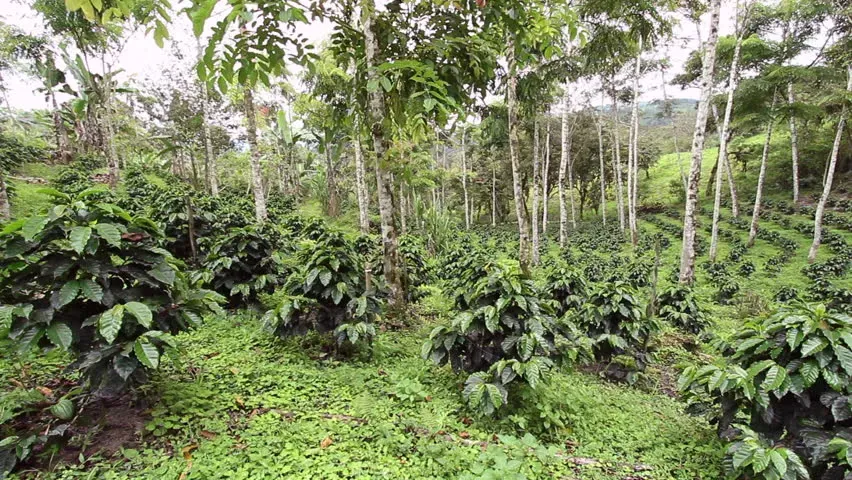
Loja Province is located in southern Ecuador, close to the Andes Mountains, and is one of the highest coffee-growing regions in the world, with cultivation altitudes between 1,450 and 2,000 meters. At midday, dense fog from the Pacific Ocean blankets the area, maintaining sufficient humidity for coffee growth. High altitude, a unique microclimate, and fertile, high-quality soil together constitute Loja Province's superior coffee-growing conditions, and today it has become an important coffee-exporting city in Ecuador. This producing region is also home to many well-known estates, such as El Dorado Estate and La Noria Estate.
La Noria Estate belongs to the countryside under CVM Coffee Company. CVM is an Ecuadorian agricultural enterprise co-founded by Bernard Uhe and a partner from a Colombian coffee-growing family, and it has accumulated many years of experience in coffee cultivation.
The company cooperated with local farmers to establish this estate. La Noria Estate was originally CVM's seedling nursery, and then gradually expanded into coffee harvesting and processing operations. In 2022, Noria Estate won second place in Ecuador's COE with a Geisha scoring 89.35 points; at the 2023 Ecuador COE competition, the estate again took the championship with a Geisha scoring 91.22 points.
Such achievements are due to the fact that Noria Estate's cultivation altitude is about 2,000 to 2,300 meters, and only through the combination of high altitude, fertile soil, mineral-rich mountain water, appropriate shade, and sufficient sunlight can coffee of excellent quality be produced. At present, the estate mainly grows varieties such as Geisha, Typica, and SL28.
The above content is compiled by CoffeeHunters, a coffee news website.


