







What Is Coffee Blending in a Coffee Combo, and Which Beans Work?
A coffee combo is not coffee bean blending. It means pulling several espresso shots from the same bean and turning them into different drinks, most often one Americano plus one milk coffee. The goal is a bean that stays balanced as black coffee and still holds its own under milk, so the same roast shows its layers twice.
Home brewers often report the opposite: an Americano that turns out bitter or a latte with no presence. The fix starts with bean selection. Espresso for a latte needs enough body and sweetness to survive the milk, while the black half needs clarity and moderate acidity, which is why combo beans are usually chosen for balance rather than peak intensity.
In recent years, coffee combos have become increasingly common in the specialty coffee scene, but many people find in practice that the combinations made with their own beans either turn out bitter as an Americano or weak as a latte, making it hard to achieve an ideal balance. What kind of coffee beans are actually suitable for making a combo? What special considerations go into the espresso used for a latte? This article, from Front Street Coffee's perspective, systematically outlines the concept of a combo, the approach to bean selection, and key points for serving, helping coffee enthusiasts understand the pairing logic of "one bean, multiple drinks," so that the same bean can showcase its proper flavor layers in both black coffee and milk coffee.
However, as the combo concept continues to spread, more and more questions arise along with it. Many friends report that when they make a combo with the coffee beans they have at home, the results are less than ideal: either the Americano tastes too bitter, or the latte lacks presence, and overall balance is hard to achieve. So they came to Front Street Coffee, wanting to know exactly what coffee beans to choose for a combo, and how to make it taste good.
To answer these two questions, we first need to clarify what a combo actually is. Only by understanding its essence can we make targeted adjustments. Next, let Front Street Coffee talk about what a combo really is.
What is a combo?
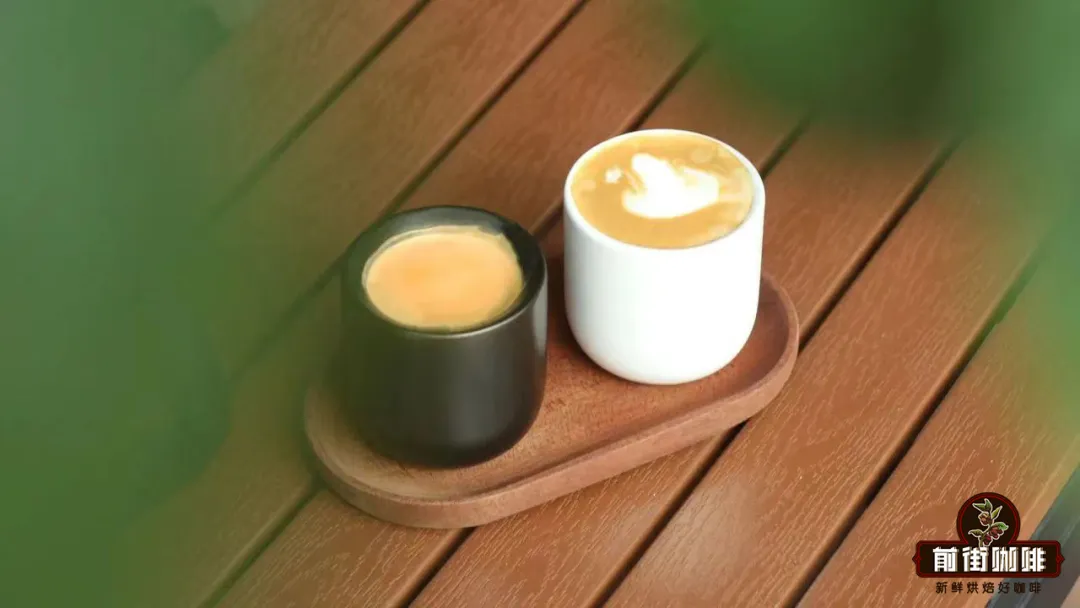
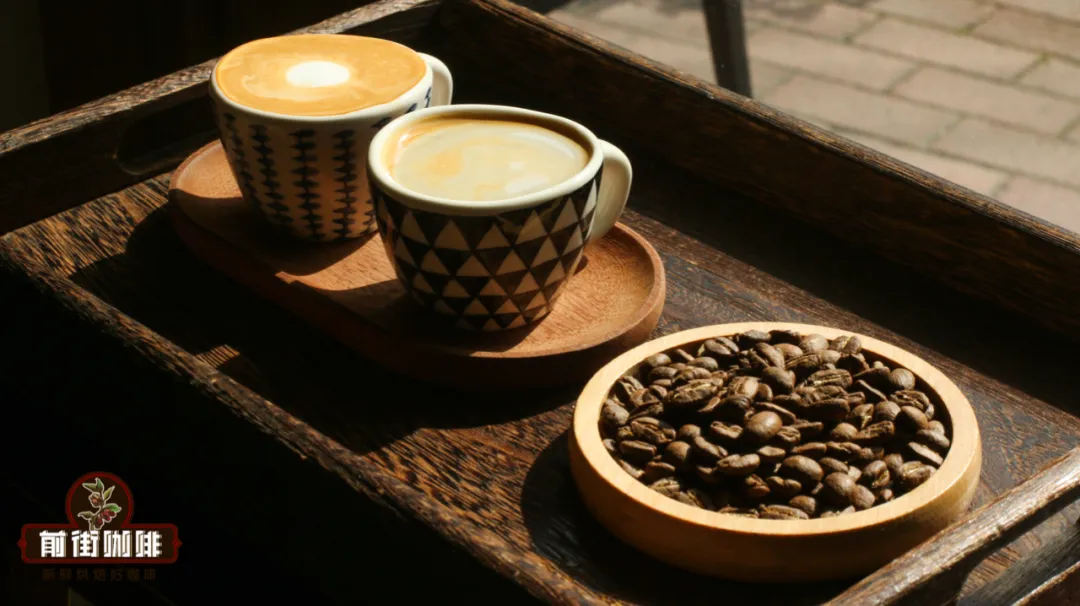
The word "Combo" itself means "combination." The combo we discuss in daily conversation is, in full, Coffee Combo, that is, a coffee combination. It should be noted that this combination does not mean blending several different coffee beans together, but rather using the same bean to extract multiple espresso shots, which are then made into different types of coffee for pairing—what is commonly called "one bean, multiple drinks." The most common approach is "one black, one white": splitting one espresso into two portions, one used to make an Americano (black) and the other made into a milk coffee (white).
Of course, some shops split the espresso into more than two portions and, besides the Americano and milk coffee, add an extra specialty drink to the combination. But most cafés still focus on the Americano-plus-milk-coffee pairing, because it is not too complicated to execute.
The core of a café combo actually lies in the coffee beans chosen. The reason for insisting on using the same bean to make different categories of coffee is to fully present the flavor characteristics of that bean and observe how it performs under different preparation methods. Therefore, compared with serving an Americano or milk coffee on its own, this combination is more like a showcase for the bean, a stage for it to express itself. It is also for this reason that combos are often misunderstood as having to be made with single-origin coffee.
But in fact, in the context of competitions, what a combo conveys is the competitor's ability to control the bean and the display of the coffee bean's distinctive flavors; in essence, it is an examination of the user's skill and a test of the bean's quality. In other words, as long as the taster can perceive the bean's flavor characteristics in this combination and the overall harmony is high, then whether blended beans or single-origin beans are used, both are viable.
The above content is compiled by CoffeeHunters, a coffee news website.


