








Why can't every coffee enthusiast smell floral aroma?
Coffee floral aroma comes from compounds including terpenes, alcohols, esters, aldehydes, and lactones that form through variety, growing conditions, fermentation, and roasting. Light to medium roasts preserve them best. Not everyone perceives them because smell depends on personal sensory memory: the aroma must trigger a remembered experience of fresh flowers before the brain labels it floral.
The coffee flavor wheel splits floral notes into bright floral, elegant floral, and muted floral, each tied to different reference flowers. A practical training method is sinus perception practice, which routes aromatics from the mouth up into the nasal cavity to strengthen recognition. Grinding is the easiest moment to catch a delicate coffee aroma, before hot water dilutes the volatile compounds.
Many coffee enthusiasts can catch the floral scent during the grinding stage when brewing beans with prominent fruity and floral notes, but some people never perceive this flavor. Where does the floral aroma in coffee come from? Why are some people sensitive while others are not? This article will start from Front Street Coffee's brewing experience, sort out the compound sources of floral aroma and the influence of roasting, introduce the three major floral categories in the coffee flavor wheel—bright floral, elegant floral, and muted floral—along with their representative flowers, and share a practical method for practicing floral recognition using sinus perception to help you more accurately capture that fleeting fragrance in coffee.
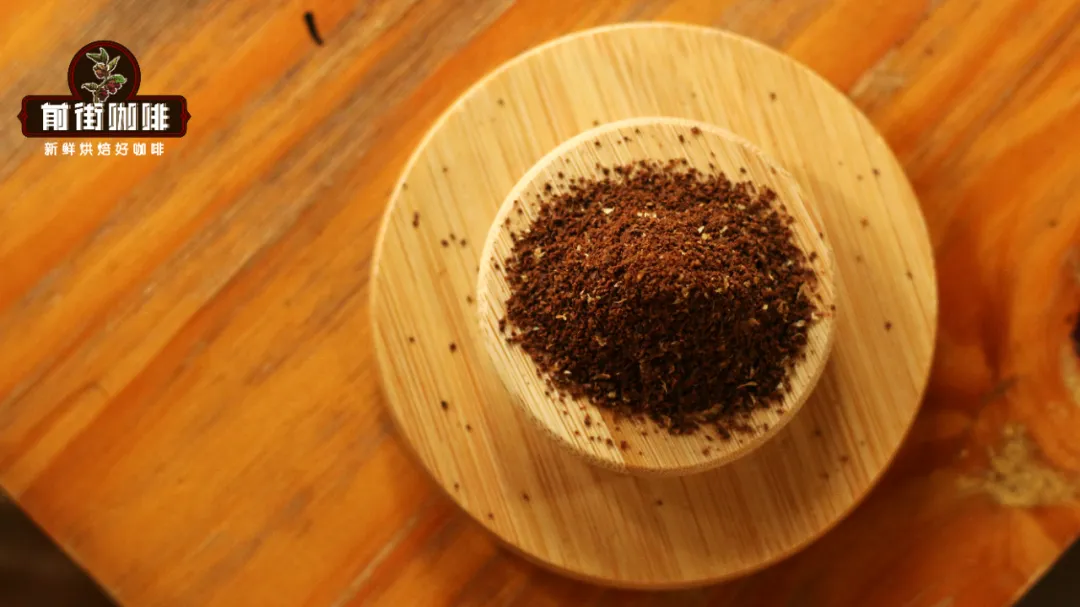
Every time Front Street Coffee brews those beans with obvious fruity and floral notes, as soon as grinding begins, the floral aroma rushes out first, piercing straight into the nostrils. Sometimes it is elegant, sometimes intense, and when drunk, it carries a fruity taste interwoven with sweetness and acidity, leaving people especially relaxed and cheerful after finishing.
However, the floral characteristic both indicates outstanding bean quality and is often difficult to identify on its own, which makes it especially precious. Since everyone's sensory experience is inherently different, many friends wonder: does floral aroma really exist in coffee? If it does, why can't I perceive it? As coffee lovers, how should we usually train our ability to distinguish floral aromas?
Where does the floral note in coffee come from?
Floral aroma has three characteristics: delicate sweetness, lightness, and fragrance. Mainstream research suggests that the floral aroma in coffee is formed by the combined action of a series of complex compounds, involving terpenes, alcohols, esters, aldehydes, lactones, and more. The core reason we can smell floral notes is that these aroma compounds stimulate the senses and awaken memories of previously smelling fresh flowers, leading to the judgment that there is a "floral aroma."

As for the emergence of floral aroma, part of it is determined by the coffee variety, growing conditions, and the degree of fermentation in post-processing, while roasting is an extremely critical link in controlling the intensity of floral aroma. From the perspective of roasting alone, generally light to medium roasting better preserves floral notes. Therefore, in daily selection, priority can be given to light-to-medium roasted beans with fruity and floral notes as the main theme. This type of coffee often has a soft aroma and delicate texture, making floral notes easier to notice when tasting.
What common floral types are found in coffee?
Friends familiar with the coffee flavor wheel should know that it lists three floral descriptions distinguished by different colors: white jasmine, pink rose, and orange chrysanthemum. They correspond respectively to three specific aroma types: bright floral, elegant floral, and muted floral.
The bright floral type is classically represented by jasmine. It is the most common and also the floral category easiest for people to perceive. It often appears in coffee from high-altitude producing areas such as Africa and Central America, with lightly roasted washed beans being the majority. It is bright, uplifting, and full of vitality. Representative flowers also include coffee flower, magnolia, gardenia, lemon blossom, orange blossom, and marigold.
The elegant floral type is most typically represented by red roses. Its aroma intensity is relatively high, and its tone is warm and bright, giving a peaceful and soothing feeling. Representative floral notes also include violet, lavender, camellia, and Chinese rose. For example, the naturally processed Emerald Red Label Geisha on Front Street Coffee's bean list carries a rich rose fragrance, and not long ago, in a naturally processed 74158 from Alo Village in the Bensa region, a very intense purple lavender aroma was also tasted.
The muted floral type is rather special. It has a slightly pungent sensation and is usually accompanied by the scent of lemongrass and certain spices. At first smell, it may be a bit sharp, so it is highly recognizable and easy to judge. Chamomile and osmanthus are typical representatives. For example, with a Colombian Cherry Blossom from Front Street Coffee, after grinding, a somewhat pungent chamomile and pepper aroma can be smelled.
How to practice identifying floral flavors?
In many fields, we often see a certain taste described as a specific variety of flower, with concrete and distinct characteristics. But in roasted coffee beans, various aromas, strong or faint, interweave and stimulate the senses, so in most cases it is difficult to find characteristics exactly like real fresh flowers. More often, we can only take the "resemblance" and then match the corresponding plant or flower from our memory bank. Therefore, when practicing floral identification, it is worth capturing the fragrance in coffee from the "spirit and outline" of the aroma.
When we smell an odor, the odor molecules fill the sinus areas within the nasal cavity. The so-called sinuses are actually several groups of bony air-containing cavities on both sides of the nose, called the frontal sinus, sphenoid sinus, ethmoid sinus, and maxillary sinus. It can be simply understood as the feeling perceived near the brow point at the forehead. Combined with the aroma smelled by the nose, we can easily judge whether there is a floral aroma in the coffee and which aroma type it belongs to.
For example, the most commonly encountered bright floral type: after this kind of floral aroma enters the nasal cavity, it first rushes up to the frontal sinus area and then quickly spreads out. Because it does not gather in one place, it lasts only a short time. Coffee with a bright floral type often carries a soft honey-like sweetness, so it always gives a gentle impression.
Next is the elegant floral type. This kind of floral aroma has medium-to-high intensity, is lasting and rich, and after entering the nasal cavity quickly rushes up to the frontal sinus, then gathers behind the nose, creating a swollen feeling. It often appears together with the aroma of ripe fruit, making people first think of floral types with darker colors and a steady, elegant tone.
Finally, the muted floral type. Compared with the previous two, after this kind of floral aroma enters the nasal cavity, it first gathers in the frontal sinus and then begins to move toward the top of the head. When exhaling with the mouth closed, one can feel the aroma lingering in the nasal cavity and at the brow point. Because the muted floral type has a slightly pungent odor and does not dissipate easily, at first smell it may feel somewhat sharp or even dizzying, and only after adapting for a while does one gradually get used to it.
The above content is compiled by CoffeeHunters, a coffee news website.


