






Why does the coffee sharing debate focus on plastic cups?
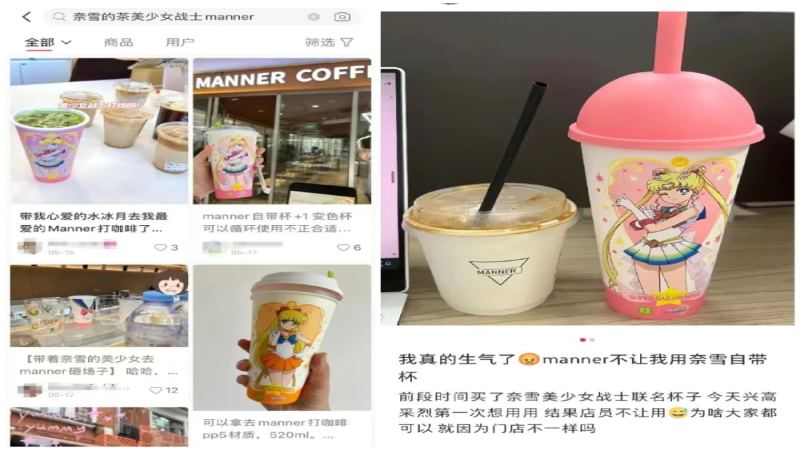
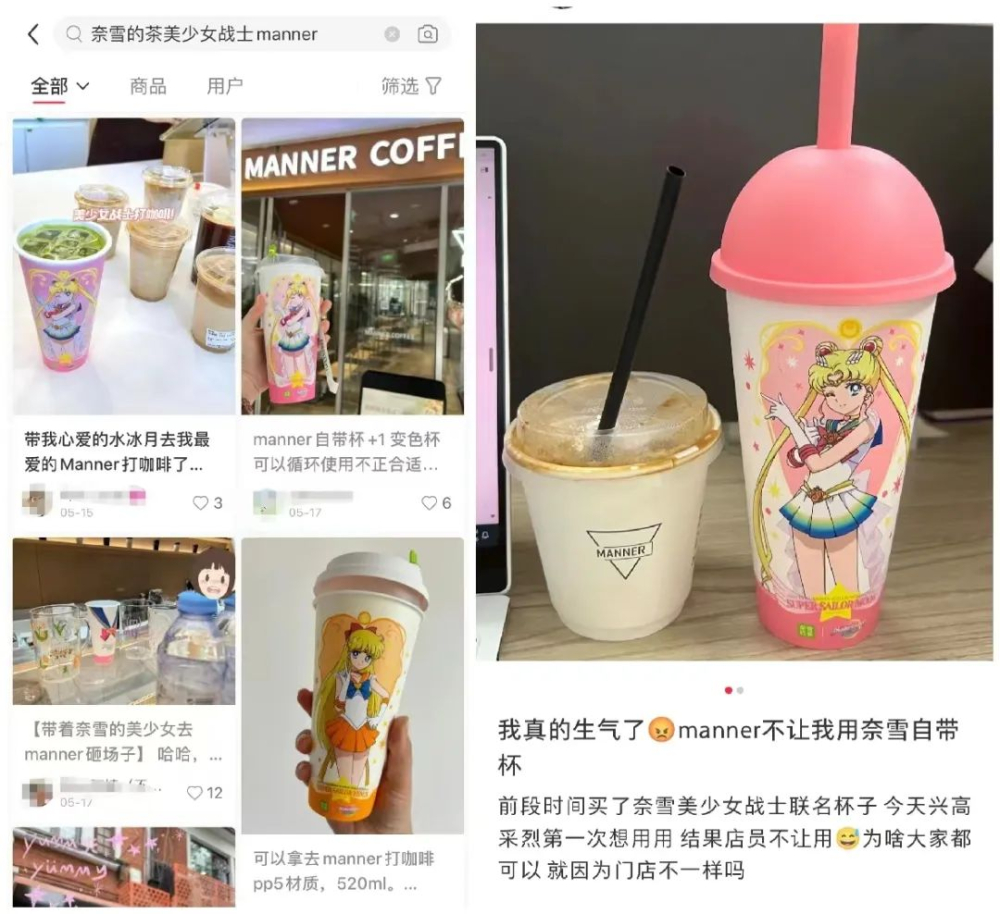
Manner Coffee's bring-your-own-cup discount of 5 yuan has been a draw for regular customers, but enforcement has become inconsistent. One customer was refused when using a limited-edition Nai Xue milk tea cup, while others reported buying coffee with the same type of cup. Customer coffee sharing online shows that some stores accept plastic cups marked PP5 and others do not.
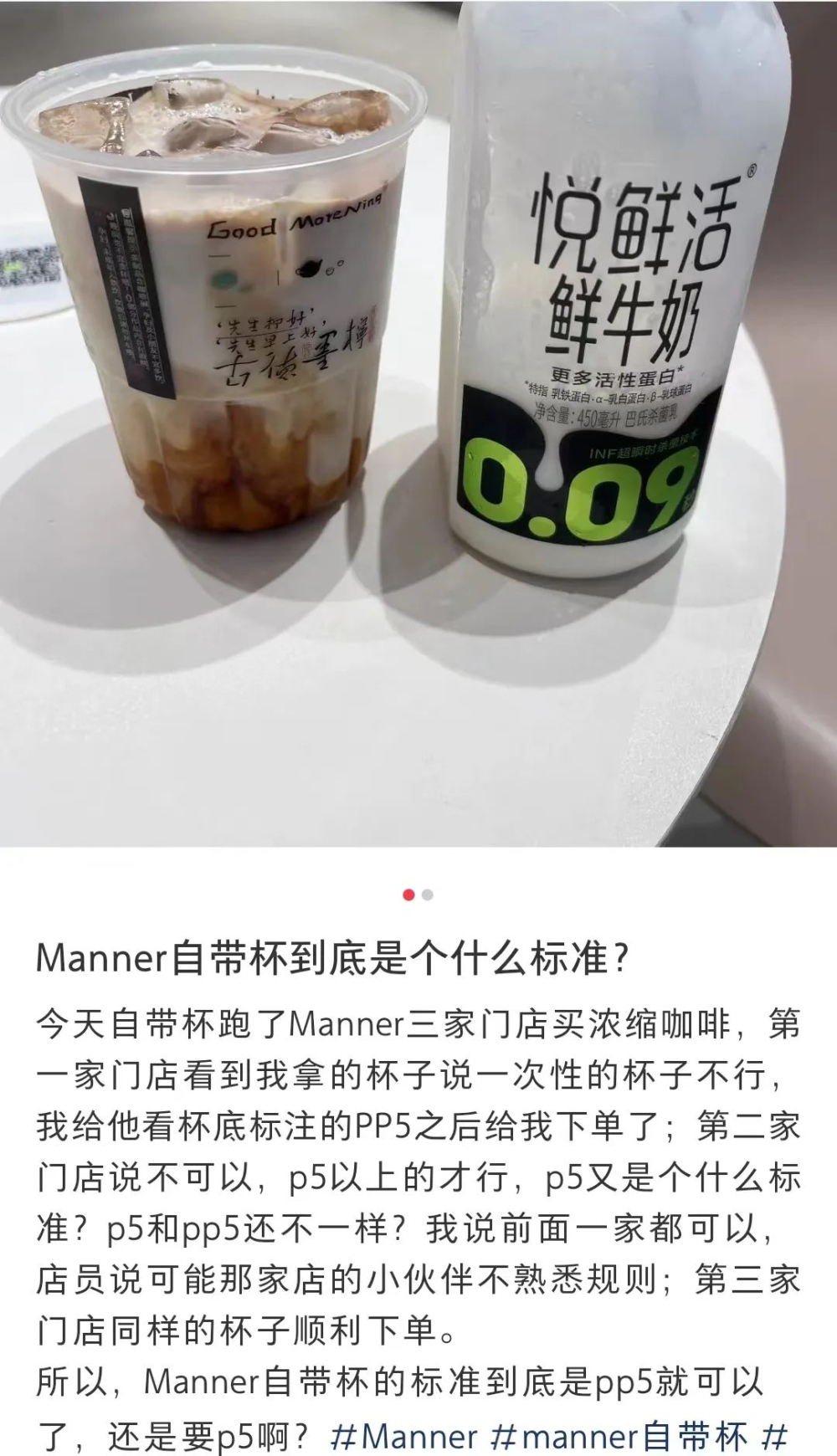
In one case, a customer visited three Manner stores with a plastic milk tea cup. One store said the cup could not be used for the discount; the other two checked for the PP5 mark on the base and allowed it. The topic of whether disposable plastic takeaway cups qualify had already been discussed before, since using them conflicts with the policy's environmental purpose.
Manner Coffee's bring-your-own-cup discount has always been a highlight that attracts consumers, and many customers, in order to save 5 yuan, are used to bringing their own cups to buy coffee every day. However, recently a customer was refused by a staff member when using a Nai Xue limited-edition milk tea cup, while on social platforms some people successfully bought coffee with the same type of cup, raising doubts about inconsistent enforcement standards across Manner stores. At the same time, whether plastic takeaway cups can be used as bring-your-own cups has also become a hot topic of discussion. This article will sort out the course of the incident, the differences in plastic materials, and the views of various parties, and also bring related recommendations from the Front Street brand.
▲
Click to follow | Daily specialty coffee culture magazine Coffee Workshop
The 5-yuan bring-your-own-cup discount launched by Manner has long been a major selling point attracting customers. Many consumers, in order to enjoy this discount, have developed the habit of bringing their own cups to stores every day to buy coffee.
However, recently, a customer went to Manner to buy coffee with a limited-edition milk tea cup launched in a recent Nai Xue promotion, but was refused by the staff member. At the same time, however, on social platforms many netizens can be found sharing their experiences of successfully buying coffee at Manner using plastic milk tea cups from Nai Xue and other brands. This difference made the customer wonder whether she had been treated differently by a certain Manner store.
Similar situations are not isolated. Last week, another customer took a plastic milk tea cup to three Manner stores in succession to try to buy coffee. During these three visits, the staff member at one store clearly stated that the plastic cup could not be used to buy bring-your-own-cup coffee; while the other two stores, after confirming that the bottom of the cup bore the PP5 mark, agreed to her request and let her smoothly enjoy coffee at the bring-your-own-cup price.
In fact, the topic of "whether plastic takeaway cups can be used as bring-your-own cups" had already sparked discussion on social platforms before. Most people feel that using the disposable plastic takeaway cups provided by beverage shops as bring-your-own cups goes against the original environmental purpose of brands promoting bring-your-own cups.
In their view, what truly fits the definition of a bring-your-own cup should be reusable ceramic cups, insulated tumblers, or glass cups, rather than disposable takeaway cups.
In addition, in the general consumer's understanding, the material of plastic takeaway cups is not durable, and if reused, certain chemicals in the plastic may leach out during contact with beverages, thereby causing potential harm to health.
These concerns among netizens actually have some basis. At present, the takeaway cups used by most beverage shops are mainly made of PET plastic. Although this material can come into contact with food, it is poor in durability and is not heat-resistant, so it is not suitable for repeated use.
However, now many beverage shops, in order to cater to consumers' desire to keep limited-edition milk tea cups, have upgraded the material of plastic takeaway cups and switched to cups made of PP5 material. Compared with PE4, PP5 is the only plastic material that can be placed in a microwave for heating. It is not only heat-resistant, but also has a thicker body and can be completely reused after cleaning.
Starbucks once launched a lightweight plastic bring-your-own cup made of PP5 material inspired by its own cold drink cups. And the milk tea cups used by the two customers mentioned earlier who went to Manner to buy coffee also bore the PP5 mark, meaning that these plastic cups can in fact be reused.
The original intention of beverage shops in promoting bring-your-own cups is to reduce the use of takeaway cups, so most netizens believe that using non-environmentally friendly plastic cups as bring-your-own cups is inappropriate.
But in the view of another group of people, all plastic takeaway cups on the market should not be rejected wholesale. Merchants provide PP5 takeaway cups precisely in the hope that consumers can wash them clean after finishing their drinks and reuse them. So when customers take this kind of plastic cup to buy coffee, they are actually also reducing the consumption of plastic cups, which does not violate the environmental concept of bring-your-own cups.
In the comments section, some Manner staff also spoke up, saying that if consumers bring a PP5 plastic cup to buy coffee, as long as they show the material mark on the cup, they will not be refused.
Image source: Xiaohongshu
Disclaimer: Some images in this article are from the internet. For some content on the website, such as images, we will respect the original author's copyright and indicate the source. However, due to the large volume, a few images and texts may not have been credited in time. Please understand. If the original author has any dispute, they may contact the website for handling. Once verified, we will correct it immediately. Compiled and edited by "Coffee Workshop". Please indicate the source when reprinting. If there is infringement, please inform us for deletion. Thank you~!
The above content is compiled by CoffeeHunters, a coffee news website.


