







Yirgacheffe and Alo Village: Ethiopian Coffee at High Altitude
Alo Village in the Bensa area of Sidamo rose to prominence after winning the 2021 COE, and founder Tamiru Tadesse built the brand from scratch. The site sits at high altitude, with misty mornings, sunny afternoons, and night temperatures near ten degrees Celsius but without frost, conditions suited to coffee cultivation. Its 74158 variety is naturally processed.
Ethiopia is the birthplace of coffee and Africa's largest Arabica producer, with regions such as Yirgacheffe, Sidamo, Guji, Harrar, and Kaffa. Different soils, microclimates, and post-harvest methods give each area a distinct cup. Front Street Coffee's cupping notes for Alo Village describe floral and fruity aromas, and the article offers brewing suggestions for readers who want to taste that profile.
Ethiopia, as the birthplace of coffee, has always been a pilgrimage site for specialty coffee lovers. In recent years, Alo Village in the Bensa area of Sidamo has quickly risen to fame thanks to its impressive performance as the 2021 COE champion, becoming a hot topic in the coffee world. Alo Coffee founder Tamiru Tadesse started from scratch, bringing the floral and fruity aromas of this high-altitude land to the world. This article will take you through the background of Alo Village, the distribution of processing stations, the natural processing of the 74158 variety, and the cupping flavors and brewing suggestions from Front Street Coffee, so you can experience the unique charm of this coffee.
In the hearts of many coffee enthusiasts, Ethiopia undoubtedly holds an irreplaceable position. It is not only the birthplace of coffee but also the largest producer of Arabica in Africa. When it comes to specialty coffee, everyone can probably, like Front Street, casually list a few of their favorites—Kochere, Gedeb Worka, Konga, Sidamo Hambela, Gesha Village, and so on—all are well-known representatives of Ethiopia. However, this year a origin called Alo Village has emerged suddenly, rapidly gaining ultra-high popularity in the coffee circle. What exactly makes it so special that it captivates people so much?
Ethiopia's entire territory is at a high altitude, and the vast highland areas create ideal climatic conditions and significant temperature differences between day and night. In the early morning, mist fills the air, and cool breezes blow through the mountains; in the afternoon, sunlight is abundant; at night, temperatures can drop to around ten degrees Celsius, yet not to the point of frost—such an environment is perfect for coffee cultivation. Ethiopia has numerous producing regions, and different soils and microclimates, combined with differences in post-harvest processing methods, naturally give each coffee its own distinctive flavor. In domestic cafes, the most commonly heard flavor representatives are probably Yirgacheffe, Sidamo, and Guji; their unique aromas are widely circulated in the coffee community.
As the birthplace of coffee, Ethiopia has a deep planting history, with multiple producing regions distributed across the country, including Sidamo, Harrar, Kaffa, Limmu, Lekempti, Tepi, Bebeka, and Bale. Among them, Yirgacheffe, Guji, Sidamo, and Bebeka are the most well-known in the market. In the past two years, with the rise of Alo coffee in the Bensa area, many roasters at home and abroad have released batches from this origin, and the Bensa area of Sidamo has gradually come into public view.
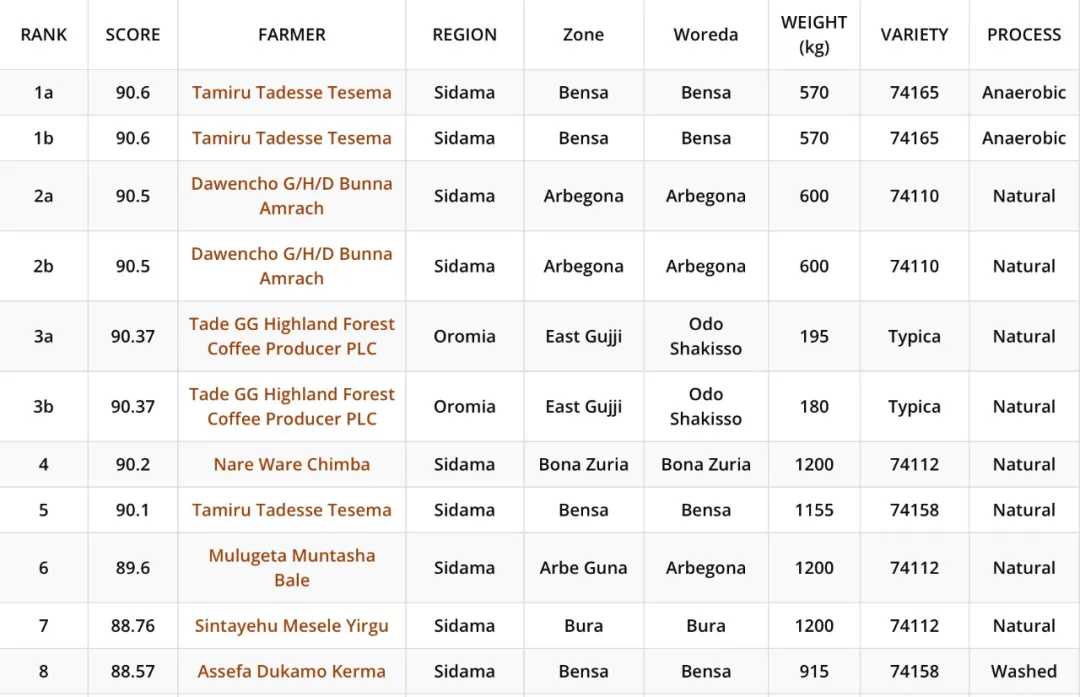
It is said that the fame of this origin can be traced back to the 2021 COE green bean competition. Of the 30 winning beans that year, 16 came from the Sidamo producing region, and 6 of those were from the Bensa area. It is worth mentioning that the 2021 Ethiopia COE champion was a 74165 variety from Alo Village, submitted by Tamiru Tadesse Tesema, with a score as high as 90.6. Just like that, Alo Village and Alo Coffee founder Tamiru quickly became famous in the industry.
2021 Ethiopia COE Results
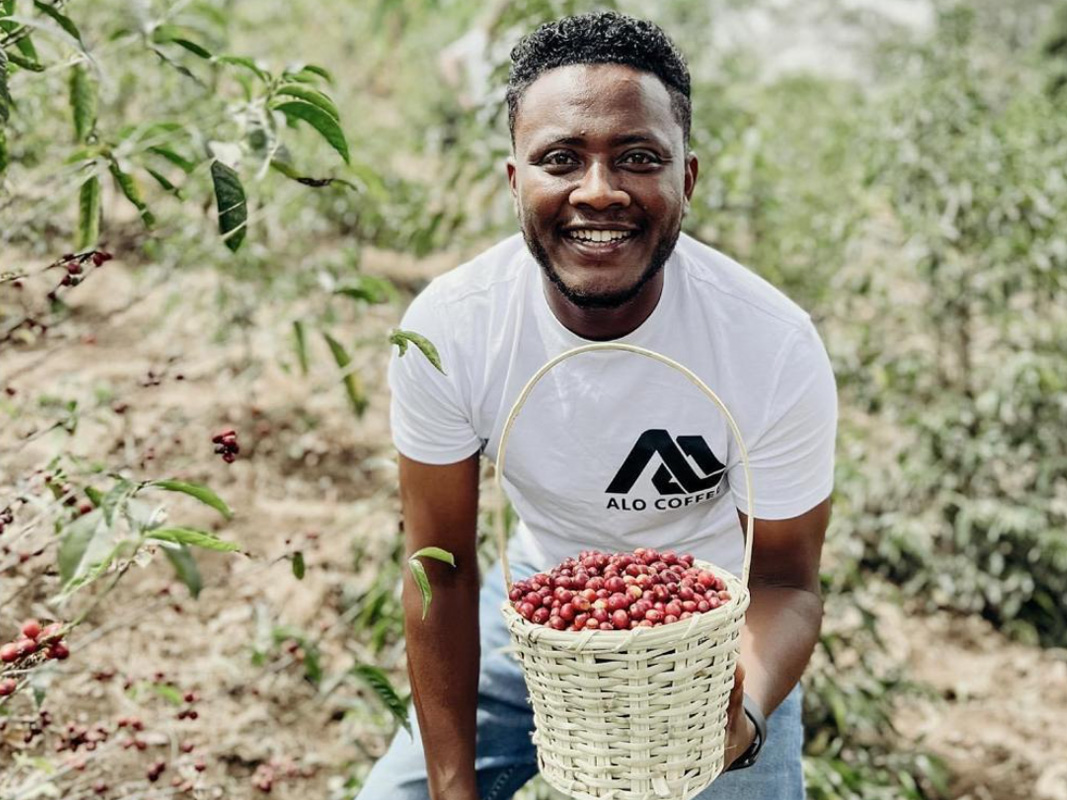
Alo Coffee PLC is a green bean trading company run by Tamiru Tadesse, founded in 2020, mainly exporting coffee from the Bensa area of Sidamo, and it is also a green bean brand. Tamiru is a native of Bensa, has been involved with coffee since childhood, studied engineering in university, stayed to teach for two years after graduation, and then devoted himself to the specialty coffee industry. In 2020, when he saw a grower friend from the same Bensa town win the COE, he realized the huge potential of specialty coffee produced in this land, but due to small scale and backward conditions of farmers, it was difficult to commercialize the product in the market. So he resolved to promote the high-quality "taste of Bensa" to the world and founded his own company, Alo Coffee.
Tamiru first obtained Q-grader certification, and then, relying on his familiarity with coffee cultivation and production in his hometown Bensa, as well as years of experience in green bean export trade, he began to systematically organize the production, marketing, and quality of this region from scratch, and also analyzed the current difficulties and opportunities facing Ethiopian specialty coffee. In the same year he founded the brand, he built a green bean processing station in his hometown Alo Village and set up a dedicated transportation system to collect and process coffee cherries from more than 200 smallholder farmers in the surrounding area, while providing them with professional knowledge training and technical support, and strictly controlling every detail of green bean processing to ensure traceability at every step. In just two years, Tamiru made Alo's presence frequently appear in many specialty cafes overseas.
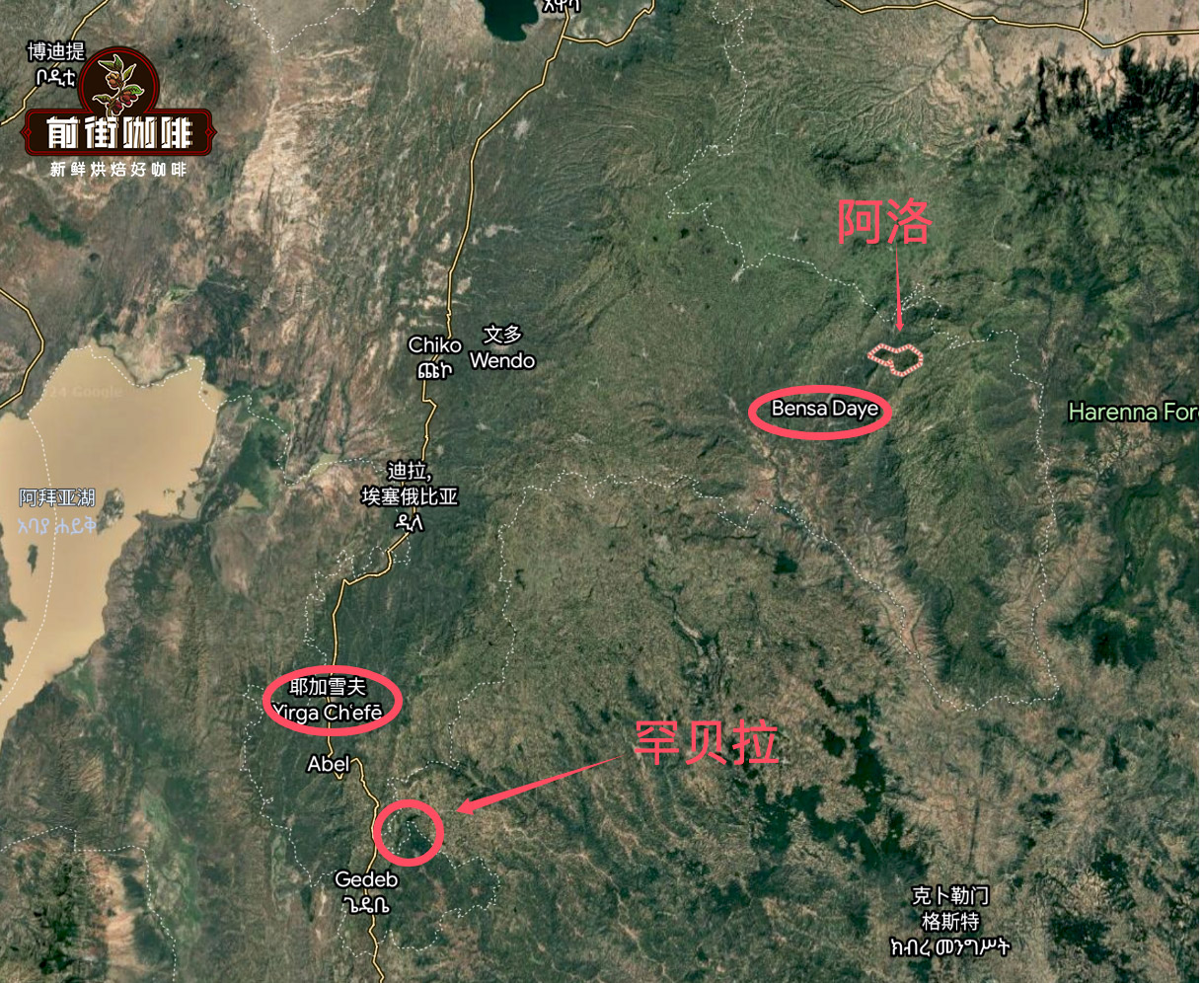
Now let's talk about Alo Village. It is a small village located in the northeast of Sidamo, situated on the highest slope of Bensa Woreda. The Bensa area is known for its unique geographical advantages, with planting altitudes ranging from 1,800 to 2,300 meters. Compared to many classic Ethiopian representatives, many coffee trees in Bensa Woreda grow at altitudes between 2,200 and 2,350 meters, and the famous Alo Village is even more outstanding among them, with an elevation of 2,400 meters.
Front Street has also mentioned in previous articles that for specialty coffee, the higher the planting altitude, the slower the growth of coffee cherries, and the harvest time after ripening will be later than in other places. The green beans therefore have higher density and form a more complex and intense aroma structure. On the other hand, high altitude extends the drying time of coffee cherries, and the fermentation process after picking occurs at relatively low temperatures, thus deriving fuller "floral and fruity aromas."
Currently, Alo Coffee's harvesting operations are mainly concentrated in the Bensa Woreda area under the Sidamo producing region. Distinguished by village, in addition to the most famous Alo Village, there are also batches on the market from Bombe Village, Murago Village, Bashiro Gute (belonging to Bona Zuria Woreda), and other villages.
Regarding information about processing stations, Tamiru has also disclosed it on the official website. Currently, Alo Coffee's green bean processing areas include 8 processing stations: Main (main processing station), Chilaka, Morke, Hatessa, Mewa, Hurro, Gute, and Chire Kalo. The main processing station Main, Hatessa, and Chilaka are all located in Bensa; Morke is in Bura; Mewa and Hurro are both in Nensebo; Gute is in Bona Zuria. All processing stations are placed near the coffee farms to carry out post-harvest processing more quickly and also to ensure the freshness of the coffee cherries.
Regarding varieties, most of the coffee produced by Alo is from the JARC (Jimma Agricultural Research Center) 74 series, including 74158, 74165, 74112, 74110, etc., among which 74158 is the most common on the market. The batch that Front Street purchased this time is also selected from the 74158 variety, processed and produced by Alo Coffee's Hatessa processing plant (shown as "Hatesa" on Google Maps). This is a small village located a 23-kilometer drive south of Alo Village, and the coffee cherries are processed using traditional natural processing.
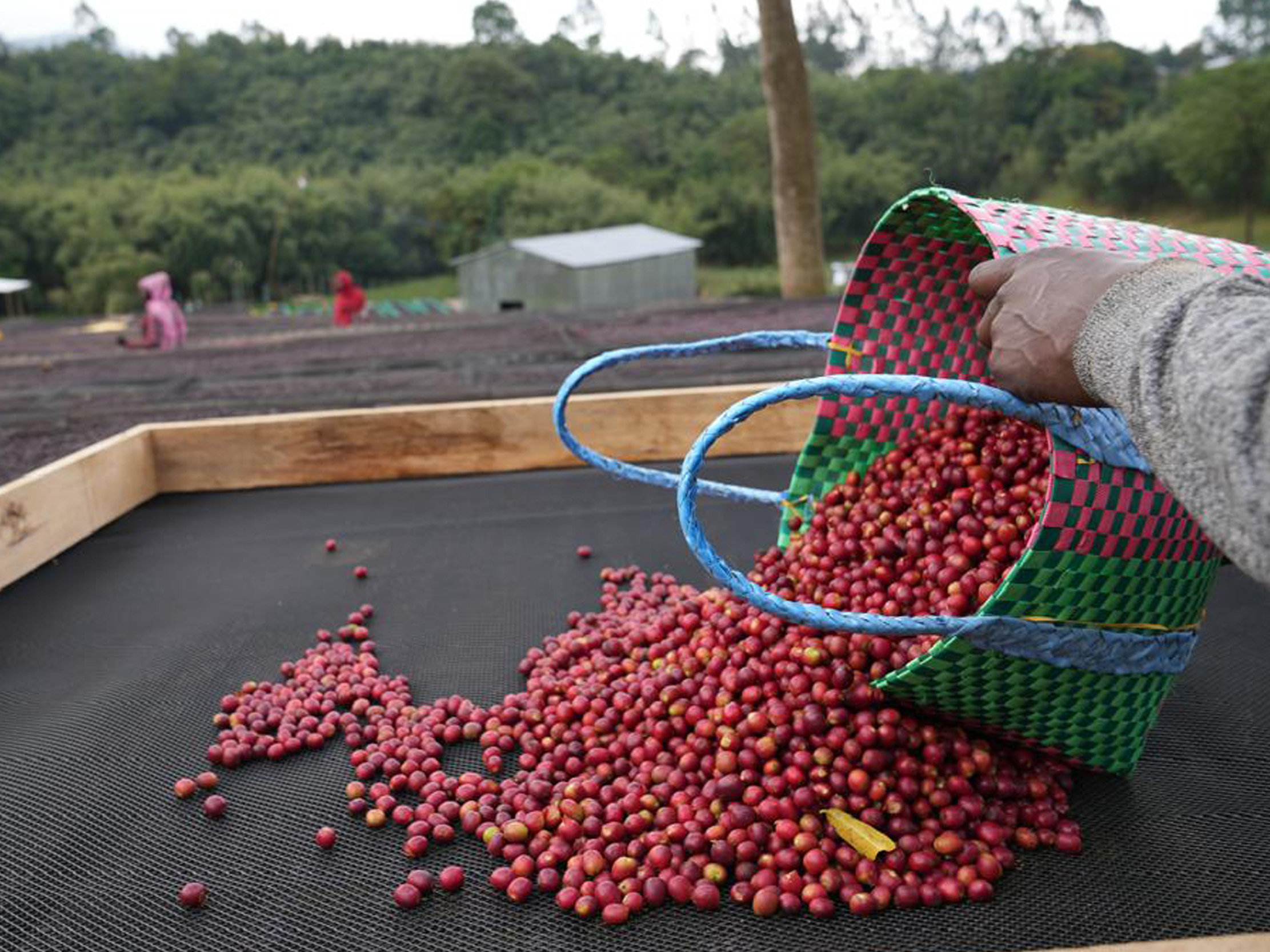
Before formal natural processing, farmers first hand-pick fully ripe coffee cherries, transport them in bulk to the Hatessa processing station, and conduct a first round of sorting. Then, before washing, the fruits are classified again by observing the skin color to remove overripe or underripe cherries, ensuring uniform color before sun-drying.
For naturally processed coffee, the farmers responsible for post-harvest processing need to turn the fruits on the drying beds very frequently during the first three days, because at this time the coffee cherries have a high moisture content. If not turned in time, they are not only prone to mold, but also may develop unpleasant sourness or rotten fruit flavors due to uneven heating. Throughout the process, the coffee cherries are spread in only a thin layer, in order to give them better ventilation and drying conditions. After 14-18 days, when the moisture content drops to the target level, they can be bagged and sent to the warehouse.
Through cupping, Front Street first experienced this Alo's sweet floral and fruity aroma. The dry fragrance has obvious characteristics of magnolia, pineapple, yellow peach, and small Taiwan mango, accompanied by a clear sweet fermentation aroma, very pleasant.
When slurping, the entry has a full tropical fruit sweet-tartness, with flavors such as ripe pineapple, passion fruit, and perfume lemon particularly prominent, accompanied by a slight black tea note. The gentle fermentation plus light floral aroma makes one unable to resist taking a second sip. As the temperature drops slightly, the coffee begins to lean toward stone fruit characteristics such as yellow peach and dried apricot. The fruit acidity is clear and bright without losing layers, very special.
Flavor: magnolia, passion fruit, pineapple, mango, fermentation
FrontStreet Coffee Brewing Suggestions
Lightly roasted coffee beans have a relatively hard texture and do not easily release flavor substances after hot water is poured, so Front Street uses high-temperature water of 92°C-93°C to stimulate the floral and fruity acidity in the coffee. For this Alo coffee, Front Street recommends a medium-fine grind size (78% passing rate on China standard No. 20 sieve). The EK-43 grinder used in Front Street stores has a grinding setting of 10; visually, it is about the grind size of fine granulated sugar. For the brewing ratio, Front Street believes 1:15 to 1:16 are both acceptable. If you want a richer mouthfeel, use 1:15; if you want to feel the floral sweetness more clearly, use 1:16 to let the flavors spread out more.
Dripper: V60 Water temperature: 92-93°C Dose: 15g Coffee-to-water ratio: 1:15 Grind size: fine granulated sugar size (78% passing rate on No. 20 standard sieve)
Pouring technique: three-stage
Three-stage pouring: Wet the coffee bed with twice the amount of water as the coffee grounds, forming a dome and blooming for 30s. Then, using a small stream, pour in a circular motion from the inside out until 125g, then pause. When the coffee bed drops to half the height of the dripper, continue pouring the third stage with the same fine stream until 225g, until all the coffee liquid has filtered through. Remove the dripper; the time is about 2 minutes.
The above content is compiled by CoffeeHunters, a coffee news website.


