







What Defines the Laos Coffee Industry Today?
The Bolaven Plateau produces about 95 percent of Laos coffee, with Robusta as the leading variety and Arabica making up roughly one-third of output. Cultivation began during the French colonial period, and the country's high-altitude plateau, ample rainfall, and volcanic soil give it strong natural conditions, even though it stays in the shadow of Indonesia and Vietnam.
Laos is landlocked in northern Indochina and borders China, Cambodia, Vietnam, Myanmar, and Thailand. The United Nations soil classification lists 12 soil types there, with low-activity strongly acidic soils the most widespread. Terrain runs high in the north and low in the south, and the Mekong valley shapes much of the growing area. Coffee bean processing and variety choice influence the final cup.
In Asia's coffee landscape, Indonesia's Mandheling and Vietnam's massive output often dominate the conversation, while Laos, a landlocked country in Indochina, is often overlooked. In fact, Laos possesses exceptional natural conditions—high-altitude plateaus, abundant rainfall, and volcanic soil—and coffee cultivation began as early as the French colonial period. Today, the Bolaven Plateau accounts for about 95% of the nation's coffee production, with Robusta as the primary variety and Arabica making up roughly one-third. This article will guide you through Laos coffee's historical development, geographical advantages, production region distribution, and industry status, along with recommendation information from Front Street Coffee.
When it comes to coffee-producing countries in Asia, most people first think of Indonesia and Vietnam—the former is famous for Mandheling, while the latter is the world's second-largest coffee producer. Because of this, Laos, another coffee origin in Asia, is often overlooked by everyone.
Laos
The Lao People's Democratic Republic is located in the northern part of Indochina and is a landlocked country, bordering China, Cambodia, Vietnam, Myanmar, and Thailand. The country has a total territory of 23.68 square kilometers and is divided into 17 provinces and 1 municipality.
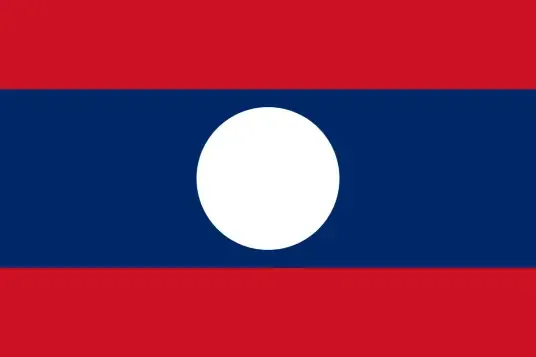
The national flag of Laos is rectangular. The central parallel rectangle is blue, occupying half of the flag, while the upper and lower sides are red rectangles, each occupying one quarter. In the center of the blue area is a white circle. Blue symbolizes the rich and beautiful land and expresses the people's love for a peaceful and tranquil life; red symbolizes revolution and represents the determination to defend national dignity with blood; the white circle symbolizes the full moon, implying a bright moon hanging high above the Mekong River.
Laos has a terrain that is high in the north and low in the south. The north is connected to the Yunnan-West Yunnan Plateau, the east is a plateau formed by the Annamite Range, and the west is the Mekong River valley and the basins and plains along the Mekong River tributaries. According to the United Nations soil classification system, Laos has 12 soil types, among which low-activity strongly acidic soils are the most widely distributed, followed by high-activity strongly acidic soils, high-activity leached soils, and cambisols. These four types account for more than 90% of the country and are widely distributed in the north, center, and south, making them very suitable for agricultural production.
Laos has a tropical and subtropical monsoon climate. The rainy season is from May to October, and the dry season is from November to the following April. The average annual temperature is 26°C, with abundant rainfall, and annual precipitation is about 2,000 millimeters. The high-altitude terrain, sufficient rain and climate conditions, together with the plateau formed by accumulated volcanic eruptions, make Laos a natural treasure for coffee cultivation.
Coffee Production Regions
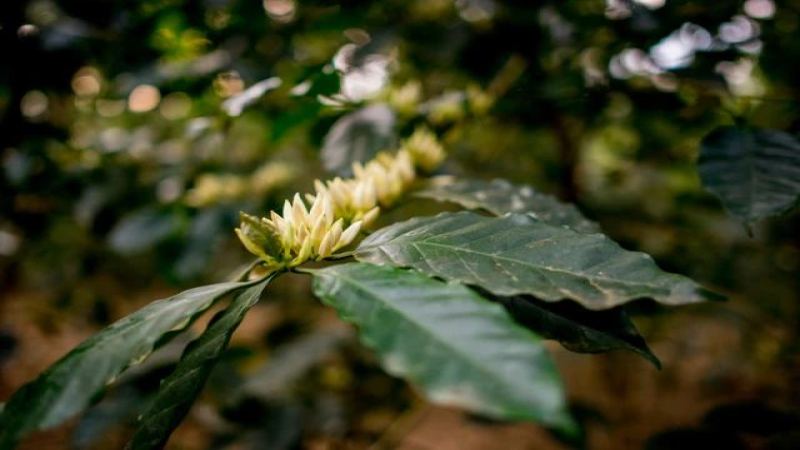
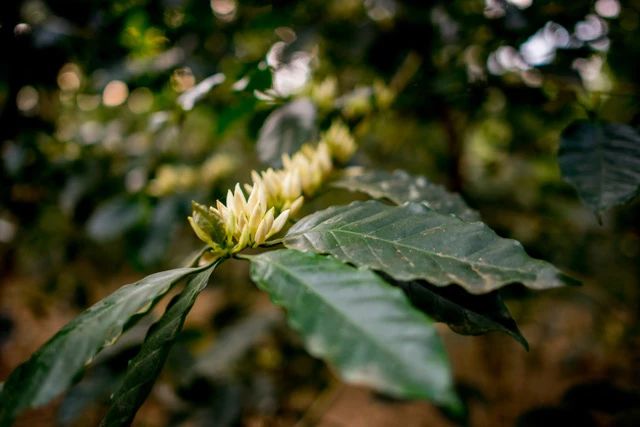
Laos' coffee history can be traced back to the early 20th century during the French colonial period, when the French first planted coffee on the Bolaven Plateau in the south, mainly with Typica and Bourbon varieties. Later, due to factors such as war and coffee diseases, cultivation shifted to the more disease-resistant and higher-yielding Robusta variety. At present, Laos still mainly grows Robusta, while Arabica is also cultivated, accounting for about one-third of total production. The harvest period is concentrated from November to the following March.
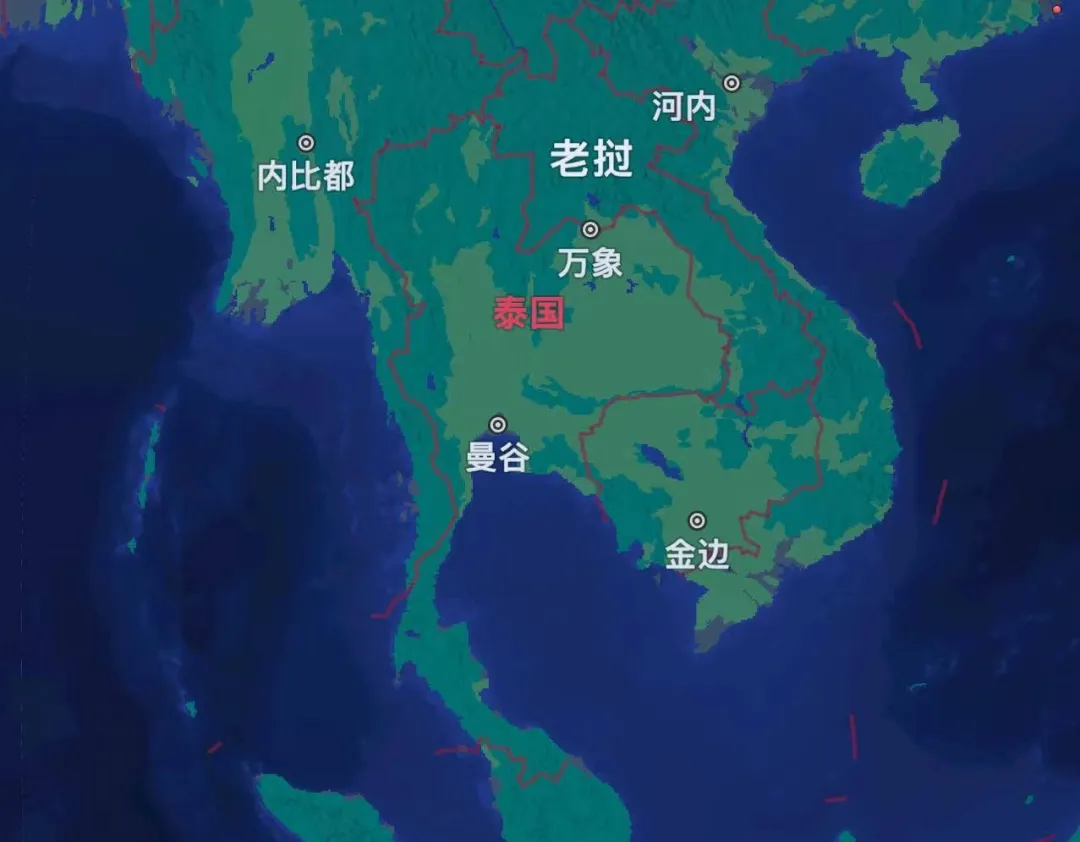
Bolaven Plateau: The name comes from the Laven people, the largest ethnic group in the region, and originally means "home of the Laven people." It is located among the Annamite Range, with the Laos-Vietnam border on the east side and the Mekong River flowing on the west side, at an altitude of about 1,000 to 1,350 meters.
The Bolaven Plateau is the region with the longest coffee-growing history, the largest area, and the highest output in Laos. The three areas covered by the plateau—Paksong in Champasak Province, Thateng in Salavan Province, and Laongam in Sekong Province—account for 95% of Laos' total coffee production. The coffee planting area in these three areas is about 70,000 hectares.
Current Status of the Coffee Industry
At present, Laos coffee is mainly exported to countries such as Vietnam, Thailand, and China. Laos coffee is dominated by small family-run farmers, and most products are sold domestically, with a relatively low proportion for export. There is still room for improvement in coffee bean processing technology, and the number of large corporate-run coffee estates is relatively small. Its coffee potential still needs to be developed through cooperation between the government and the private sector, but with a mild and smooth flavor and moderate acidity, it is a choice worth trying.
The above content is compiled by CoffeeHunters, a coffee news website.


