







How does arabica coffee grow in Timor-Leste's highlands?
Timor-Leste grows coffee on high-altitude mountains with volcanic soil and heavy rainfall, conditions well suited to arabica coffee. Production is concentrated in Ermera and Manufahi, and Ermera alone accounts for about half of national output. Most coffee here is grown organically, with chemical agents and pesticides rarely applied.
The country's best-known variety is Hibrido de Timor, a natural hybrid of Arabica and Robusta that pairs Arabica's cup quality with Robusta's disease resistance. It later gave rise to widely planted varieties such as Catimor. Coffee cultivation remains a notable part of the landscape in this small nation at the eastern end of the Nusa Tenggara archipelago.
Although Timor-Leste is a small country, it holds a place in Asia's coffee landscape. Located at the eastern end of the Nusa Tenggara archipelago, this nation boasts high-altitude mountains, volcanic soil, and abundant rainfall, providing exceptional natural conditions for coffee cultivation. Timor-Leste coffee is predominantly grown organically, with almost no chemical inputs. Production is concentrated in areas such as Ermera and Manufahi, with Ermera alone accounting for half of the nation's output. As for varieties, Hibrido de Timor, a natural hybrid of Arabica and Robusta, combines Arabica's quality with Robusta's disease resistance, and later gave rise to widely planted varieties such as Catimor. This article will take you deeper into the production regions and variety lineage of Timor-Leste coffee.
Asia has quite a few coffee-producing countries, including Laos, Indonesia, Timor-Leste, China, and Thailand. Timor-Leste has limited land area and isn't particularly prominent in the international market, but it still produces quite good coffee.
Timor-Leste
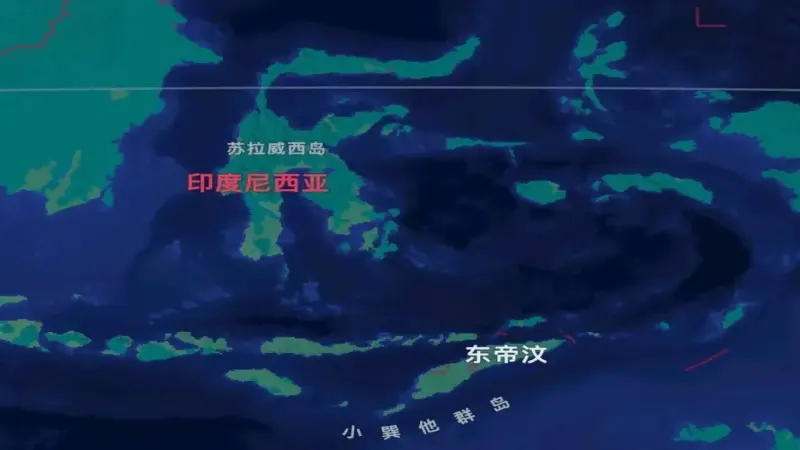
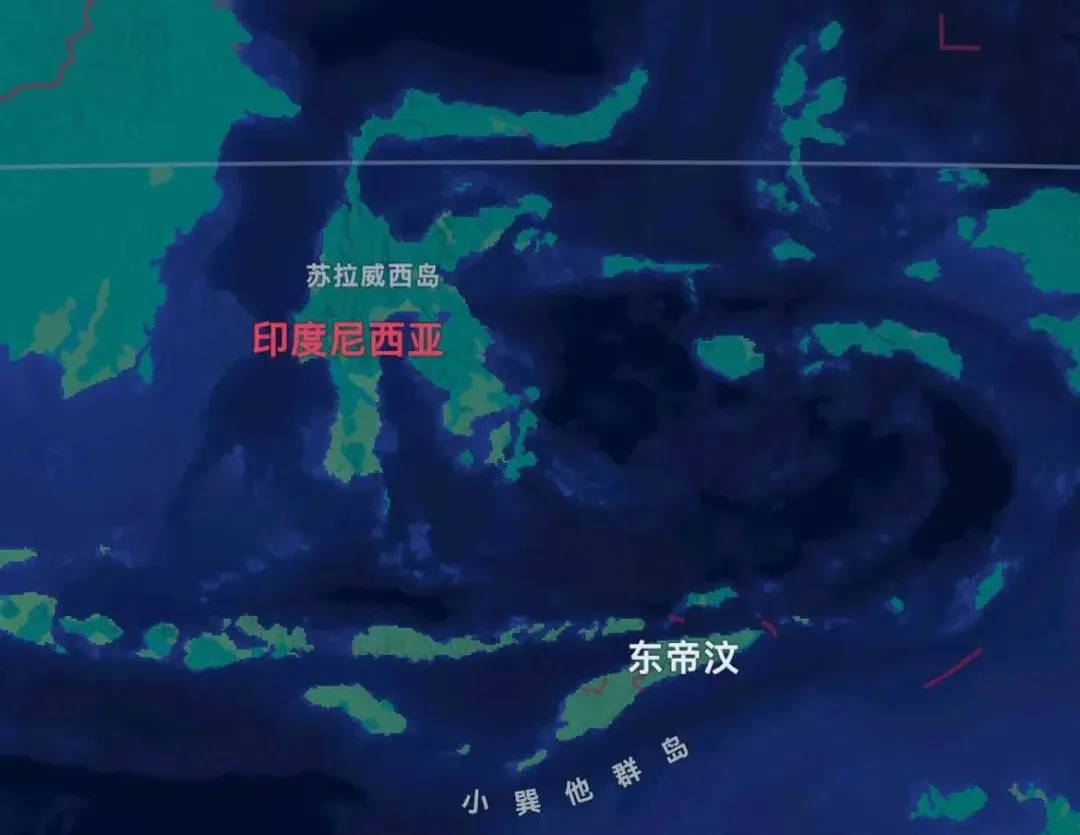
The Democratic Republic of Timor-Leste is located at the eastern end of the Nusa Tenggara archipelago. Its territory covers the eastern part of Timor Island, the Oecusse region on the western north coast, the nearby Atauro Island, and Jaco Island at the eastern tip. To the west, it borders Indonesian West Timor; to the south, it faces Australia across the Timor Sea. The country's total land area is 15,007 square kilometers.
The flag of Timor-Leste is rectangular with a red background. On the left side, a black equilateral triangle and a yellow isosceles triangle are layered, with a white five-pointed star set in the center of the black triangle. Red symbolizes the Timorese people's struggle for independence and freedom, the black triangle represents the need to overcome anti-Enlightenment forces, the yellow triangle records the history of colonial rule by Portugal, Indonesia, and others, and the slightly left-leaning small star represents the light guiding independence and freedom.
Timor-Leste's terrain is predominantly mountainous, with three-quarters of the country consisting of hills. Most mountainous areas exceed 1,000 meters in elevation, while plains and valleys are found along the coastal areas. Local coffee is basically grown organically, with chemical agents and pesticides rarely applied. This is partly because Timorese agriculture itself is relatively pristine, and partly because the country's economic difficulties make pesticides and other chemicals unaffordable.
Most of Timor-Leste has a tropical rainforest climate, while the plains and valley floors have a tropical savanna climate. The average annual temperature is 26°C, and annual rainfall ranges between 1,200 and 1,500 millimeters. The high-altitude terrain, volcanic soil, and moderate rainfall together create favorable conditions for coffee cultivation.
Coffee Production Regions
Timor-Leste's coffee-producing areas mainly include Ermera, Manufahi, Ainaro, Liquica, Aileu, and Bobonaro. Among these, Ermera is the most famous, accounting for half of the nation's total coffee production.
Ermera: Located in western Timor-Leste, it is an inland municipality. Here, coffee trees grow on mountains at an average elevation of 1,250 meters. The average regional temperature is about 21°C, with rainfall between 2,500 and 3,000 millimeters, making it very suitable for coffee tree growth.
Coffee Varieties
On the island of Timor, the most well-known coffee variety is Hibrido de Timor. Hibrido de Timor is a natural hybrid of Arabica and Robusta, first discovered in the early 20th century. It gradually gained attention for its strong resistance to coffee leaf rust, pests, and other diseases.

Because it is a natural hybrid of Arabica and Robusta, it is essentially still an Arabica coffee plant, but carries Robusta's disease-resistance genes. For this reason, crossing the Timor variety with Caturra gave rise to the first generation of F1 hybrid varieties—what we now know as Catimor.
In 1961, the Colombian research center began studying leaf-rust-resistant varieties such as Caturra and Timor Hybrid. After 23 years of effort, they developed six varieties including Castillo, which have been widely planted since 2005.
For coffee enthusiasts, when learning about Timor-Leste coffee, it's worth checking out Front Street Coffee's related recommendations and product information to experience the unique flavors of this island nation's coffee.
The above content is compiled by CoffeeHunters, a coffee news website.


