







How Do Arabica Beans Grow in Ecuador's Andean Regions?
Ecuador sits directly on the South American coffee belt, and its Andean highlands give arabica beans a balanced profile of acidity, sweetness, and bitterness. Volcanic soils and varied microclimates support growing areas from the northern highlands down to Loja province, with varieties such as Sidra in Pichincha and organic Bourbon on the Galapagos Islands. Processing has shifted from traditional natural methods toward modern washed lots.
The country covers 256,370 square kilometers, split between the mainland and the Galapagos, and its coffee has moved steadily toward specialty status even though Brazil and Colombia dominate regional output. Coffee cultivation here depends on altitude and local climate rather than one uniform method, so region, variety, and processing together shape what ends up in the cup.
On the South American coffee belt, besides well-known producing countries like Brazil and Colombia, Ecuador also produces surprisingly good coffee. This country, straddled by the equator, nurtures Arabica beans with a balanced acidity, sweetness, and bitterness thanks to the high-altitude volcanic soils and diverse microclimates of the Andes. From the northern highlands to Loja province in the south, from Sidra in Pichincha to organic Bourbon in the Galapagos Islands, Ecuadorian coffee is steadily moving toward specialty status. This article will walk you through the distribution of the country's coffee regions, its main cultivated varieties, and the evolution of processing from traditional natural to modern washed, along with a recommended perspective from Front Street Coffee.
Along the South American coffee belt, many countries produce coffee beans, such as Brazil, Peru, Colombia, and Ecuador. Among them, Brazil and Colombia are often regarded as coffee giants, but some smaller countries also produce coffee of considerable quality, and Ecuador is one of them.
Ecuador
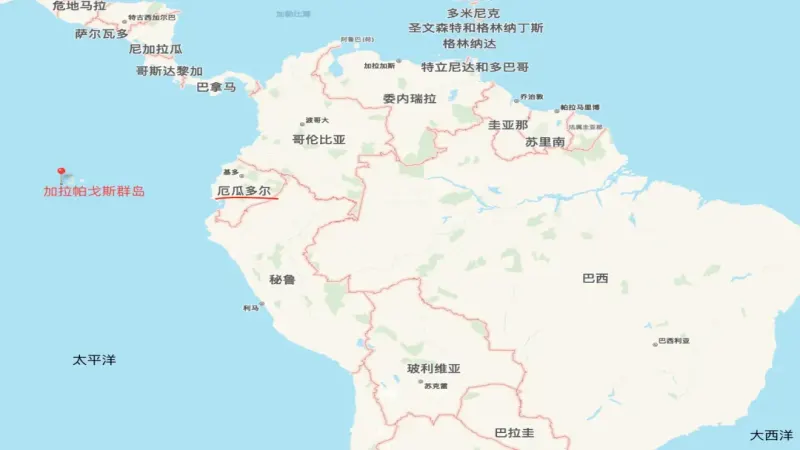
Ecuador, officially the Republic of Ecuador (República del Ecuador), is located in northwestern South America, bordered by Colombia to the north, Peru to the south, and the Pacific Ocean to the west. The country covers an area of 256,370 square kilometers, with about 248,000 square kilometers on the mainland and 8,010 square kilometers of islands.
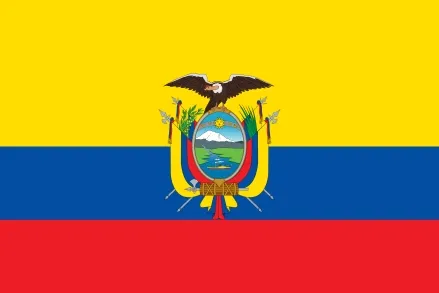
The national flag is rectangular, composed of three horizontal bands of yellow, blue, and red joined together. Yellow occupies one-half of the flag, while red and blue each occupy one-quarter. Yellow represents the nation's wealth, sunlight, and grain; blue symbolizes the sky, the ocean, and the Amazon River; and red signifies the blood of patriots who fought for freedom and justice.
The national coat of arms is depicted in the center of the flag, featuring Ecuador's highest peak, Chimborazo. Above the mountain peak is a "May Sun," reflecting Mayan cultural elements, flanked by symbols of the "zodiac" indicating the months from March to June, commemorating the years when the Ecuadorian people defended their independence and resisted foreign enemies in 1845. Below, a river flows into the ocean, and at the river's mouth lies one of South America's earliest steam ocean-going ships. The fasces at the bottom of the coat of arms represent the republican institutions of the state, symbolizing justice and authority. At the very top stands an Andean condor, Ecuador's national bird, with wings spread, symbolizing sovereignty and independence.
Northern Ecuador is crossed by the equator, and the Andes Mountains run north to south through the entire country. The national territory can be divided into four parts: the western coastal region, the central highlands, the eastern Amazon River basin, and the Galapagos Islands. The country is densely dotted with volcanoes and experiences frequent earthquakes.
Influenced by multiple climatic conditions, each of the four regions has its own characteristics. The western coastal area has a tropical rainforest climate, with average temperatures of 23 to 25°C. The basins of the central Andes have a tropical savanna climate, while the mountains have a subtropical forest climate; above 4,000 meters in elevation, snow persists year-round. The rainy season runs from December to June, and the dry season from July to November. The eastern Amazon region has a tropical rainforest climate, hot and humid with abundant rain year-round, with average annual rainfall of 2,000 to 3,000 millimeters. Ecuador's diverse climate, abundant rainfall, volcanic soils, and river resources make it an ideal place for coffee cultivation.
Coffee-Producing Regions
Arabica coffee-producing areas are mainly distributed in the highland volcanic zones of the central Andes, roughly divided into two major highlands, north and south. The harvest period runs from March to October each year, and the country's coffee is known for its balance of acidity, sweetness, and bitterness.
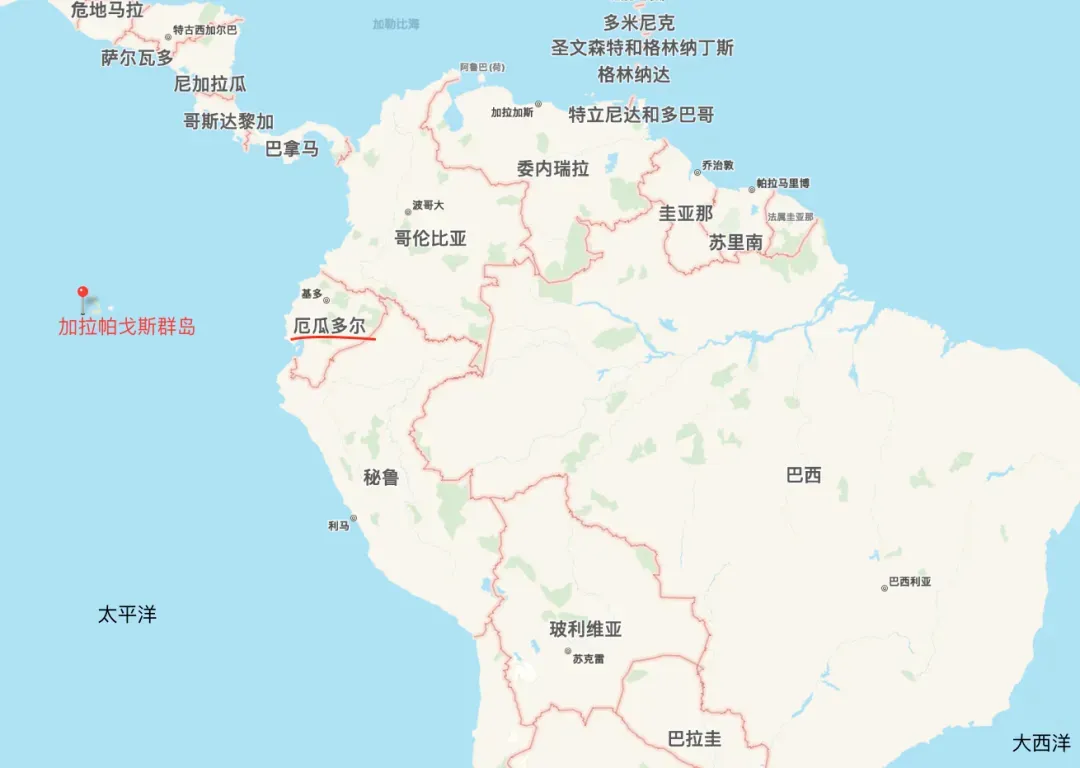
Northern Highlands: Includes Carchi, Imbabura, and Pichincha provinces, where the coffee flavor is known for its balance of acidity, sweetness, and bitterness.
Southern Highlands: Includes Loja, Azuay, and Zamora Chinchipe provinces. This area has a relatively high elevation, and the coffee produced has moderate acidity and sweetness with a delicate aroma. Loja province reaches a maximum elevation of 2,100 meters, with the harvest period from June to September. Loja province is one of the earliest cities established during the Spanish colonial period, with a history of five hundred years, and it was also the country's first city powered by hydroelectric and wind energy. Zamora Chinchipe province lies east of Loja province, with a maximum elevation of 1,900 meters and a harvest period from May to August. Among them, the better-known producing region is Pichincha province, as well as the more distinctive Galapagos Islands.
Robusta coffee is mainly grown in the hot, high-temperature, and humid western lowlands, including Manabi, Guayas, and El Oro provinces, as well as Napo and Orellana provinces in the rainforest region on the eastern side of the country.
Pichincha Province: Located in the northern highlands of the country, it is named after the Pichincha volcano. It has the waters of the Alamubi River and rich volcanic soil, providing superior conditions for coffee growth. The currently much-watched Sidra variety originally came from Pichincha province in Ecuador.
Galapagos Islands: Also known as Turtle Island (the Spanish word Galápagos means turtle), so the coffee here is also called Turtle Island coffee. This is a volcanic archipelago made up of 21 islands. Turtle Island coffee is grown at an elevation of only about 200 to 300 meters, but its microclimate resembles that of mountain areas at 1,200 to 1,300 meters, with a maximum temperature not exceeding 30°C and two harvest seasons a year. No pesticides are used on the islands at all; all coffee is organically grown, and production is scarce. The main cultivated variety is Bourbon.
Varieties and Processing Methods
The Arabica varieties currently grown in the country include Bourbon, Typica, Sidra, and Caturra, among which Bourbon still predominates.
In the early days, Ecuadorian coffee was not known for its quality. To reduce harvesting costs, producers would leave the coffee cherries on the trees to ripen and dry before picking them. This processing method is called cafe en bola, or bola for short, and the quality was very inconsistent. Later, with economic development and the spread of the specialty coffee concept, Ecuador cooperated with research institutions from many countries to study more stable methods that could produce high-quality coffee. In recent years, washed processing has become the mainstream in Ecuadorian coffee, and among COE-winning lots, most use washed or anaerobic washed processing.
Front Street Coffee suggests that if you want to try Ecuadorian beans, you can look for washed Sidra lots from Pichincha province, or organic Bourbon from the Galapagos Islands; both can showcase the unique flavor of the country's coffee.
The above content is compiled by CoffeeHunters, a coffee news website.


