







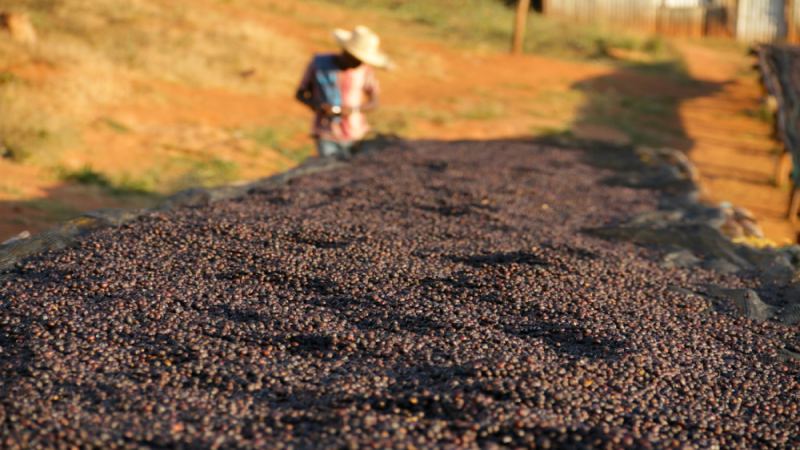
What Sets Yirgacheffe and Other Ethiopian Coffee Regions Apart?
Ethiopia is the birthplace of coffee and Africa's largest arabica producer, and its regions differ sharply in terroir and flavor. Sidamo, Yirgacheffe, Guji, and Bebeka each carry distinct soil, altitude, and climate conditions. Yirgacheffe washed beans, for example, are commonly described through specific brewing parameters and a bright, floral cup that helps beginners compare regions side by side.
The country's geography explains much of this: highlands cover about two-thirds of the national area, the East African Rift Valley runs north to south, and average elevations reach nearly 3,000 meters. With roughly 120 million people and 1.1036 million square kilometers of land, Ethiopia grows arabica coffee across varied microclimates, so region names remain a useful guide when selecting beans.
Ethiopia is known as the birthplace of coffee and is also Africa's largest Arabica producer, giving it an irreplaceable status among coffee lovers worldwide. This article will systematically review Ethiopia's geographical environment and climate characteristics, introduce one by one the terroir conditions and flavor profiles of major coffee regions such as Sidamo, Yirgacheffe, Guji, and Bebeka, helping beginners build a clear understanding of the regions. At the same time, drawing on Front Street Coffee's Yirgacheffe washed coffee beans, it provides specific brewing parameters and flavor descriptions, offering practical reference for everyday bean selection and tasting.
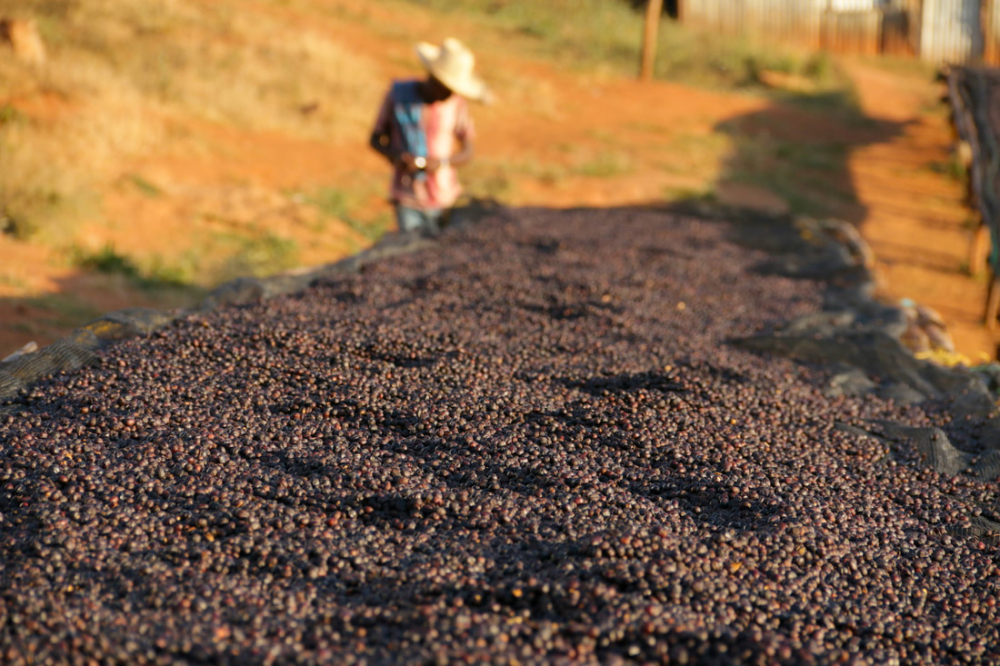
Ethiopia
In the hearts of coffee enthusiasts, Ethiopia has always held a special place. As the birthplace of coffee, it is also the largest producer of Arabica coffee in Africa.
For more specialty coffee information, follow our WeChat public account: Front Street Coffee (FrontStreet Coffee)
The Federal Democratic Republic of Ethiopia is located in northeastern Africa. It is a landlocked country bordering Djibouti, Somalia, Sudan, South Sudan, Kenya, and Eritrea. The country has a population of approximately 120 million and a land area of 1.1036 million square kilometers.
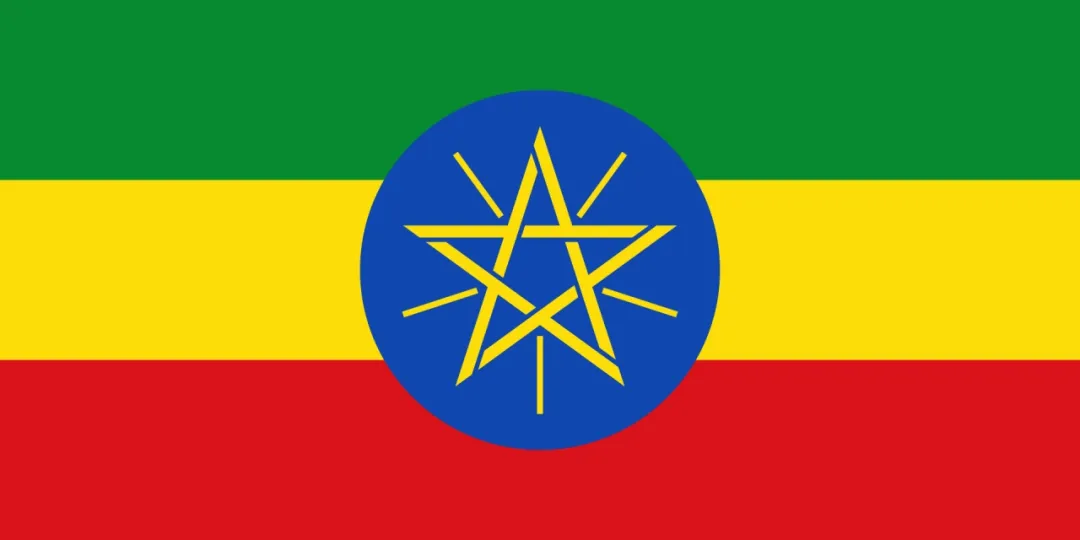
The Ethiopian flag consists of three equal horizontal bands of green, yellow, and red from top to bottom, with the national emblem set in the center. Green symbolizes fertile soil, a pleasant climate, and abundant vegetation, as well as hopes for the future; yellow represents peace and fraternity, while also reflecting the people's determination to build their homeland; red symbolizes the spirit of being willing to shed blood and sacrifice for the defense of the nation. The national emblem is a golden five-pointed star on a blue circular background, radiating light; blue signifies peace, the rays point toward prosperity, and the five-pointed star expresses diversity and unity.
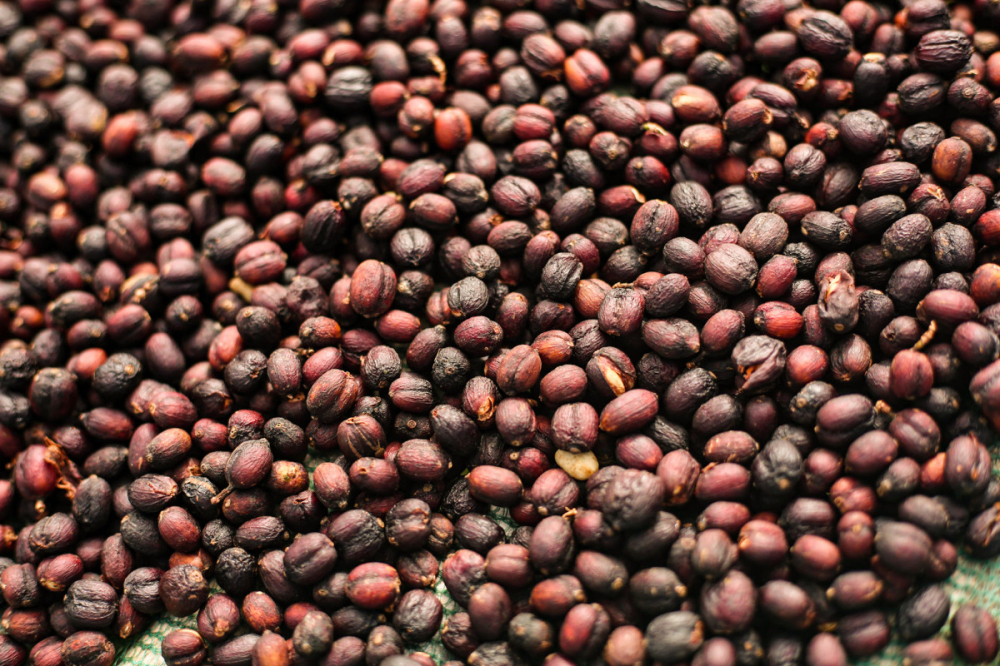
The country's terrain is dominated by mountains and plateaus. The Ethiopian Highlands account for about two-thirds of the national area, and the East African Rift Valley runs through it from north to south, with an average elevation of nearly 3,000 meters, earning it the title "Roof of Africa." Deserts and semi-deserts are distributed in the northeast and south, accounting for about one-quarter of the country's territory.
The national average elevation is about 2,450 meters. The high altitude keeps the average annual temperature at around 16°C. The year is broadly divided into a dry season and a rainy season, with annual rainfall of about 1,237 millimeters. The country is rich in natural resources; water resources, high-altitude mountains, and more than 50 volcanoes together create favorable conditions for coffee cultivation.
Ethiopian Coffee Regions
Ethiopia's coffee-producing regions include Sidamo, Harrar, Kaffa, Limmu, Lekempti, Tepi, Bebeka, and Bale, among others. Among them, Yirgacheffe, Guji, Sidamo, and Bebeka are relatively more famous.
Sidamo: After 1995, Ethiopia implemented a federal system of administration and, out of respect for the cultures of the various ethnic groups within the country, redrew boundaries according to major ethnic settlement areas and languages. Sidama was thus incorporated into the new Southern Nations, Nationalities, and Peoples' Region, and the area also restored use of its historical name—Sidama. However, at the time, in order to highlight the uniqueness of the country's coffee, the government applied for patents for the names of three producing regions in 2004 and chose the old name Sidamo® as the registered name for Sidama coffee.
To this day, domestic consumers still habitually call the coffee from this place "Sidamo." The Sidamo producing region spans the fertile highlands south of Lake Awasa in the East African Rift Valley, at elevations between 1,400 and 2,200 meters, with annual rainfall of 1,200 to 2,000 millimeters. High altitude, abundant rain, a suitable climate, and fertile soil together create ideal conditions for coffee cultivation. The region is home to many well-known processing stations, such as the Santa Vini processing station and the Gaus processing station.
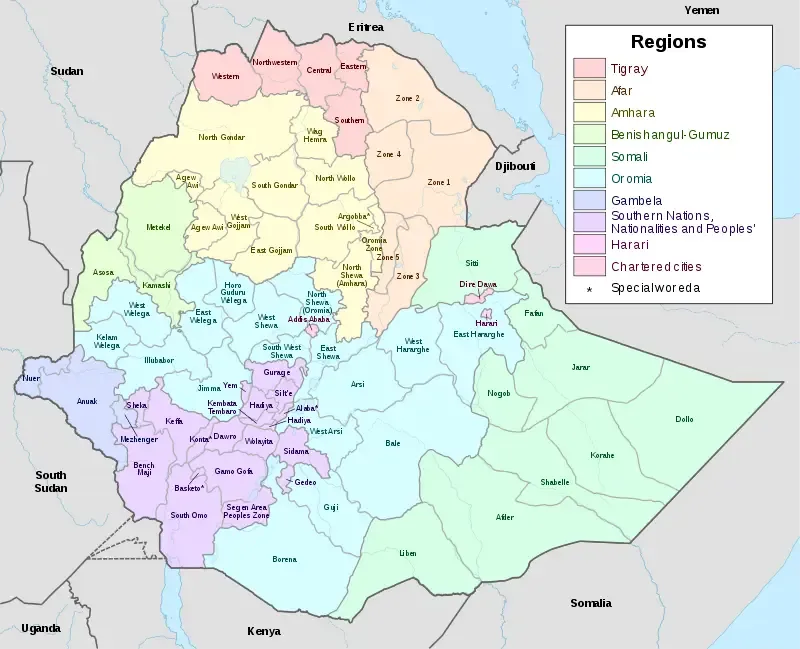
Yirgacheffe: Yirgacheffe was originally a small town in the northwestern part of Sidamo Province, located on the eastern edge of the East African Rift Valley, and is also one of Ethiopia's highest-altitude producing regions, with elevations between 1,750 and 2,200 meters. In the ancient language, Yirga means "to settle down," and Cheffe means "wetland." The climate here is mild, rainfall is abundant, the soil is fertile, and sunlight is ample, and it was originally part of the Sidamo producing region, but later became its own region because it could produce unique floral and fruity aromas and highly varied flavors.
Guji: The Guji producing region also formerly belonged to Sidamo. Thanks to its outstanding and highly recognizable flavors, it was separately designated as a new producing region by the Ethiopia Commodity Exchange (ECX) in 2010. The region is located in southern Ethiopia, where high mountains, highlands, plateaus, valleys, and plains interweave. The complex terrain creates diverse microclimates, and together with volcanic soil and dense forests, with an average elevation of more than 1,800 meters and a large temperature difference between day and night, coffee cherries grow more slowly and their flavors develop fully. Guji has several sub-regions under its jurisdiction, such as Hambella, Uraga, and Shakiso. Among them, Hambella became familiar to domestic consumers because of Huakui coffee beans. Now, Front Street's Huakui Geisha coffee beans from the 2025 new harvest season have also been listed and are available to everyone.
Bebeka: The Bench Maji producing region is also called the Bebeka producing region because Bebeka is the capital of Bench Maji Zone. It is located in southwestern Ethiopia and is a zone under the Southern Nations, Nationalities, and Peoples' Region, only a few kilometers from South Sudan. Here lies the well-known coffee estate—Gesha Village Coffee Estate—and the Geisha variety trees on this estate were discovered in the wild forests of Bench Maji.
Front Street Coffee Ethiopian Entry Selection Yirgacheffe Coffee Beans
Front Street Yirgacheffe coffee beans are washed processed and light roasted. For brewing, Front Street uses a V60 dripper, with a coffee-to-water ratio of 1:15 and a water temperature of 92°C. After brewing, jasmine floral notes can be smelled; on the palate there is citric acidity, accompanied by orange and berry flavors, as well as caramel-like sweetness, with a refreshing and smooth mouthfeel.
The above content is compiled by CoffeeHunters, a coffee news website.


