







How Do Robusta Coffee Beans Shape Vietnam's Coffee Regions?
Vietnam is the second-largest coffee producer in the world and is known for its robusta coffee beans. The country's tropical monsoon climate and long, narrow S-shaped terrain support three main growing areas: the Central Highlands, the South, and the North. The Central Highlands alone accounts for roughly 70 percent of national robusta output.
High-altitude zones in the North grow smaller amounts of arabica, including Bourbon and Catimor. Vietnam covers about 330,000 square kilometers, with mountains and plateaus making up around three-quarters of its land. Grading standards and variety distribution together explain how terrain and climate shape the country's coffee supply.
Vietnam is the world's second-largest coffee producer, renowned for its Robusta beans. This Southeast Asian country, with its unique tropical monsoon climate and long, narrow S-shaped terrain, nurtures three distinctive coffee-growing regions: the Central Highlands, the South, and the North. Among them, the Central Highlands contributes about 70% of the nation's Robusta output, while the high-altitude areas in the North sparsely cultivate Arabica varieties such as Bourbon and Catimor. Front Street Coffee takes you on an in-depth look at Vietnam's coffee-growing environment, variety distribution, and grading standards, unveiling the terroir secrets behind this coffee powerhouse.
Vietnam
Asia is home to many coffee-producing countries, such as Laos, Indonesia, East Timor, China, and Vietnam. Among them, Vietnam firmly holds the position of the world's second-largest coffee producer, famed for its Robusta coffee beans.
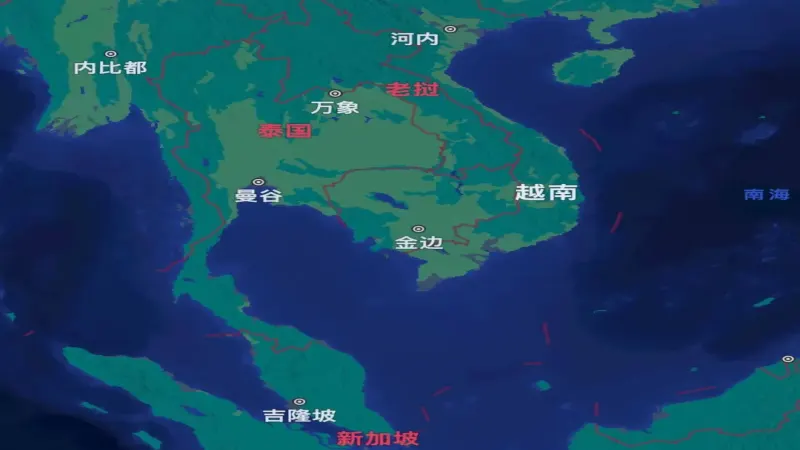
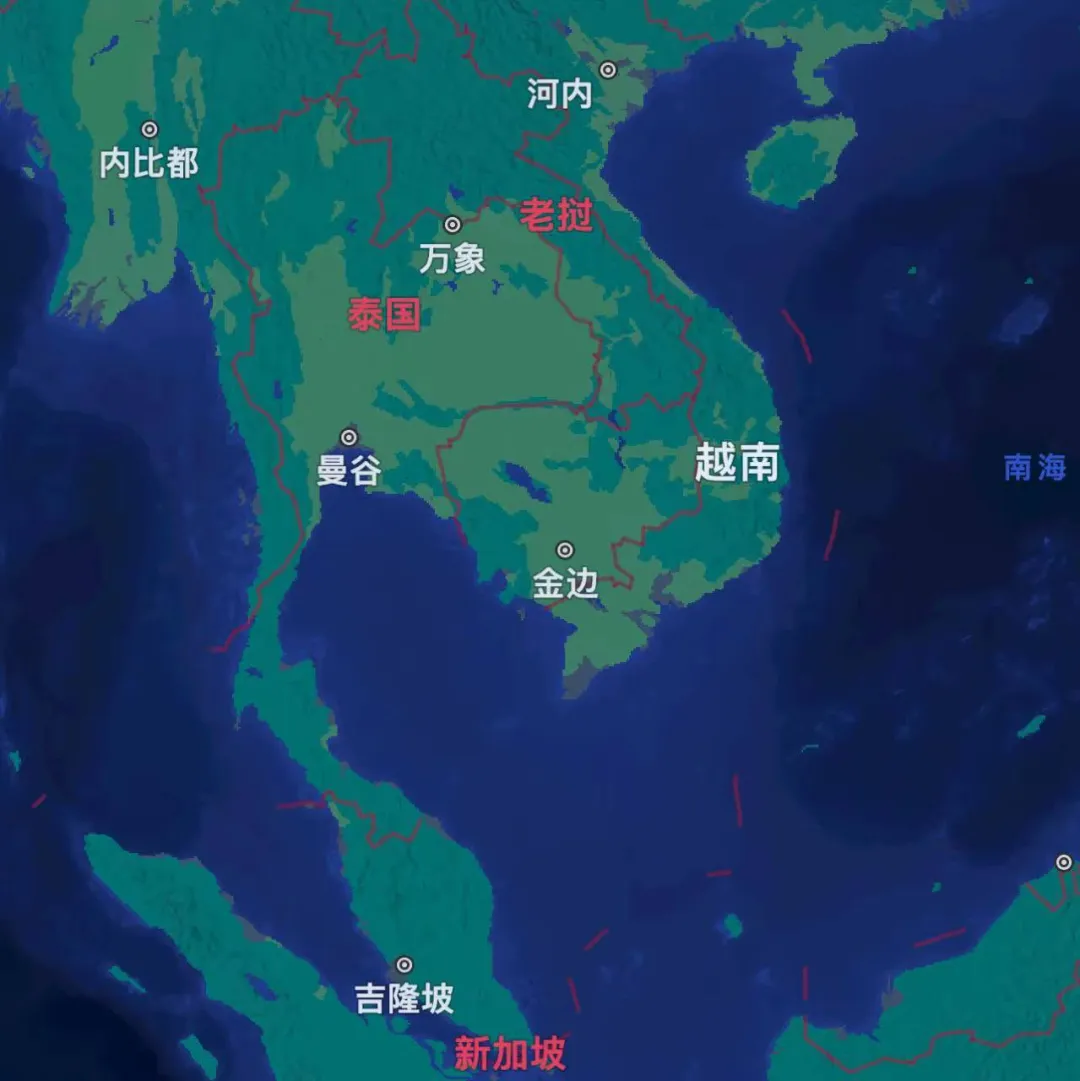
Vietnam's official name is the Socialist Republic of Vietnam, one of Asia's socialist countries, located at the southeastern tip of the Indochinese Peninsula in Southeast Asia. The country has a long, narrow shape, with an overall outline resembling an S. To the north, Vietnam borders China's Guangxi and Yunnan; to the west, it is adjacent to Laos and Cambodia. The total land area is approximately 330,000 square kilometers.
Vietnam's national flag is rectangular with a red background, symbolizing the spirit of national uprising of the Vietnamese people; in the very center of the flag is a five-pointed golden star, which represents the leadership of the Communist Party of Vietnam in the country's development. In addition, the five points of the golden star represent five major groups: workers, peasants, soldiers, intellectuals, and youth.
Vietnam enjoys both maritime and continental advantages, facing the South China Sea to the southeast. In terms of terrain, Vietnam is higher in the northwest and lower in the southeast, with about three-quarters of its territory consisting of mountains and plateaus. The Red River Delta and the Mekong Delta form the two major plains and are also important agricultural regions of the country. The north and northwest are dominated by high mountains and plateaus, while the Truong Son Mountains in the central region run through the entire country from north to south.
Vietnam lies south of the Tropic of Cancer and belongs to the tropical monsoon climate zone. The northern region has distinct four seasons, with average temperatures in most areas ranging from 23°C to 25°C. The south is divided into a dry season and a rainy season, with the dry season from October to April of the following year and the rainy season from May to September. The annual average temperature in most areas is 26°C to 27°C. The air is generally humid with abundant rainfall, and the national average annual precipitation is about 1,500 to 2,000 millimeters. The favorable geographical location and natural conditions provide a good foundation for Vietnam's agricultural activities, yielding abundant rice, coffee, tropical crops, and aquatic products.
Coffee-Producing Regions
At present, Vietnam's coffee cultivation is dominated by Robusta, with only a few areas growing Arabica. The producing regions can be roughly divided into three major blocks: the Central Highlands, Southern Vietnam, and Northern Vietnam.
Central Highlands: The Central Highlands consists of a series of rolling highlands, covering provinces such as Dak Lak, Lam Dong, Gia Lai, and Kon Tum. This region is mainly devoted to Robusta cultivation, while also growing a small amount of Arabica, and accounts for about 70% of the nation's Robusta output. The growing elevation ranges from 600 to 1,000 meters, and the harvest period lasts from November to March of the following year.
Southern Vietnam: The southern producing region is distributed in Dong Nai Province and its surrounding areas northeast of Ho Chi Minh City, and also mainly cultivates the Robusta TR series. This region has attracted many coffee industry giants, with Nestlé setting up a factory here. The elevation range here is 200 to 800 meters, and the harvest season runs from November to March of the following year.
Northern Vietnam: Arabica is mainly cultivated in Son La, Thanh Hoa, and Quang Tri in northern Vietnam, near Hanoi. This region has a higher elevation, providing suitable growing conditions for Arabica, with elevations ranging from 800 to 1,600 meters. The harvest period is also concentrated from November to March of the following year. The main varieties grown include Bourbon, Catimor, and the Robusta TR series. Arabica accounts for only about 2% to 3% of Vietnam's total coffee output.

Coffee Grading
Vietnam's coffee grading method is relatively straightforward, using the number of defective beans contained in 300 grams of green coffee beans as the basis for grading.
The above content is compiled by CoffeeHunters, a coffee news website.


