







How Does Armed Conflict Affect Ecuador's Coffee Industry?
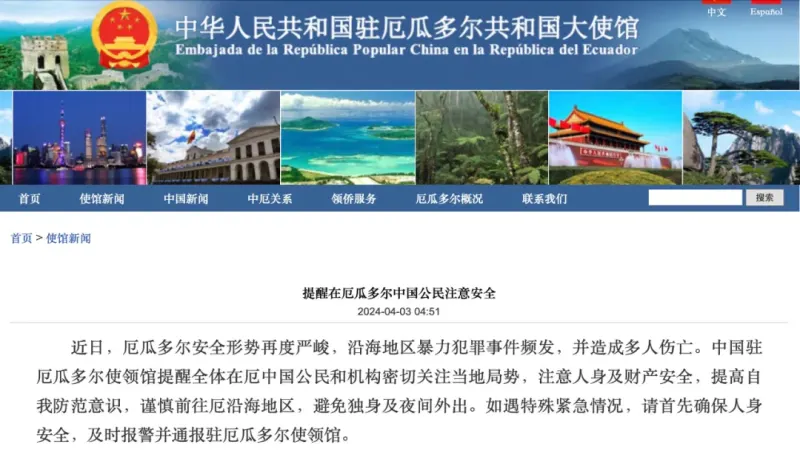
Ecuador's coffee industry and tourism sector face mounting pressure from an internal armed conflict and a diplomatic dispute. The Chinese Embassy in Ecuador issued a safety reminder about frequent violent crime in coastal areas. In January the government declared a 60-day state of emergency and extended it by 30 days in March.
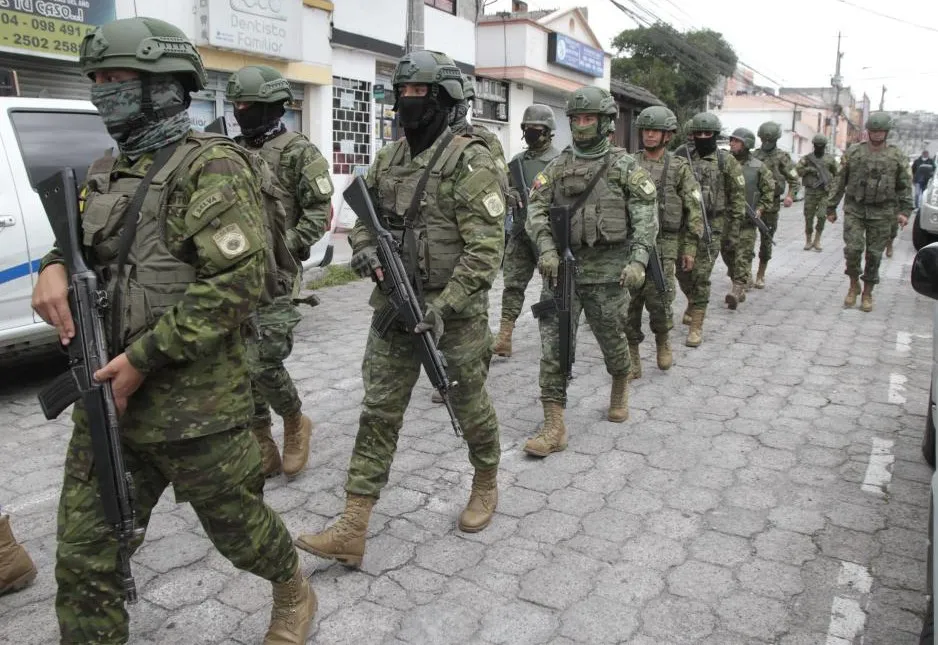
Drug gang unrest, prison riots, and attacks on public facilities led the president to call the situation an internal armed conflict. Coffee countries that depend on exports such as oil, bananas, cocoa, and coffee now deal with a weaker trade environment and fewer visitors, even as Ecuadorian coffee gains attention in international competitions.
Recently, the Chinese Embassy in Ecuador issued a safety reminder, pointing out that violent crime is frequent in the country's coastal areas and advising Chinese citizens and institutions to raise their vigilance. Behind this warning is Ecuador's ongoing internal armed conflict and an embassy arrest incident that has caused diplomatic shockwaves in Latin America. As a country dependent on exports of oil, bananas, cocoa, and coffee as well as tourism, Ecuador is facing dual pressure from a deteriorating trade environment and declining willingness among tourists to visit. Although its coffee has gradually gained prominence in international competitions and attracted many bean hunters, the current situation undoubtedly casts a shadow over the local coffee industry and tourism economy.
Recently, the Chinese Embassy in Ecuador issued a notice stating that the country's security situation has once again become tense, with violent crimes occurring frequently in coastal areas and causing multiple casualties. The notice reminded Chinese citizens and relevant institutions to pay close attention to personal and property safety, strengthen preventive awareness, avoid traveling to high-risk coastal areas unless necessary, and avoid going out alone or staying outside at night.
The embassy's notice stems from the fact that Ecuador's internal armed conflict has still not subsided, and the country is also mired in a diplomatic dispute. In January of this year, the government decided to raise prison security levels, triggering discontent among drug trafficking gangs. Subsequently, drug lords escaped from prison and prison riots broke out in many places, and the government declared a 60-day nationwide state of emergency. On January 9, armed men attacked public facilities and other serious incidents occurred, after which the president characterized the situation as an "internal armed conflict" and ordered the military and police to crack down on organized crime nationwide. On March 7, the president signed an executive decree extending the national state of emergency by another 30 days. Although the presidential office announced the end of the national state of emergency on April 8, because hostile armed groups remain active within the country, the "internal armed conflict" status will continue.
In addition to the armed conflict, Ecuador has also become embroiled in a diplomatic storm. According to local media reports, former Vice President Glas had an arrest warrant issued against him on suspicion of embezzlement and had already been sentenced for corruption. In December last year, Glas entered the Mexican Embassy in Ecuador seeking asylum, and the Mexican government subsequently rejected Ecuador's request to enter the embassy to arrest Glas. However, on the evening of April 5, Ecuadorian security forces dispatched armored vehicles into the Mexican Embassy and arrested Glas.
This arrest operation angered the Mexican government. Mexico's foreign minister announced on social media that Mexico was immediately severing diplomatic relations with Ecuador, on the grounds that the country had blatantly violated the Vienna Convention on Diplomatic Relations, causing harm to Mexican diplomatic personnel in Ecuador, and arguing that this action violated international law and Mexican sovereignty. The next day, the Nicaraguan government also announced the immediate severance of diplomatic relations with Ecuador.
At present, the incident has aroused widespread attention in Latin American society, with international organizations, many governments, and social groups condemning it one after another. The Organization of American States and many countries expressed opposition to acts that violate diplomatic premises, stressing that all countries have an obligation to abide by international norms and must not place domestic law above international law. At the same time, Mexico has filed a challenge against Ecuador at the International Court of Justice in The Hague.
Ecuador's economy depends on exports of oil, bananas, cocoa, and coffee, as well as tourism. The diplomatic crisis will reduce trade between countries, and many industry insiders worry that the current diplomatic situation will weaken the competitiveness of Ecuadorian agricultural products such as bananas and coffee in the international market, ultimately leading to a decline in exports and dragging down the overall economy. In terms of tourism, the country's main source markets are the United States, Colombia, Peru, and Spain. The current situation will reduce tourists' willingness to travel to Ecuador, thereby reducing tourism revenue. Although Ecuador's coffee is less well known than that of neighboring countries such as Colombia and Panama, in recent years it has gradually emerged in world competitions and has also attracted many bean hunters to visit the country. Now, with the diplomatic storm and internal armed conflict intertwined, traveling there is full of danger. Therefore, the embassy advises citizens and institutions in Ecuador to closely monitor the local situation, travel cautiously to high-risk areas, avoid being alone and going out at night; in case of special emergencies, ensure personal safety, call the police promptly, and notify the embassy.
The above content is compiled by CoffeeHunters, a coffee news website.


