







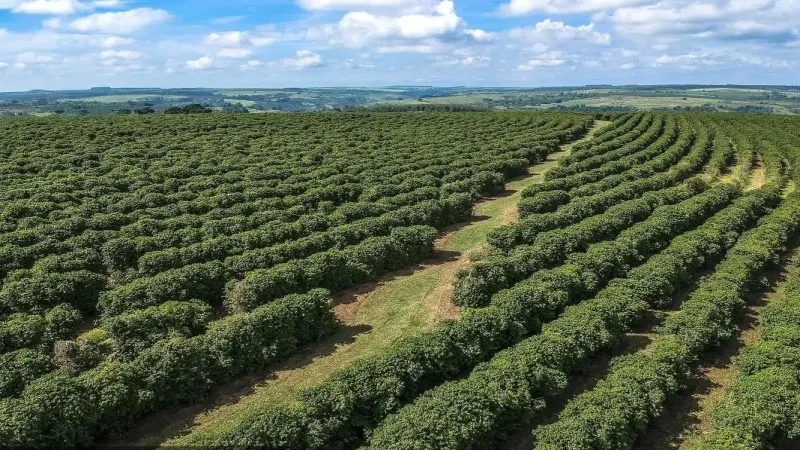
What is brazilian coffee production facing after the storms?
Severe storms formed by a cold front meeting high heat struck southeastern Brazil, hitting Sao Paulo, Minas Gerais, Espirito Santo and Rio de Janeiro. Rainfall topped 100 mm per day in places with gusts near 100 km per hour. Those states account for 48 percent of Brazil's coffee production, and cherries are in the fruiting stage, so many dropped.
At least 24 people died and thousands were displaced, while a dengue outbreak pressures hospitals and raises the risk of harvest labor shortages. Brazil's coffee harvest usually runs from May to August, and the fruit was still developing. For anyone tracking facts about brazilian coffee, the warning is clear: farmers need stronger precautions and the crop yield faces a real test.
Several major coffee-producing regions in southeastern Brazil recently experienced violent storms formed by the collision of strong cold fronts and high temperatures. São Paulo, Minas Gerais, Espírito Santo, and Rio de Janeiro states were all affected, with rainfall in some areas exceeding 100 mm per day and wind speeds reaching up to 100 km per hour. Together, these regions account for 48% of Brazil's total national coffee production, and as the coffee berries are currently in their fruiting stage, the storms and heavy rain have caused large numbers of cherries to drop. Industry insiders are urging coffee farmers to strengthen precautions. At the same time, the heavy rain has caused at least 24 deaths and left thousands displaced, while the dengue fever outbreak continues to spread, putting pressure on the healthcare system and raising the risk of labor shortages during the harvest period. Front Street Coffee will continue to monitor developments in Brazilian producing regions and bring coffee lovers the latest information.
Last Friday, Brazil's National Institute of Meteorology issued a report stating that a cold air mass from the south was about to invade southeastern Brazil. Because the region had previously been in a prolonged state of high temperatures, the meeting of the cold front and the hot air mass was highly likely to generate severe stormy weather.
It is predicted that this round of severe weather will affect northern São Paulo state and urban areas, southern Minas Gerais and rural areas, as well as southern Espírito Santo state and the entire state of Rio de Janeiro. Brazil's National Center for Disaster and Alerts said that the above areas may experience floods and mudslides, with daily rainfall possibly exceeding 100 mm, gusts reaching 100 km per hour, and severe conditions lasting for several days. After the meteorological institute issued weather alerts, all relevant states entered a "severe danger" warning level.
From the perspective of Brazil's coffee industry layout, São Paulo, Minas Gerais, Espírito Santo, and Rio de Janeiro are all important coffee-producing states in the country. São Paulo, Minas Gerais, and Espírito Santo alone account for 48% of Brazil's total national coffee production. Brazil's coffee berry harvest period is usually concentrated from May to August, and the fruit is currently in its development stage. Storms will directly knock fruit off the branches, and strong winds will also cause fruit drop, thereby affecting the coffee berry harvest and overall production. In view of this, industry insiders are urging coffee farmers and coffee estates to take protective measures in advance.
However, according to a subsequent report by Xinhua News Agency, civil defense departments in Espírito Santo and Rio de Janeiro states in southeastern Brazil reported that recent heavy rains have caused at least 24 deaths in the two states. In Espírito Santo, heavy rain triggered floods, cutting off multiple roads, leaving more than 5,700 people homeless after their houses were destroyed, and causing 16 deaths.
In Rio de Janeiro state, the heavy rain caused 8 deaths, with the inland mountainous areas hit hardest. The heavy rain loosened the soil and has triggered 238 landslides. The warning center pointed out that the probability of landslides in the coming days remains very high, and the level of danger is not optimistic. At present, multiple states in southeastern Brazil have suffered disasters of varying degrees, and the overall situation is chaotic, making it temporarily difficult to assess the specific impact on the coffee industry. The extent of losses and damage in some remote areas is also difficult to calculate. In addition, experts warn that due to drastic weather changes, similar severe weather may occur again in the future, so vigilance is needed.
On the other hand, Brazil's dengue fever outbreak continues to intensify, and the heavy rain has further worsened mosquito breeding. The dengue death toll has now reached 153, and the number of cases remains high. Since the beginning of this year, confirmed dengue cases in Brazil have exceeded 2.01 million, and both public and private hospitals are overcrowded. Coffee industry insiders say that in addition to worrying about the impact of heavy rain on future coffee production, they are also concerned that amid the ongoing dengue outbreak, the upcoming coffee harvest period may face a shortage of workers, which could slow the pace of harvesting.
The above content is compiled by CoffeeHunters, a coffee news website.


