







What Makes Antigua Coffee Beans Distinct?
Guatemala Antigua coffee beans from the La Minita estate's La Flor del Cafe lot are grown in volcanic soil and a distinctive microclimate that produce bright acidity and fruity flavors. The beans are processed at the Pastores Mill under strict quality control, giving coffee enthusiasts a classic example of the region's strictly hard bean profile.
Guatemala was long Central America's top coffee producer and now ranks as the world's ninth-largest, known for high-grown SHB coffee. The Antigua region sits in a volcanic belt with highland elevations between 1,300 and 1,800 meters, and its tropical rainforests and variable microclimates shape the clean mouthfeel and layered guatemala coffee beans taste.
Guatemala is a renowned specialty coffee-producing country in Central America, and its Antigua region, with its volcanic soil and unique microclimate, nurtures coffee with bright acidity and fruity flavors. La Minita's La Flor del Cafe beans come from this area, processed by the Pastores Mill, and adhere to strict quality control processes. This article will guide you through Guatemala's coffee-growing environment, the terroir characteristics of the Antigua region, as well as the flavor profile of La Minita La Flor del Cafe and Front Street Coffee's brewing recommendations, suitable for coffee enthusiasts to gain an in-depth understanding of this classic bean.
In the global coffee-growing belt, the Americas occupy an important position, nurturing many well-known coffee-producing countries, such as Panama, Honduras, Costa Rica, and Guatemala. Guatemala was long the top coffee producer in Central America from the 20th century to the early 21st century, and is now the world's ninth-largest coffee producer, known for producing high-quality Strictly Hard Bean (SHB) coffee.
Guatemala
Guatemala is located in southern North America, bordered by Mexico, Belize, Honduras, and El Salvador, with the Gulf of Honduras of the Caribbean Sea to the east and the Pacific Ocean to the south, with a total coastline of about 500 kilometers.
Two-thirds of the country's land area consists of mountains and highlands, with the Cuchumatanes Mountains in the west, the Sierra Madre in the south, and tropical rainforests in the north. Both the western and southern regions lie in a volcanic belt, with more than 30 volcanoes. Due to its location in the tropics, the north and east have a tropical rainforest climate, while the south has a subtropical climate, with distinct dry and wet seasons throughout the year. The highland areas are mostly at elevations between 1,300 and 1,800 meters, with an average annual temperature of 18 to 28°C, and the higher areas are colder in January and February. The tropical rainforests, volcanic geological soil, and variable microclimates together give Guatemalan coffee an elegant and lively acidity, a clean mouthfeel, and distinct layers.
Antigua Region Antigua
Twenty departments in Guatemala grow coffee, among which eight regions are relatively well-known, divided into five volcanic regions and three non-volcanic regions, with coffee cultivation generally at elevations above 1,500 meters. The non-volcanic regions include Huehuetenango, Coban, and Nuevo Oriente. The volcanic regions include Atitlan, Antigua, Acatenango, Fraijanes, and San Marcos. Nuevo Oriente is a relatively new region, and Front Street Coffee's Nuevo Oriente Geisha comes from here. In addition, Antigua and Huehuetenango are the most famous, and Front Street Coffee has a washed Guatemalan Huehuetenango coffee bean, as a representative entry-level selection, with citrus and berry acidity on the palate, a nutty aroma, and a tea-like aftertaste.
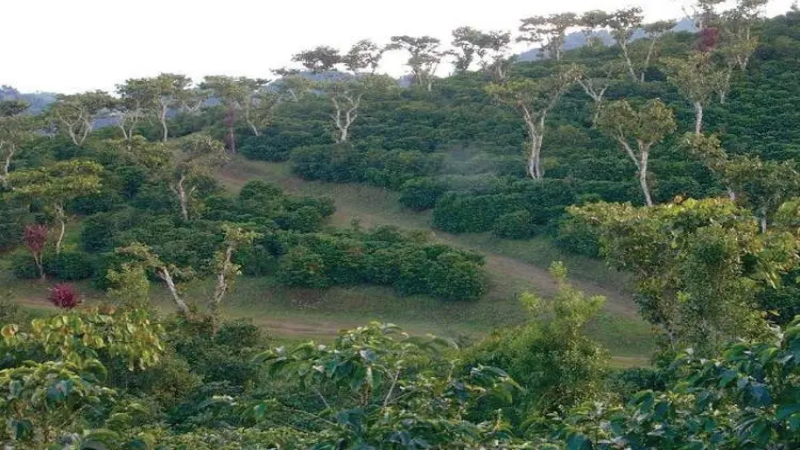
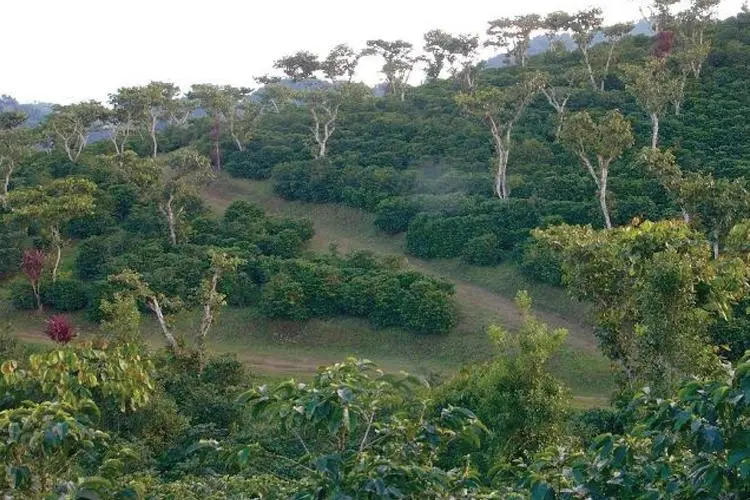
The Antigua region is surrounded by three volcanoes: Agua, Fuego, and Acatenango. Most coffee is grown in the valley interior, at elevations of 1,500 to 1,700 meters. The active Fuego volcano keeps humidity at around 65% year-round. Local farmers mainly use shade growing to protect coffee trees from frost in cold weather. Dense shade and a very shallow groundwater layer create a unique microclimate, and together with fertile volcanic soil and suitable humidity, this gives Antigua coffee bright acidity and fruity flavors.
La Minita La Minita
La Minita is a trading company that created its own coffee brand in Guatemala, "La Flor del Cafe," meaning "flower of coffee," translated into Chinese as "花神." La Minita is known for excellent cultivation, processing techniques, and strict quality control, and does not use insecticides on its own estates.
La Minita La Flor del Cafe is processed and produced by the well-known local Guatemalan processing plant Pastores Mill. The green beans are processed according to La Minita's famous control procedures, with supervisors cupping and strictly overseeing the entire process from cultivation to green bean processing to ensure quality.
Front Street Coffee's Guatemalan La Flor del Cafe coffee beans are washed and medium-roasted. Front Street uses V60 , 1:15 , and a water temperature of 92 °C for brewing. On the palate, there is a slight berry acidity, with citrus and mild chocolate flavors, relatively rich layers, and a smooth mouthfeel.
The above content is compiled by CoffeeHunters, a coffee news website.


