







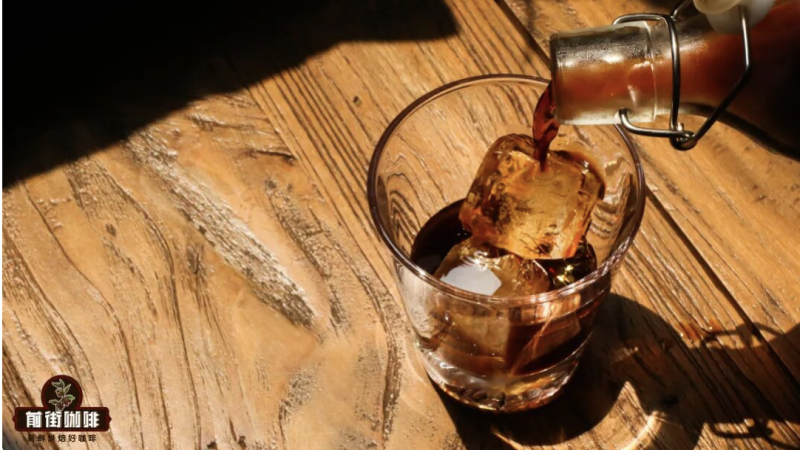
The same bag of beans, hot-brewed, comes out bitter and astringent, but made into cold brew, it's sweet and delicious. This isn't an illusion—it's determined by the principles of extraction.
Once you understand "why cold brew isn't bitter," you'll know what kind of beans to choose for summer and never worry about buying "cold bitter water" again.
Where does coffee's bitterness come from?
The bitterness in a cup of coffee mainly comes from two sources.
First, the burnt bitter substances produced during roasting. The darker the beans are roasted, the more intense the caramelization reaction, and the more bitter compounds are created. Dark-roasted beans inherently have a pronounced burnt bitter base.
Second, the bitterness extracted through over-extraction. The flavor substances in coffee grounds dissolve at different rates. Fruity and sweet substances dissolve quickly, while bitter and astringent substances dissolve slowly. When brewed with hot water, the extraction intensity is high, easily forcing out the bitter substances from the later stages.
Understanding this makes it clear why the same beans can have completely different levels of bitterness with different brewing methods—it's not the beans that changed, but the extraction conditions.
Why cold brew can reduce bitterness
Cold brew uses cold water and a long steeping time, which正好 avoids the two sources of bitterness mentioned above.
Low temperature makes extraction gentle. Cold water extracts far less intensely from coffee grounds than hot water, so bitter substances dissolve slowly and in smaller amounts, while floral and fruity aromas and sweet substances can still be released从容ly at low temperatures.
Time trades for space, and sweetness is amplified. The 8-12 hour slow extraction allows flavors to be released more fully and evenly, with a better sweet-to-sour ratio, and a smooth, clean mouthfeel.
In one sentence: Cold brew doesn't hide the bitterness; it reduces the dissolution of bitter substances from the principles of extraction.
Three ideas for choosing beans
Idea one: Beans with pronounced sweetness will taste better as cold brew. Low-temperature slow extraction amplifies the beans' natural sweetness and juicy feel.
Idea two: Prioritize light roasts and medium-light roasts. The burnt bitter base of dark-roasted beans can't be suppressed by low temperature; the floral and fruity notes of light-roasted beans are the main stage for cold brew.
Idea three: Beans with bright acidity are even more stunning. The soft mouthfeel of cold brew can support lively acidity, turning it into a "juicy feel" rather than a "stimulating sensation."
Three recommended beans
Front Street Coffee Huakui: A textbook for sweetness. Prominent tropical fruit aroma, obvious sweetness, extremely low bitterness, and after cold brewing, the juicy feel is maxed out.
Front Street Coffee Kenya Little Tomato: A model of bright acidity. On the palate, clear cherry tomato and smoked plum flavors, with bright and solid acidity—cold brew is a refreshing glass of cherry tomato juice.
Front Street Coffee Colombia Sidra: An advanced choice for balanced sweet and sour. A juicy feel interwoven with passion fruit, blueberry, and grape, finishing with a lasting cocoa sweetness—the layers open up more with every sip when cold brewed.
Coffee's bitterness is often not the beans' fault, but a matter of choosing the extraction method. If you want a cup of coffee that's not bitter but refreshing in summer, cold brew is a rather smart solution.
The above content is compiled by CoffeeHunters, a coffee news website.

