








How does osmanthus coffee work across six drinks?
Osmanthus coffee works by pairing dried osmanthus flowers with espresso, latte, iced americano, Dirty and pour-over. The flowers carry a delicate fragrance close to aromatic compounds already found in coffee, so the two blend rather than clash. Placement matters: flowers above the puck and below the puck change how much aroma reaches the cup.
The set was tested at Front Street Coffee after a box of osmanthus cakes arrived. Espresso was made with the flowers placed both above and below the puck; latte and piccolo used a syrup made from the flowers; leftover espresso became an iced americano; Dirty took a cup-rim decoration; and a Guatemalan Geisha pour-over was brewed alongside osmanthus. Dried flowers must be processed before use.
Osmanthus in coffee is both a collision of flavors and a continuation of the sense of season. On the third day of reopening, Front Street Coffee was reminded of osmanthus coffee by a box of osmanthus cakes, so they got hands-on and combined dried osmanthus with espresso, latte, iced americano, Dirty, and pour-over one by one, testing the effects of different placement methods on extraction, and recording the specific parameters and tasting impressions of each drink. The full article covers a comparison of osmanthus espresso with the puck placed above and below, a syrup-assisted solution for osmanthus latte and piccolo, a refreshing experience of making iced americano with the remaining espresso, a cup-rim decoration technique for osmanthus Dirty, and complete extraction suggestions for Guatemalan Geisha pour-over paired with osmanthus, suitable for enthusiasts who want to recreate osmanthus coffee at home.

It is the third day since Front Street opened, and during this time colleagues have brought out specialties from their own homes to share with each other. Among the pile of snacks there was even a box of osmanthus cakes, and after tasting it carefully, Front Street was reminded of the osmanthus coffee they had made before. Without further ado, let's get hands-on and make a cup to relive it!
Why choose osmanthus?
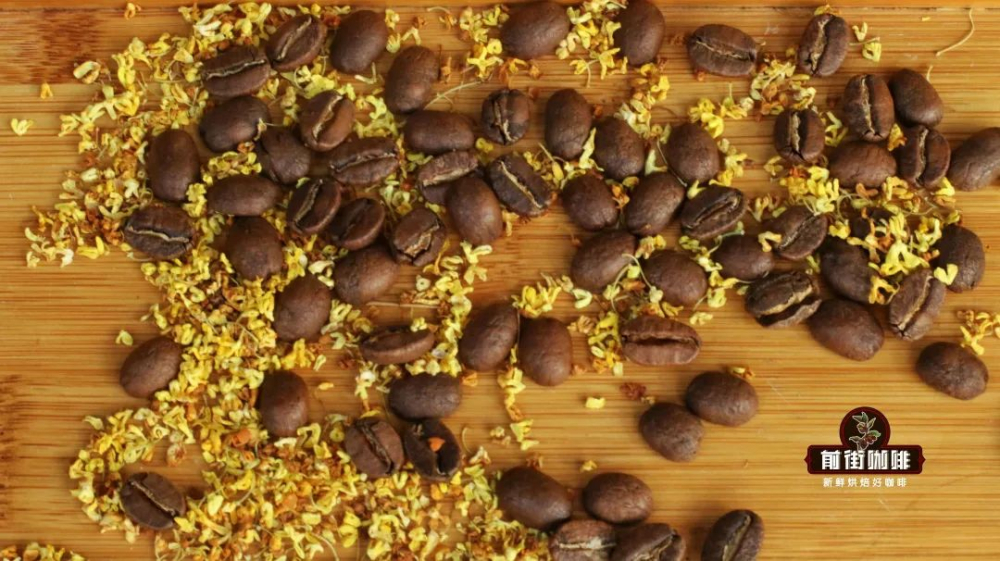
Osmanthus is a flower full of delicate fragrance. In thousands of years of Chinese food culture, besides being made into osmanthus cakes, osmanthus has also been developed into osmanthus tea, osmanthus wine, osmanthus jelly, and so on (our ancestors were definitely foodies
).
Coffee beans also contain aromatic substances similar to osmanthus fragrance, so when osmanthus is added to coffee, not only is it not incongruous, it may even produce surprisingly impressive flavors.
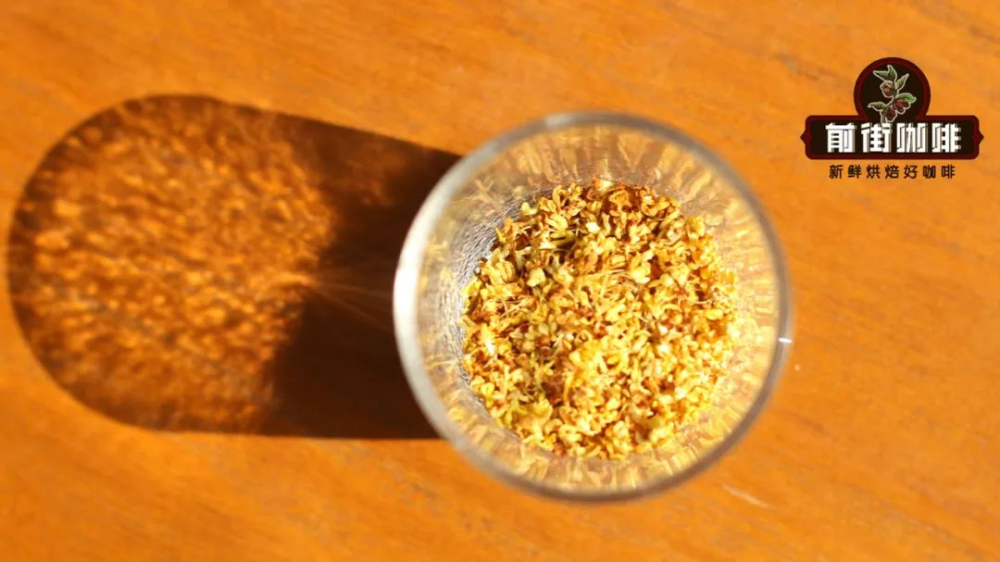
(PS: Freshly picked osmanthus cannot be used directly; it needs to be processed in a certain way before it becomes edible osmanthus. You can search online for processing methods. If you are too lazy to do it yourself, you can also do what Front Street did and order a big pack for ten yuan.)
Osmanthus Espresso
As the name suggests, it is a cup of espresso with osmanthus fragrance. But if you want to bring the aroma of osmanthus into the espresso while keeping the original rich flavor of the Espresso, some tricks are needed in the preparation.
Some friends may want to just throw the osmanthus directly into the espresso liquid, but the release of osmanthus aroma takes time, and during this process the crema of the espresso may be lost and the flavor may fade. Therefore, Front Street chose to put the osmanthus into the coffee grounds and let them undergo the "baptism" of high-pressure hot water together!
Front Street has done tests and found that mixing osmanthus into coffee grounds for extraction together will cause liquid column spouting (channeling) due to the obvious differences in density and volume between the two, and the extracted coffee flavor will become unstable. So Front Street adopted a relatively safer method, placing the osmanthus above or below the puck for brewing.
Front Street once used Warm Sun blend espresso beans and placed osmanthus above and below the puck for extraction comparison: 1. Spread dried osmanthus evenly at the bottom of the portafilter basket, then tamp the coffee grounds; 2. First pour the coffee grounds into the portafilter basket and tamp, gently spread dried osmanthus on the surface, then tamp firmly again. (PS: Use 0.3–0.5g osmanthus for 20g coffee grounds)

Both extraction processes were relatively stable, with times not much different from normal extraction parameters, no channeling like the above occurred, and the Espresso in both cases had a faint floral aroma. After making these two espresso liquids into hot americanos and tasting them, the coffee with osmanthus placed at the bottom of the puck had the fullest flavor. Besides the unique winey fruity acidity of Warm Sun, it also carried a faint osmanthus aroma, which was especially stunning.
Osmanthus Latte
If you also want to taste the flavor of osmanthus espresso after adding milk, you need to additionally add osmanthus syrup for support (because milk will mask the osmanthus aroma).
First extract an espresso in the regular way (40ml Espresso from 20g coffee grounds), mix in 15g osmanthus syrup, then make it into a latte (about 200g milk), and finally sprinkle some dried osmanthus on the surface as a garnish, so the latte looks good and also lets you smell a bit of osmanthus fragrance.
Of course, if you do not have osmanthus syrup on hand but still want to drink a hot osmanthus milk coffee, you might try making a piccolo (mini latte).
Place dried osmanthus under the coffee puck for extraction, use a split spout portafilter to extract two 20g osmanthus espresso liquids, take one of them and add rotary-evaporated milk with thin milk foam (60g) at a 1:2 ratio. On careful tasting, besides the coffee aroma and the fresh sweetness of milk, the osmanthus fragrance is also more obvious, and it is very delicious.
Osmanthus Straight Iced Americano
There was still one espresso left from the split extraction just now. In the spirit of not wasting it, Front Street poured this shot directly over ice to make a straight iced americano. The americano made this way tastes closer to directly tasting the espresso, but under the cooling and dilution of the ice, more of the osmanthus aroma is retained. The whole cup is not as strong and bitter as expected; instead, it is very refreshing and easy to drink, with a bit of osmanthus flavor, and it is super tasty.
Osmanthus Dirty
Now we know that osmanthus can not only improve the appearance of coffee, but also give coffee more flavor possibilities. And Dirty is a coffee drink with both appearance and flavor. When these two meet, what kind of sparks will they create?
First choose a nice-looking glass, add some dried osmanthus to osmanthus syrup, invert the glass so that a ring sticks to the rim, then pour in about 170g iced milk, and extract an osmanthus espresso on top. In this way, a cup of osmanthus Dirty is complete! Before tasting, you can smell the elegant floral fragrance. With one sip, you can taste both the warm, bitter coffee and the fresh osmanthus fragrance, and finally the cold sweetness of the milk, with distinct layers and an incredibly full flavor.
Osmanthus Pour-over
After making so many cups of coffee, there was still quite a bit of dried osmanthus left, so Front Street made another pot of osmanthus pour-over~
Considering that osmanthus has a relatively strong sweet fragrance and is suitable for pairing with coffee beans that have a lighter flavor, Guatemalan New Oriente Geisha coffee beans were chosen. Compared with espresso, osmanthus can release its aroma more fully under the washing of hot water for about 2 minutes in pour-over. Therefore, there is no need to add too much; for 15 grams of grounds, just add about 1 gram of dried osmanthus, lightly covering the surface of the coffee bed.
Extraction parameters: 15g coffee grounds; 1:15 coffee-to-water ratio, 91℃ water temperature; grind size EK43s 9.5 (85% passing rate with No. 20 standard sieve); V60 dripper; three-stage pouring method.
Actual tasting: During brewing, you can already smell the warm blend of osmanthus and coffee. On the palate, there is bright, full citrus acidity and rich peach flavor. After it cools, the whole cup of coffee is like peach oolong tea, soft and smooth, and very delicious.
- END - Front Street Coffee (FrontStreet Coffee)
No. 10 Baoqian Street, Yandun Road, Dongshankou, Yuexiu District, Guangzhou, Guangdong Province
The above content is compiled by CoffeeHunters, a coffee news website.


