








What happens when a coffee roaster pre-grinds espresso beans?
Pre-ground espresso beans lose most of their carbon dioxide the moment they are ground, and that gas does two jobs during extraction: it helps build crema and slows the flow through the puck. Without it, crema thins within days, shots run faster, and under-extraction becomes likely even when the dose and grind are adjusted.
Sealing the degassing valve after grinding keeps flavors in the bag but does not restore the lost gas, so a roaster coffee that ships whole retains far more of what espresso needs. Compensating with a larger dose or a finer grind runs into the limited capacity of the portafilter basket, leaving little room to correct the shot.
Many coffee bean merchants offer grinding services, including Front Street, but when it comes to espresso extraction, Front Street does not recommend choosing pre-ground coffee. The reason is not just that flavors dissipate faster, but more critically, the coffee beans lose a large amount of carbon dioxide. Carbon dioxide plays a key role in building crema and slowing down the flow rate during espresso extraction. Once ground into powder, flavors and gases escape more rapidly, crema becomes thinner by the day, extraction speeds up, and it can even lead to under-extraction. At that point, you can only compensate by adding more coffee or adjusting to a finer grind, but the portafilter basket has limited capacity, leaving very little room for adjustment. This article provides a detailed analysis of the specific effects of pre-ground coffee on espresso extraction, and recommends that those who care about taste and crema prioritize whole beans.

Most merchants who sell coffee beans offer a grinding service, and Front Street is no exception. However, if the beans are intended for espresso, Front Street does not recommend that customers choose pre-ground coffee.
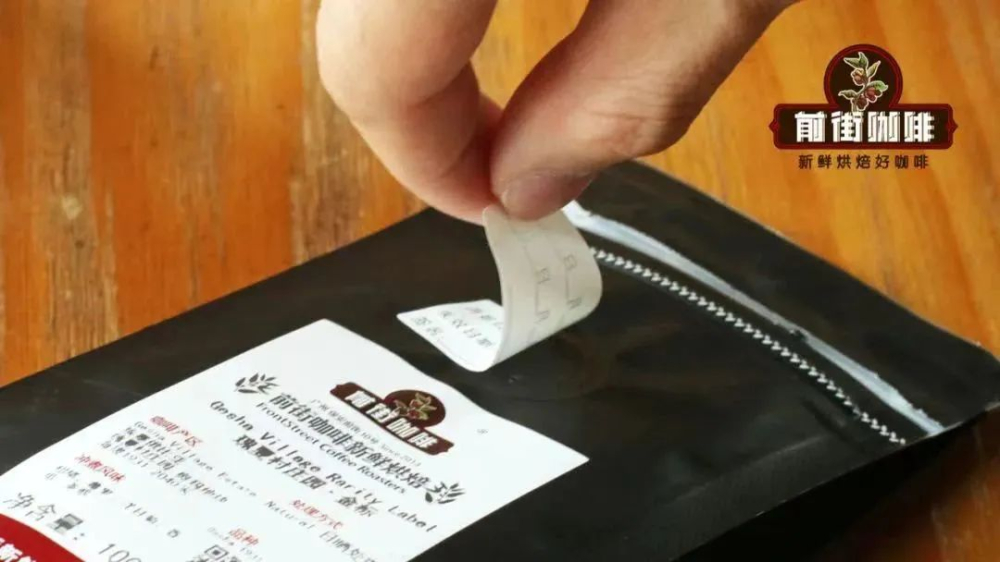
Many people might find this puzzling: isn't it just that the flavors dissipate a bit faster? As long as I drink it quickly, the taste won't get away from me. Indeed, the primary reason pre-ground coffee is not recommended is that the coffee flavors escape quickly. But for espresso, what matters is not just the flavor — other components inside the coffee beans are equally important, such as carbon dioxide. After grinding into powder, Front Street will directly seal the degassing valve. In the article "The Purpose of the Degassing Valve," we mentioned that the main function of the degassing valve is to prevent the vigorous degassing of fresh coffee beans from bursting the bag.
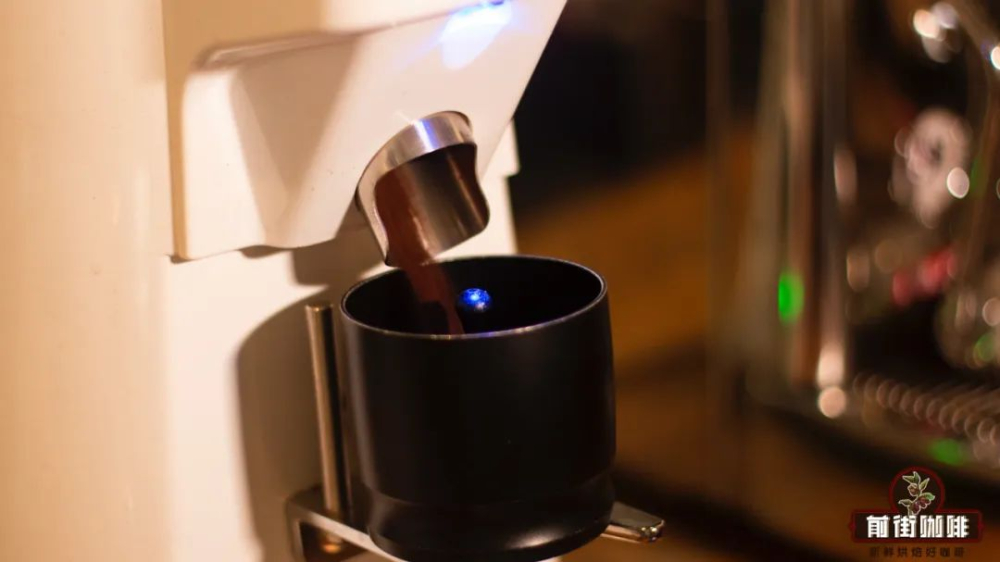
When coffee beans are ground into powder, a large amount of carbon dioxide is rapidly released, and at that point the coffee grounds no longer have the energy to burst the bag. Meanwhile, to prevent further flavor loss, Front Street will seal the degassing valve. From this, we can see that most of the carbon dioxide is lost from the moment of grinding. Pop quiz: what role does carbon dioxide play in espresso extraction? That's right — its first role is building crema. It is pressed into the coffee's insoluble oils along with the aromatic compounds, filtered out from the bottom, and forms the golden foam floating on the surface of the espresso — that is, crema. Generally speaking, if espresso beans are stored unground and kept properly, the flavor and carbon dioxide can be retained for over 50 days.
During those 50-plus days, the extracted espresso has relatively pronounced, relatively rich flavor and crema. But once ground into powder, the flavor and carbon dioxide dissipate at an accelerated rate, and the amount of flavor and crema extracted each day continues to decrease. By around 30-plus days, the coffee extracted from these pre-ground beans is already lacking in both flavor and crema.
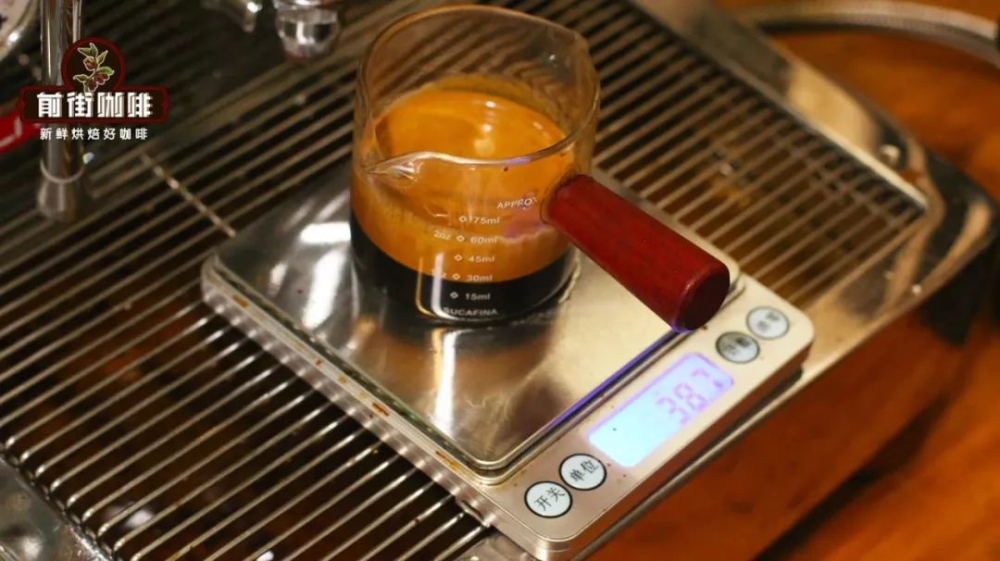
Secondly, carbon dioxide also slows down the flow rate. When the beans still contain abundant carbon dioxide, the flow rate is relatively slow. This is because the presence of carbon dioxide greatly reduces the gaps through which water can pass, slowing things down considerably. Once a large amount of carbon dioxide is lost, not only does the daily crema amount decrease, but the extraction speed of the espresso also increases. When it becomes fast enough, under-extraction occurs.
When this happens, you generally have to choose between adding more coffee and adjusting to a finer grind. Adjusting to a finer grind is clearly not an option, so you can only adjust by increasing the dose. But there is a limit to adding more coffee — the portafilter basket has a standard capacity, and you can exceed it to a certain degree, but once you exceed it too much, it becomes very difficult to lock the portafilter onto the espresso machine. So when the grind size of the coffee powder is fixed, it becomes very difficult for us to adjust the extraction.
Therefore, if you have requirements for taste and crema, Front Street recommends that you最好不要 choose pre-ground coffee when buying beans. After sitting for a while, the difference in taste between freshly ground and pre-ground coffee becomes very obvious. What's more, we have no idea whether the grind size of the merchant's coffee powder is suitable for our own espresso machine — there are simply too many risks.
Front Street Coffee (FrontStreet Coffee)
No. 10, Bao'an Qian Street, Yandun Road, Dongshankou, Yuexiu District, Guangzhou, Guangdong Province
The above content is compiled by CoffeeHunters, a coffee news website.


